





Baroque Period (1600–1750)
Oratorio
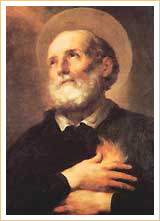
In addition to the opera and the secular cantata, the oratorio was another popular vocal form during the Baroque period. Based on a religious theme or biblical text, oratorio had its early origins in the 1540s, with efforts by St. Philip Neri to educate and convert common people through spiritual exercises held in a prayer hall. These exercises, which at first were limited to sermons, prayer, hymn singing, and vernacular dramatizations and discussions of the Bible, soon grew into large-scale dramas for concert performance. From around 1600 onward, techniques such as the recitative and the aria with basso continuo began permeating these oratorios (which were named after the venue in which they were held—a prayer hall is also known as an oratory). In fact, oratorio had evolved into something akin to opera without costumes or staged action. Because oratorios were the only musical event permitted during the Lent season, they soon became the musical outlet for the concert-going Baroque public enamored with opera. The earliest surviving oratorio is Rappresentazione di anima et di corpo ("The Representation of Soul and Body," 1600), an allegorical morality play by the Italian composer and organist Emilio de' Cavalieri (c. 1550-1602).
Composer: Johann Sebastian Bach
-
"Christmas Oratorio, BWV 248: II. Recitative: Es begab sich aber, zu der Zeit"
Early Baroque oratorio appeared in two forms: the Latin oratorio and the oratorio volgare, which used Italian texts. The Latin oratorio, which included the roles of narrator and chorus in addition to the central characters of the plot, reached its peak in the works of the Roman composer Giacomo Carissimi, who wrote and conducted oratorios at the Oratorio del Santissimo Crocifisso (Oratory of the Most Holy Crucifix) in Rome. His finest oratorio, Historia di Jephte ("The Story of Jephthah"), is based on the Old Testament story from the Book of Judges (Judges 11:28-38), and we’ll examine this work in the following listening examples. In the story, the main characters are Jephthah, his daughter Filia, and Historicus, the narrator. Note that the part of Historicus is sung by a tenor, although at various points different soloists or a combination of voices sing the part. Note also the intervention of the chorus, which serves to amplify the drama.
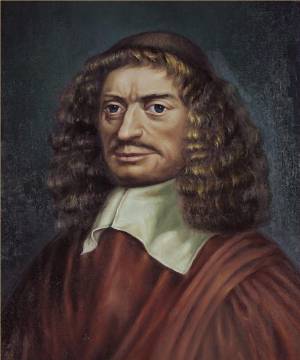
Giacomo Carissimi
Although none of his music was published during his lifetime, Carissimi's influence as a composer and teacher was widespread in 17th-century Europe. From the age of 25 until his death 44 years later, he held the post of maestro di cappella at the Church of St. Apollinaire in the German College in Rome, a prestigious position that brought him recognition and wealth. Aside from being the first major composer of oratorios, Carissimi also wrote motets, cantatas, and masses.
(Recitative: tenor)
(Recitative: solo tenor
(Six voices)
(Accompanied aria: solo soprano)
Composer: Giacomo Carissimi
-
"The Story of Jephtah: Historicus"
Composer: Giacomo Carissimi
-
"The Story of Jephtah: Jephtah"
Composer: Giacomo Carissimi
-
"The Story of Jephtah: Coro a 6"
Composer: Giacomo Carissimi
-
"The Story of Jephtah: Filia"
Carissimi's pupil Alessandro Scarlatti (1660-1725) was one of the principal composers of the oratorio volgare. In the hands of Scarlatti, the oratorio became analogous to opera. While the themes remained religious, the texts were in Italian, the role of the narrator was eliminated, and the chorus was abandoned. In fact, the oratorio was little more than a substitution for opera.
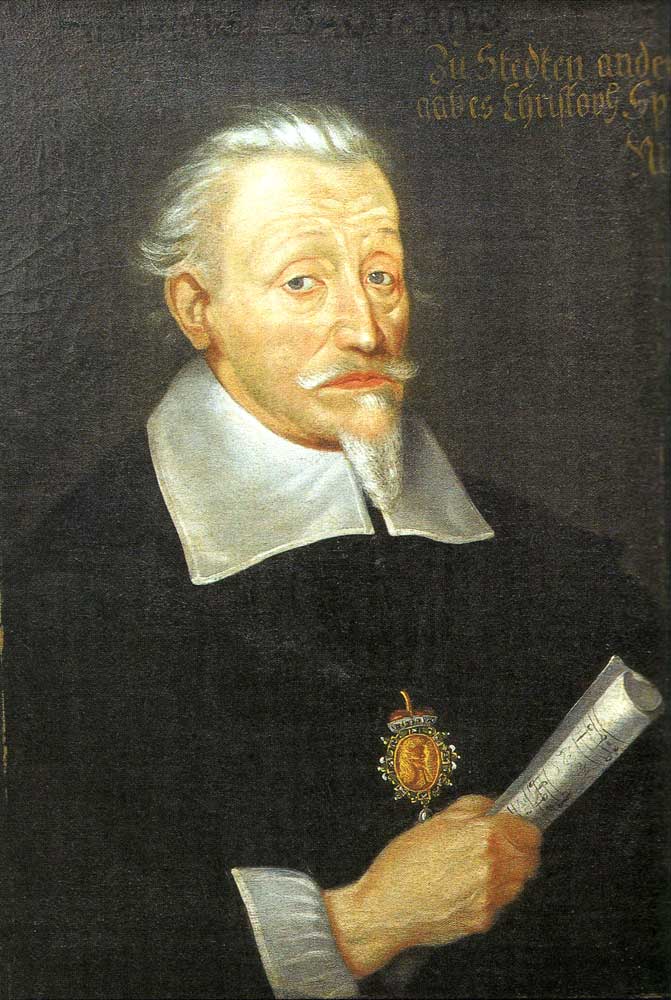
The oratorio spread from Italy to the other countries of Europe. Heinrich Schütz (1585-1672), who studied in Italy, introduced the oratorio to Germany. The influence of his teacher Monteverdi may be heard in "Erhore mich, wenn ich rufe".
Composer: Heinrich Schütz
-
"Psalmen Davids: Erhore mich, wenn ich rufe"
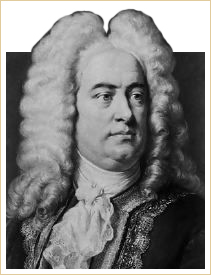
George Frideric Handel
In England, the oratorio rose to its height with the monumental works of George Frideric Handel (1685-1759).
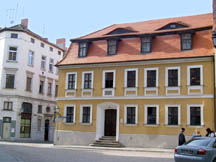
Handel was born in Halle, Germany to a prosperous family. His father was a barber-surgeon who did not want his son to be a musician (a common theme in music history). Eventually, his father relented, allowing Handel to study composition with Friedrich Zachow, a well-respected teacher and composer. After enrolling at the University of Halle, Handel determined that his destiny lay in opera. In 1706, he moved to Italy where he composed his first major works. A visit to London in 1710 left him enthralled, and he decided to settle there permanently.
During his first decade in London, Handel established his mastery of Italian opera through some of his operatic masterpieces, including Julius Caesar and Orlando. His benefactors generously funded his work, permitting him to live an extravagant lifestyle. In the 1730s, however, after the premiere of Blow's The Beggar's Opera, English audiences became fascinated with the ballad opera, a distinctly English form that dispensed with the opulence of Italian opera. Realizing that tastes had changed, Handel turned his attention to oratorio. The English public approved, enabling him to present masterful works to great acclaim for the remainder of his life.
Handel's Oratorios and Choral Music
By changing his focus to oratorio, Handel was able to develop the strong English choral tradition while writing a form of music similar to the Italian opera he loved. English audiences and royalty, moved by the religious settings of his oratorios, continued to support his work. During the last decades of his life, Handel produced dozens of masterful oratorios, including Israel in Egypt (1739), Messiah (1742), Judas Maccabaeus (1747), and Jeptha (1752).
Handel's Musical Style
One outstanding feature of Handel's work was his ability to synthesize the best features of all European Baroque music. His cosmopolitan style—which combined Italian musical forms, the grandeur of French music, and the seriousness of German music—was targeted to an English concert public with a strong appreciation for choral music.
If Bach's music may be described as mainly polyphonic with homophonic passages, then Handel's may be said to be the opposite. This is not to say that Handel was not adept at polyphony. On the contrary, polyphonic passages like the chorus "And With His Stripes" from Messiah are as rich and complex as any written by Bach. Handel, however, simply chose not to use polyphony very often.
Composer: George Frideric Handel
-
"Messiah: And with His stripes"
More typical of Handel's style is the chorus "All We Like Sheep", also from Messiah. In it, Handel does not rely on a single texture here to carry the entire movement. Instead, he alternates between homophonic passages, polyphonic passages, and passages in which one vocal part is featured in monodic style.
Composer: George Frideric Handel
-
"Messiah: All we like sheep"
Also evident in this movement is Handel's inventive use of word-painting, exemplified in the vocal parts moving away from each other at the words "have gone astray", the twisting vocal lines at "we have turned", the insistence at the words "every one to his own way", and the dramatic minor-key ending at "and the Lord hath laid on Him the iniquity of us all".
When Handel died in England in 1759, he was given a state funeral and buried in Westminster Abbey. It would be almost 150 years before another composer of prominence appeared in England. His legacy would be felt for a long time after his death. The homophonic texture of his choruses, the stately character of his instrumental works, and the cosmopolitan quality of all of his music formed a blueprint that was followed by the next generation of composers, including Bach's sons.