





Romantic Period (1820–1910)
Richard Wagner
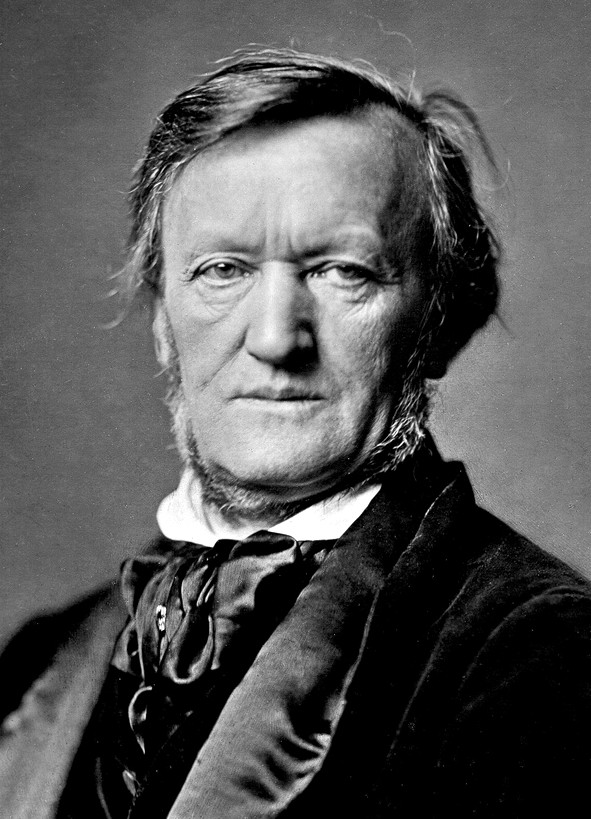
Perhaps no figure in the history of music has simultaneously inspired such devotion and loathing as Wagner. On one hand, he was, by all accounts, mean-spirited, intolerant, anti-Semitic, and focused on his art at the total expense of those around him. On the other hand, he was a devoted husband, a visionary, an iconoclast, and a pivotal figure in the history of music, whose theories had far-reaching consequences, not only in music, but in theater as well.
His stepfather, an actor and a playwright, exposed him to Shakespeare and Goethe, but most importantly, to Beethoven, whose music, especially the Seventh Symphony, made a deep and long-lasting impression on the young Wagner.
In the 1840s, he composed The Flying Dutchman, Tannhäuser, and Lohengrin. In developing the latter, he established a new compositional concept called music drama, which was to change the course of opera in the 19th century.
Wagner's vision of the music drama was that of a total art work (Gesamtkunstwerk) that would encompass a perfect blend of music, literature, acting, poetry, set design, and architecture, with Wagner himself playing all these roles. He spent the next 35 years of his life attempting to fulfill this ideal.
An aspect of Wagner’s music that placed him at the forefront of his generation was his bold use of harmony. The overture to Tristan und Isolde begins on a single note, A. (The opening two measures form the “Isolde” leitmotif). However, the piece immediately moves away from A minor and returns to it only briefly about 30 measures later.
Composer: Richard Wagner
-
"Tannhauser: Overture"
Composer: Richard Wagner
-
"Tristan and Isolde: Overture"
Especially in his late dramas, Wagner stretched the fabric of tonality almost to its breaking point. If the major/minor tonal system is built on the premise that chord progressions need to lead to a resolution of the tonic, what happens if we never reach the tonic? The net result is a sense of restlessness or endlessness in the harmony.
Wagner’s contributions to Romantic music may be summarized as follows:
- Completed the restructuring of the traditional opera that began in the 18th century, leading to a new conceptualization of the form as music drama.
- Credited with popularizing the concept and practice of the leitmotif.
- Stretched the harmonic advances of Beethoven, Schubert, Liszt, and others to new limits.
Johann Strauss Jr.: King of the Waltz
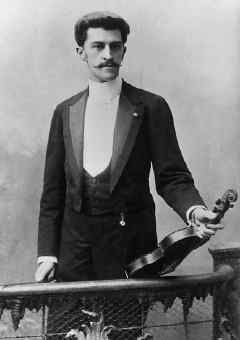
Although many composers have written waltzes, everyone agrees that Johann Strauss Jr. wrote the most defining waltz of all time: The Blue Danube. According to Strauss's publisher, this famous waltz is the most profitable property in the history of music.
Strauss was a prolific composer and an effective self-promoter who toured extensively and frequently with his own orchestra, not only within Austria but also internationally. In fact, in 1872, he received $100,000 to conduct one composition fourteen times on a tour of the United States.
Johann Strauss Jr. was one of 11 children. His father was one of the most popular composers and conductors of dance music. However, he strongly opposed the idea of any of his children pursuing a career in music. As a result, Johann Strauss Jr. snuck lessons and managed to become an accomplished musician in his own right, surpassing his father's long-held reputation. In addition to numerous waltzes, Strauss Jr. left behind overtures, polkas, and vocal works.
Composer: Johann Strauss II
-
"An Der Schönen, Blauen Donau (The Blue Danube), Op.314"
Giuseppe Verdi
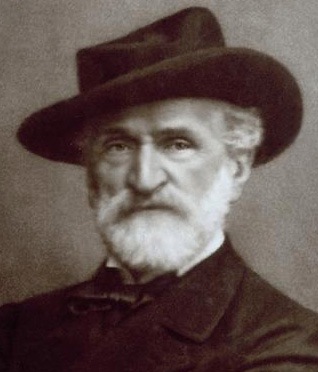
Giuseppe Verdi devoted his life to refining and expanding traditional Italian opera; his music embodied the grandest and most elaborate Romantic gestures. After growing up in relative poverty in northern Italy, Verdi studied in Milan before returning home and marrying at the age of 23. His first opera, which met with encouraging success, was produced at Milan’s famous La Scala Theater in 1839. At the urging of the theater director, he composed Nabucco, the story of the Babylonian King Nebuchadnezzar. At the time, Italy was struggling to free itself from Austrian rule; the story of the Jews’ struggle for freedom from Babylon and their desire to return to their homeland struck a chord with the Italian public. The chorus "Va pensiero sull’ ali dorate" became a de facto national anthem, and the opera turned Verdi into a national hero.
Despite occasional retirements, most notably between 1871 and 1887, Verdi’s artistic success continued until his death at age 87. Although Verdi’s style at times trespassed into Grand Opera(Don Carlos), he more often retained the traditional Italian forms of opera seria and opera buffa (comic opera).
Composer: Giuseppe Verdi
-
"Nabucco: Entry Chorus, Gli Arredi Festivi Giu Candano Infantri"
Composer: Giuseppe Verdi
-
"Nabucco: Va, Pensiero - Chorus Of Hebrew Slaves"
Giacomo Puccini
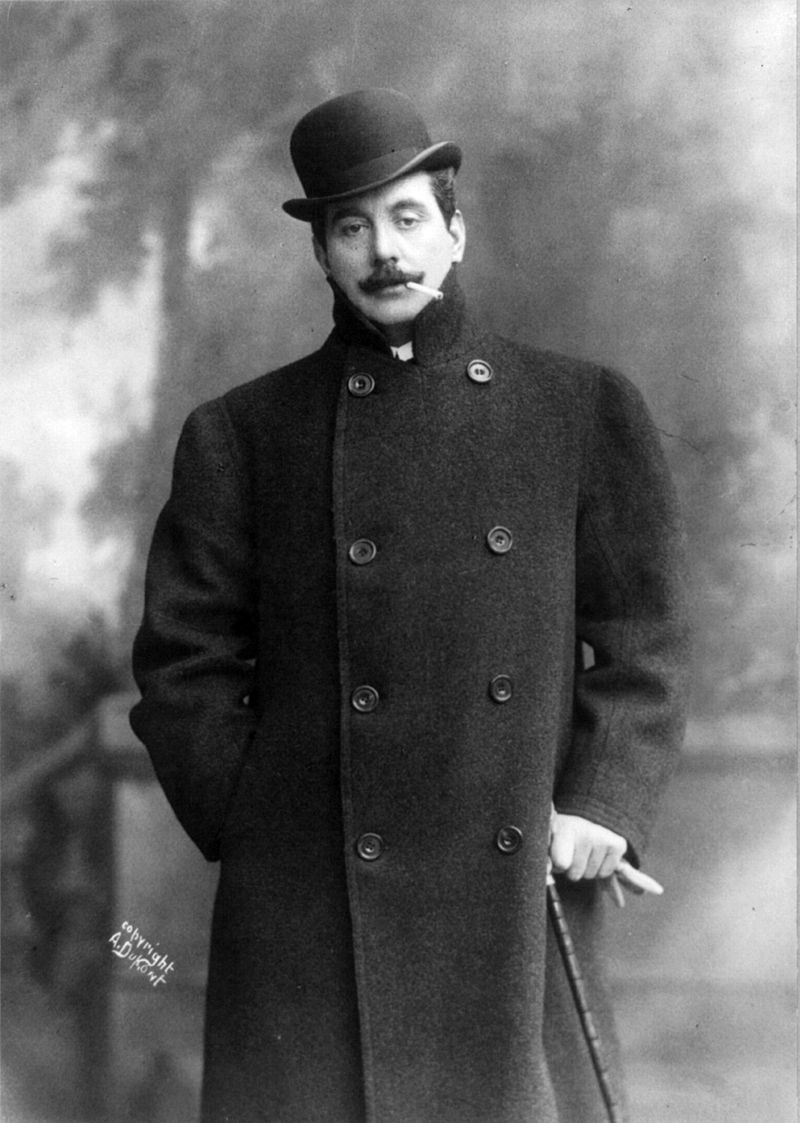
The greatest (and most eclectic) of the Italian post-Romantic composers was Puccini. Puccini was a sensitive composer with a genius for melody and a flair for drama. In the aria "O mio babbino caro" from Gianni Schicchi, the soprano sounds as though she were singing about the heavens unfolding. In reality, she is singing to her father, threatening to throw herself off a bridge in an impetuous fit if he does not let her marry. "Vissi d’arte" from Tosca may be the composer’s greatest moment in verismo opera.
Composer: Giacomo Puccini
-
"Turandot: Nessun Dorma"
Composer: Giacomo Puccini
-
"Gianni Schicchi: Gianni Schicchi: O mio babbino caro"
Composer: Giacomo Puccini
-
"Tosca: Act II: Vissi D'arte"
Gustav Mahler
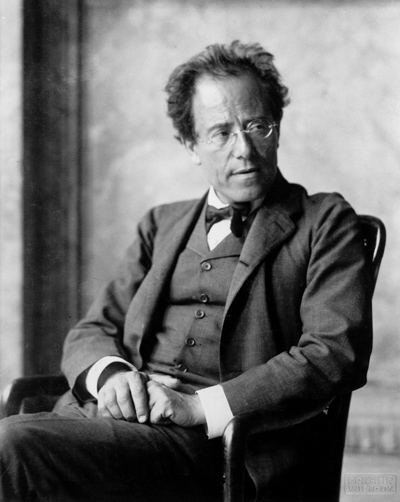
Gustav Mahler was known as a conductor as well as a composer, serving as Director of the Vienna Opera from 1897 to 1907 and as conductor of the New York Philharmonic Orchestra from 1909 to 1911. Throughout his life, he was tormented by his decision as a young man to convert from Judaism to Catholicism. This duality was expressed through sudden and dramatic changes of dynamics and moods in his music.
Mahler was subject to bouts of depression and prone to superstition. He believed enough in “the curse of the Ninth”—that a composer's ninth symphony would be his last, as it had been for Beethoven—that instead of calling his ninth major work a “symphony” (which he could have), he called it a “song cycle”— Das Lied von der Erde. Ironically, he then completed Symphony No. 9 but died before he could complete Symphony No. 10—arguably fulfilling the curse.
Mahler’s symphonic works are massive in scope. All are at least an hour in length and require huge orchestral forces. His scores are enormously detailed and display a precise sense of orchestration. The Symphony No. 2 calls for a huge chorus, two soloists, 17 wind players, 25 brass players, numerous percussion players, 4 harps, an organ, and strings. Symphony No. 8 is nicknamed the Symphony of 1000 because of the number of performers required to perform it.
Despite the size, a level of intimacy may be found in all of his symphonies. Amidst the gargantuan scoring for anvil and percussion lay passages of exquisite beauty for solo mandolin and delicate ländler (an Austrian folk dance). Mahler may also be classified as a traditionalist, for he worked in a standard symphonic form with occasional forays into Lieder and song cycle.
Composer: Gustav Mahler
-
"Symphony No. 9: III. Rondo-Burleske: Allegro Assai. Sehr Trotzig"