





France
Until World War I, Paris and Vienna were the two main centers of composition in Europe. Thereafter, modern means of communication and transportation meant that new trends, styles, and idioms were so quickly adopted that no single city was known as a leading innovator. However, the renown of music teacher Nadia Boulanger made Paris a leading center of musical education. As well, nationalistic pride, demonstrated in the music of Satie, Debussy, and Ravel, continued to dominate France throughout the 20th century.
Nadia Boulanger
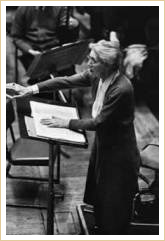
In addition to her work as a composer and conductor, Nadia Boulanger was an outstanding music professor who taught some of the most influential composers of the 20th century. Her students included Aaron Copland, Philip Glass, Walter Piston, and Quincy Jones. She has been called “the most influential teacher since Socrates.” Although she taught in the U.S. and England, her principal base was in Paris, where she taught for 70 years.
Les Six
The cultural atmosphere of post-WWI France produced a school of composers known as Les Six, which included Arthur Honegger (1892-1955), Louis Durey (1888-1979), Georges Auric (1899-1983), Germaine Tailleferre (1892-1983) (the only female member of the group), Darius Milhaud (1892-1974), and Francis Poulenc (1899-1963). Led by Honegger, Milhaud, and Poulenc, the group sought to maintain the understated style of Erik Satie. Honegger’s oratorio Le Roi David (King David) was a centerpiece for Les Six, while his Laudate Dominum was a beautiful short choral work in the style of a motet.
Darius Milhaud emerged among Les Six as one of France’s leading musical figures. His suite of short piano pieces, Saudades do Brazil, which includes Ipanema, revealed his interest in the music of Latin America. His La Création du monde (The Creation of the World) is one of the first works to combine elements of American jazz with art music.
Composer: Arthur Honegger
-
"Laudate Dominum"
Composer: Darius Milhaud
-
"Saudades do Brasil, Op. 67: Ipanema"
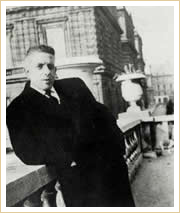
A member of Les Six, Francis Poulenc is probably best known for his smaller works. The characteristic delicacy of his chamber music may be heard in the third movement of his Violin Sonata.
Composer: Francis Poulenc
-
"Violin Sonata: III. Presto tragico"
Olivier Messiaen
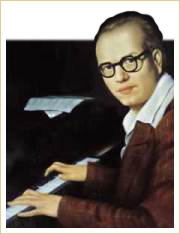
A prominent French composer, Messiaen created yet another distinctive style: his Neumes rythmiques for piano adapted idioms from medieval music as well as from contemporary sources, including Stravinsky and Debussy. His influence spread through the work of his two greatest students, Pierre Boulez (1925-2016) and Karlheinz Stockhausen (1928-2007).
Composer: Olivier Messiaen
-
"Turangalîla-symphonie: V. Joie du sang des étoiles"