
SUBJECT: Instrumental Timbre
Grade Level: 9 - 12
LESSON OBJECTIVES
Students will:
- Explain how timbre helps us distinguish the sounds of different instruments.
- Characterize the use of the term “color” in music.
- Compare the relationship between the sound waves produced by an instrument and that instrument's timbre.
COMMON CORE STANDARDS
Add district, state and/or national standards as is applicable to your area.
Preparatory Activities
10 minutes
- Review the basic vocabulary for Class 7:
- Timbre, flute, clarinet, arrangement, tessitura, soprano, alto, tenor, bass, baritone, a cappella, choir (chamber and chorus)
- Review the characteristics for each of the instrument classification systems:
- Chordophones, Aerophones, Membranophones, Idiophones and Electrophones
Resources/Materials
- Ability to hear and see video and audio clips by overhead projector.
- A piece of paper for student answers.
Video Examples
Violin: Subscribed 3:52 – 5:01
Ref. Ludwig Beethoven: Concert for Violin and orchestra performed by Hilary Hahn with the Detroit Symphony Orchestra
Balalaika: Subscribed 0:03 – 4:43
Ref: Concert variations on the theme of the Russian folk song “Valenki” performed by Anastasia Tyurina and the Osipov Russian Folk Orchestra
Triangle: Subscribed 0.07 – 1:37
Ref. Escape: Sextet for Triangles by Drew Worden performed by the Eastman Percussion Ensemble (Megan Arms, Chris Jones, Andrea Venet, Connor Stevens, Sam um, and Sarah Persichetti
Fluegelhorn: Subscribed 0:47 – 2:03
Ref. Antonio Vivaldi Concerto for Two Violins performed by Sergei Nakariakov and Kirill Soldatov and the Moscow Virtuosi
Serpent and Ophicleide: Subscribed 0:03 – 1:27

Wolfgang Amadeus Mozart: Clarinet Concerto in A major, K.622 [ 13:00-13:37 ]
Wolfgang Amadeus Mozart: Clarinet Concerto in A major, K. 622 performed by Arngunnur Arnadottir and the Iceland Symphony Orchestra
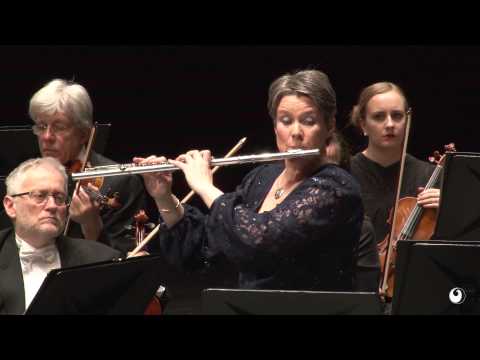
Wolfgang Amadeus Mozart: Flute Concerto no. 1 in G-Major, K. 313. [ 01:33-02:54 ]
Wolfgang Amadeus Mozart: Flute Concerto no. 1 in G-Major, K 313 performed by the Iceland Symphony Orchestra performed by Hallfrioud Olafsdottir and the Iceland Symphony Orchestra
INSTRUCTIONAL SEQUENCE
TIME
Whole Group Instruction
- Using a many or as few of the video clips listed, have students classify each of the instruments within the five (5) Hornbostel-Sachs System based on the instrument’s sound source after watching the video.
- You may need to place each clip twice.
20 minutes
Group Practice/Small Group Instruction
- Either individually or in small groups, students should answer and generate the following:
- Select 3 words that describe the sound of the instrument.
- What characteristics of the instrument led you to place in in a specific category within the system?
- What other instruments can you name in the video clip?
15 minutes
Closing Activites/Summary
- View each of the clips to confirm the students’ responses.
- Students should share each other’s responses and discuss differences.
20 minutes
Extension/Enrichment/Re-teaching/Accommodations
- Apply the same process with different audio clips so that no visual representations are available.