
The Strings
Introduction
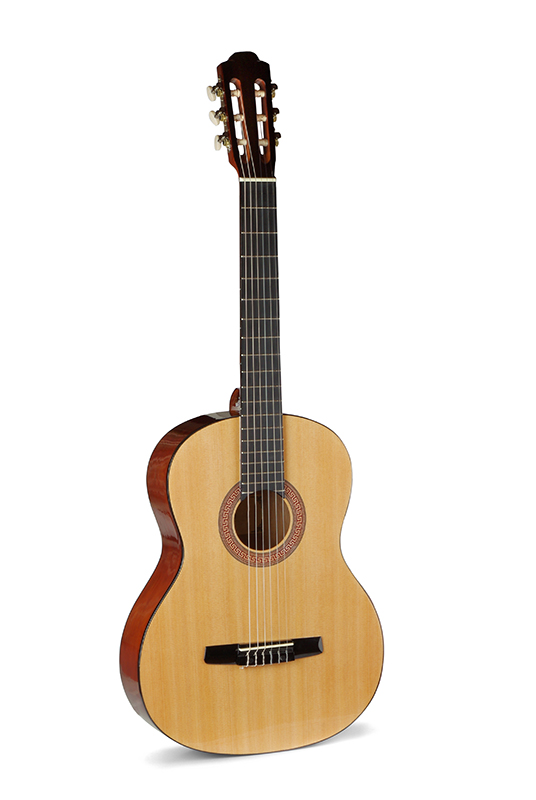
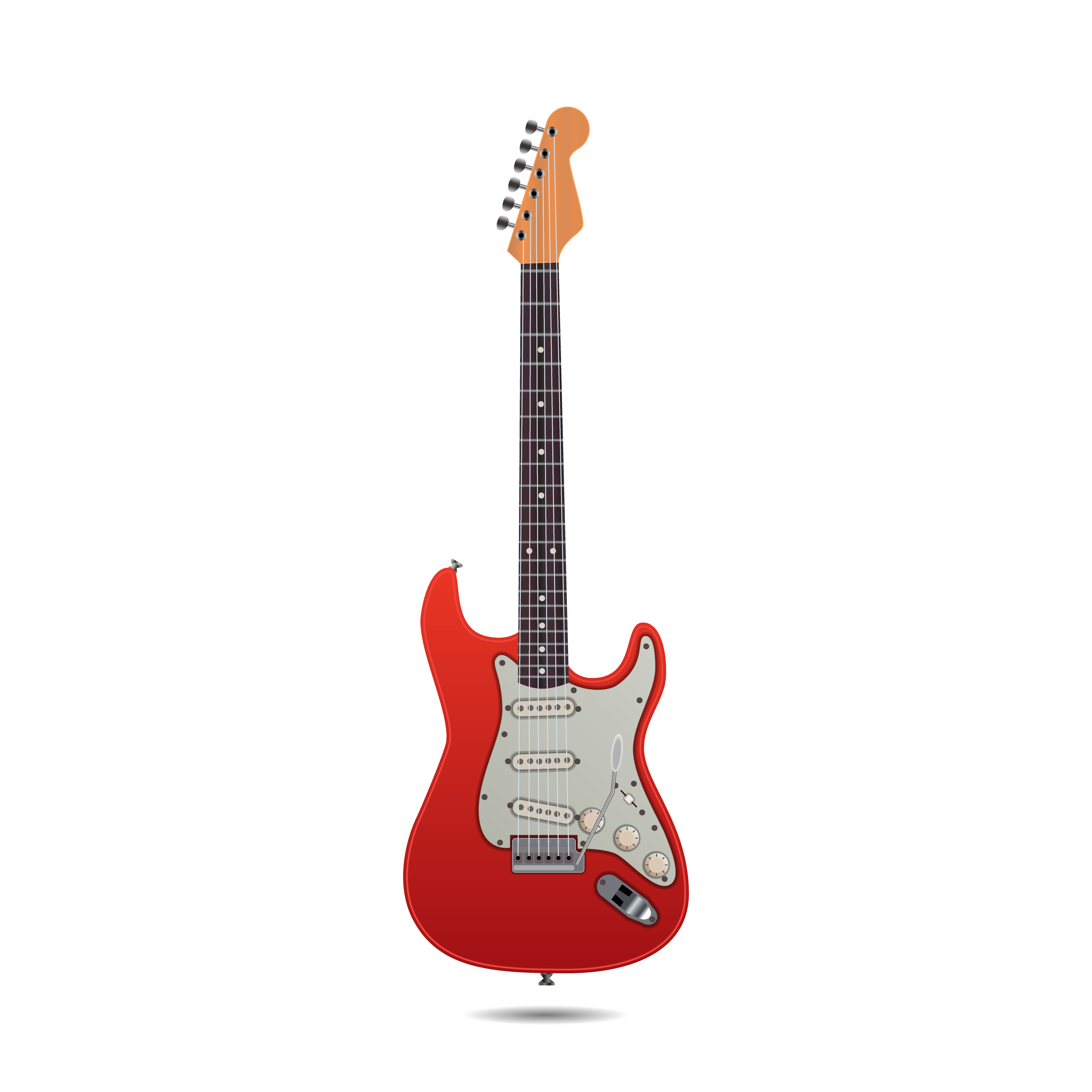
Almost every culture in history has featured string instruments as part of their musical life and heritage. However, regardless of their origin, string instruments share one common characteristic: a string stretched between two points to produce the sound. Strings may be plucked, strummed, bowed, rubbed, or otherwise manipulated in order to produce vibration. Although any one of these techniques may be applied to a particular string instrument, different instruments have traditionally been played using just one or two of these techniques. For example, guitars are strummed or plucked rather than played with a bow (i.e., bowed), whereas the opposite is true of the cello or the violin, for which strumming and plucking are used to a much lesser degree.
When playing traditionally bowed instruments, string players control dynamics by applying more or less bow pressure and speed to the strings. The ability to produce a high level of volume is particularly important when a solo string instrument needs to be heard above a large ensemble, as happens in a concerto for violin and orchestra. Vibrato, from the Latin vibrare (“to shake”), is another interesting instrumental technique used by string players. It consists of a quick back and forth movement or rocking of the finger that is in contact with the string, with the intent of producing a fluctuation of pitch for expressive purposes.
As with any other type of instrument, string instruments vary widely in terms of size, shape, and number of strings. However, there are groups of string instruments that share similar construction and instrumental technique characteristics.
One of these groups is the set of instruments that form the backbone of the traditional symphony orchestra. Comprising the string section of the orchestra, they characteristically are:
- similar shape and construction,
- played with a bow, and
- used in a way that the body of the instrument amplifies the sound.
Four Members of the String Section
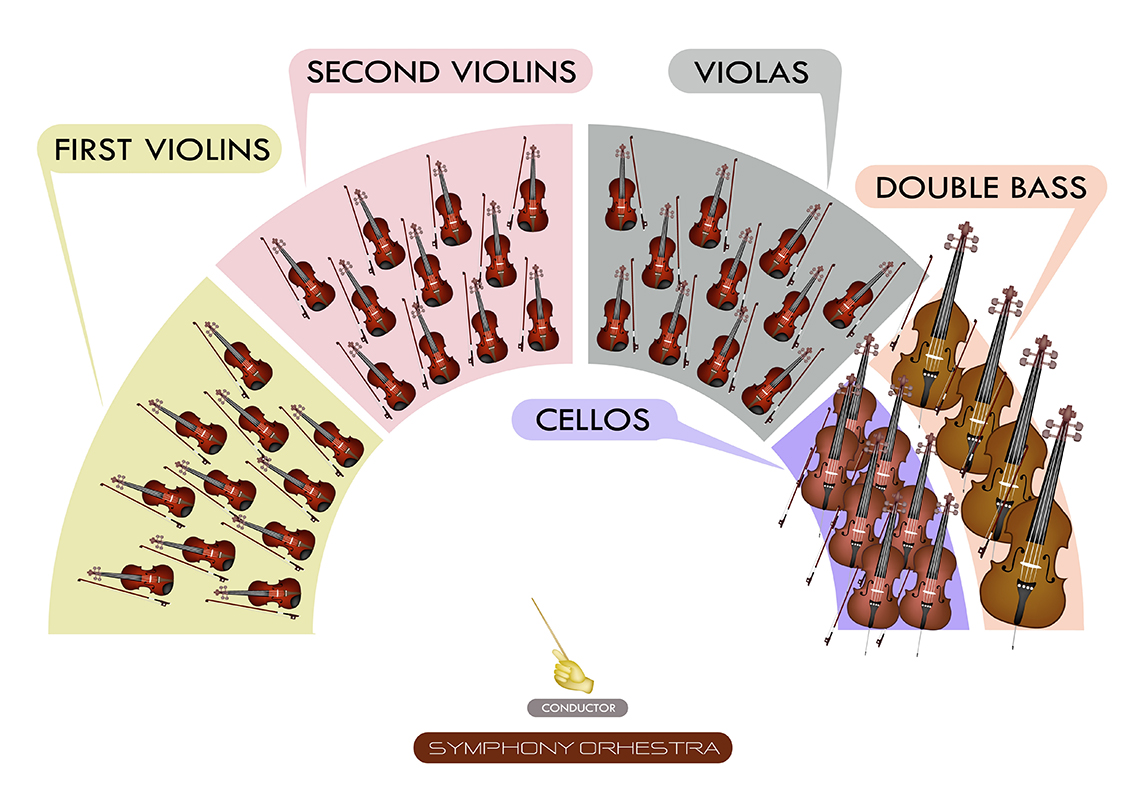
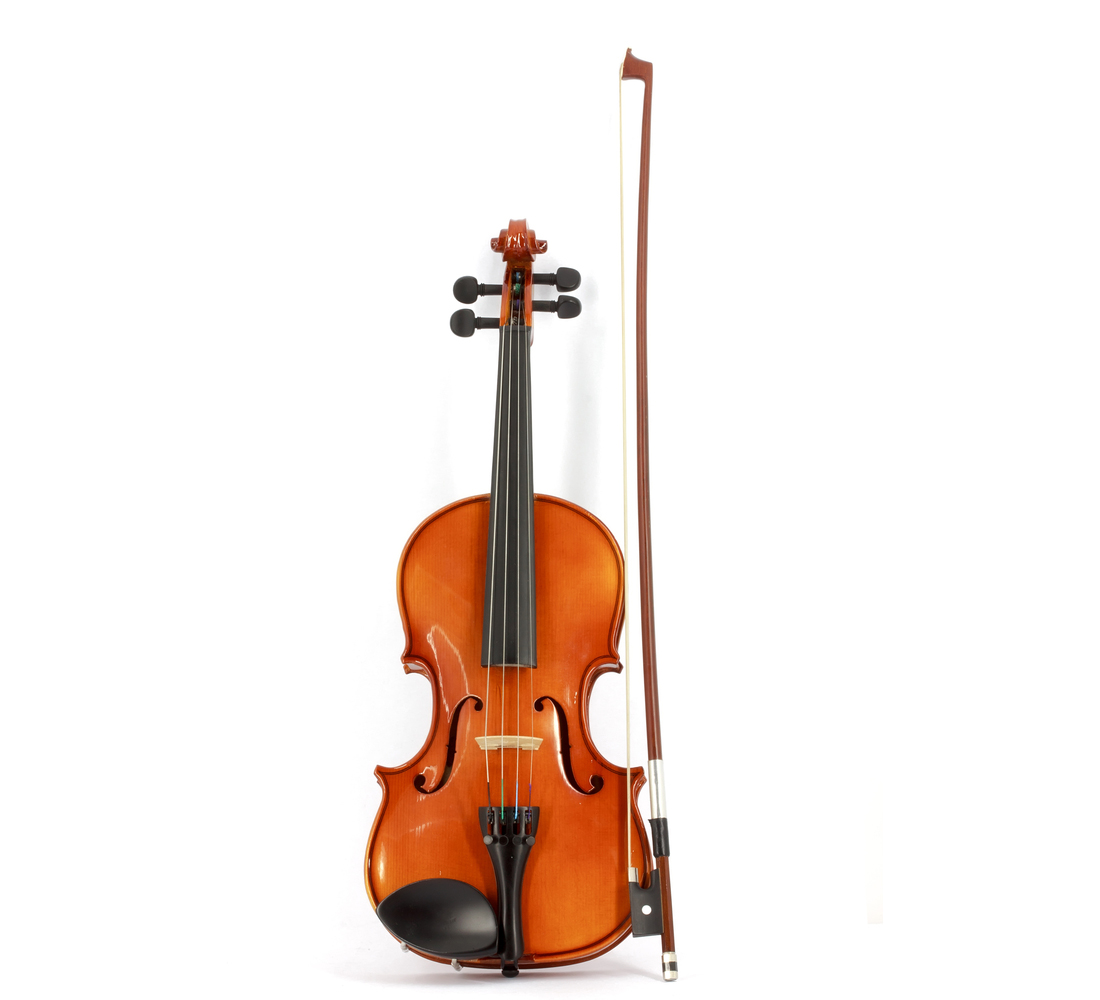
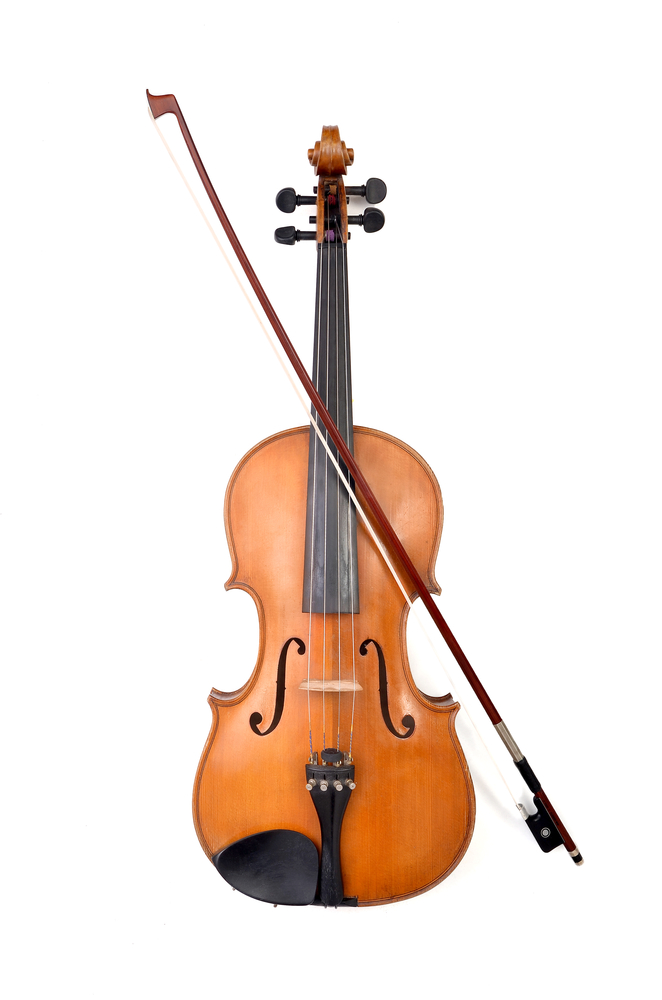
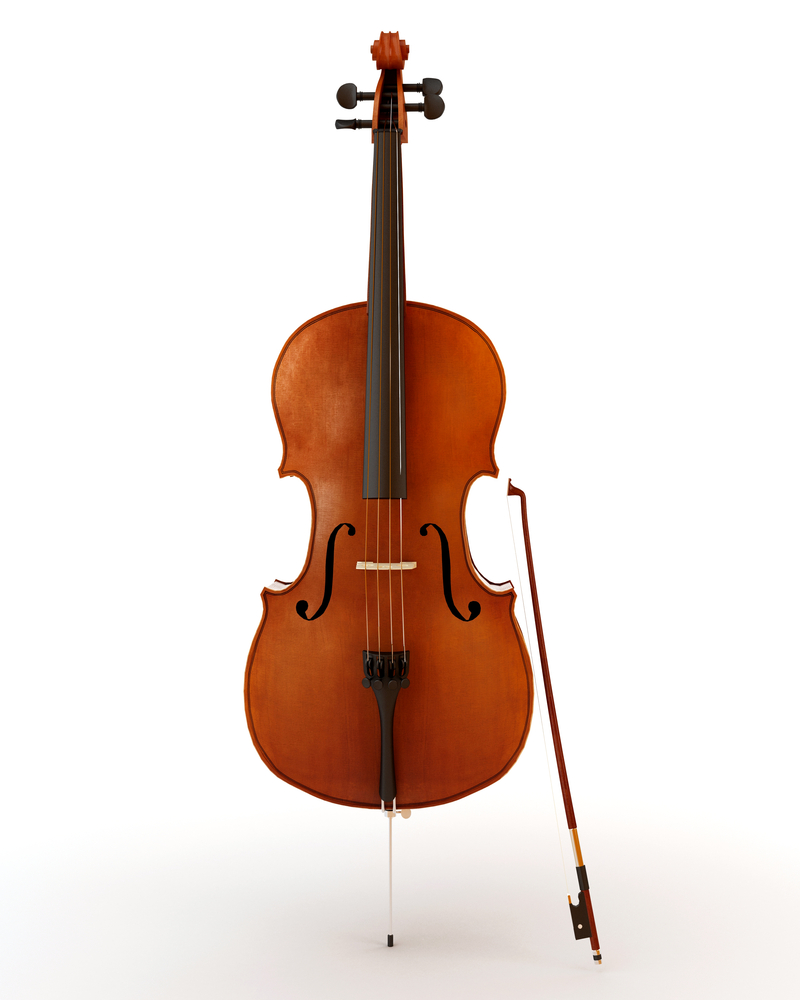
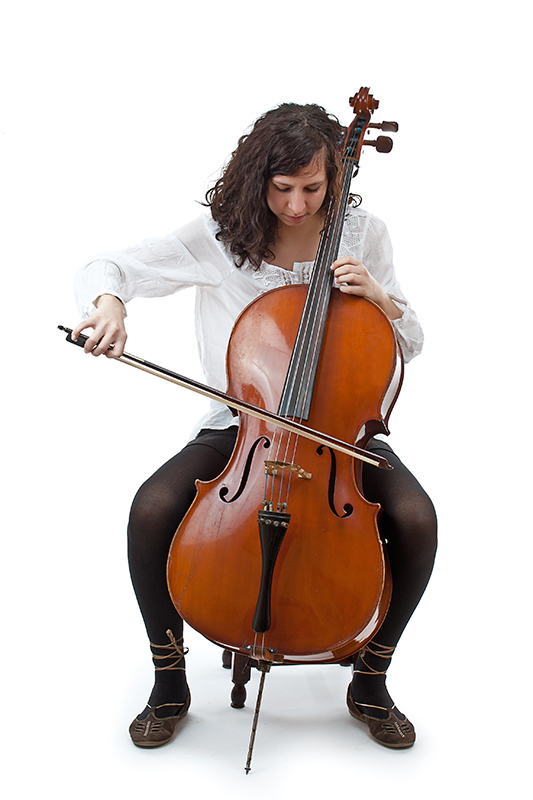
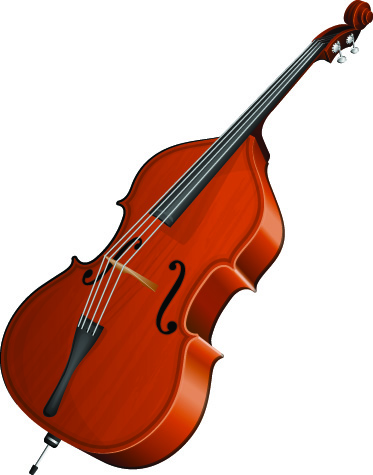
The four main orchestral string instruments are (from highest to lowest pitch): the violins (usually divided into two sections, playing individual parts), the violas, the cellos, and the double basses. Each have four strings arranged in order of pitch and may be played by means of a bow (arco) or plucked (pizzicato), as can be heard in the second movement of Maurice Ravel's String Quartet in F where at various points all the instruments are played pizzicato, bowed, or using a combination of both techniques. Whereas the violin and viola are played with the instrument resting between the shoulder and the chin, the larger cello (or, to give it its full title, violoncello) is placed between and slightly behind the knees facing outwards, and the bulky double bass is played standing up or seated on a high stool. The way we refer to performers of instruments is derived from the name of the instrument itself. Thus, we speak of violinists, violists, cellists, bassists, guitarists, and harpists, to name a few.
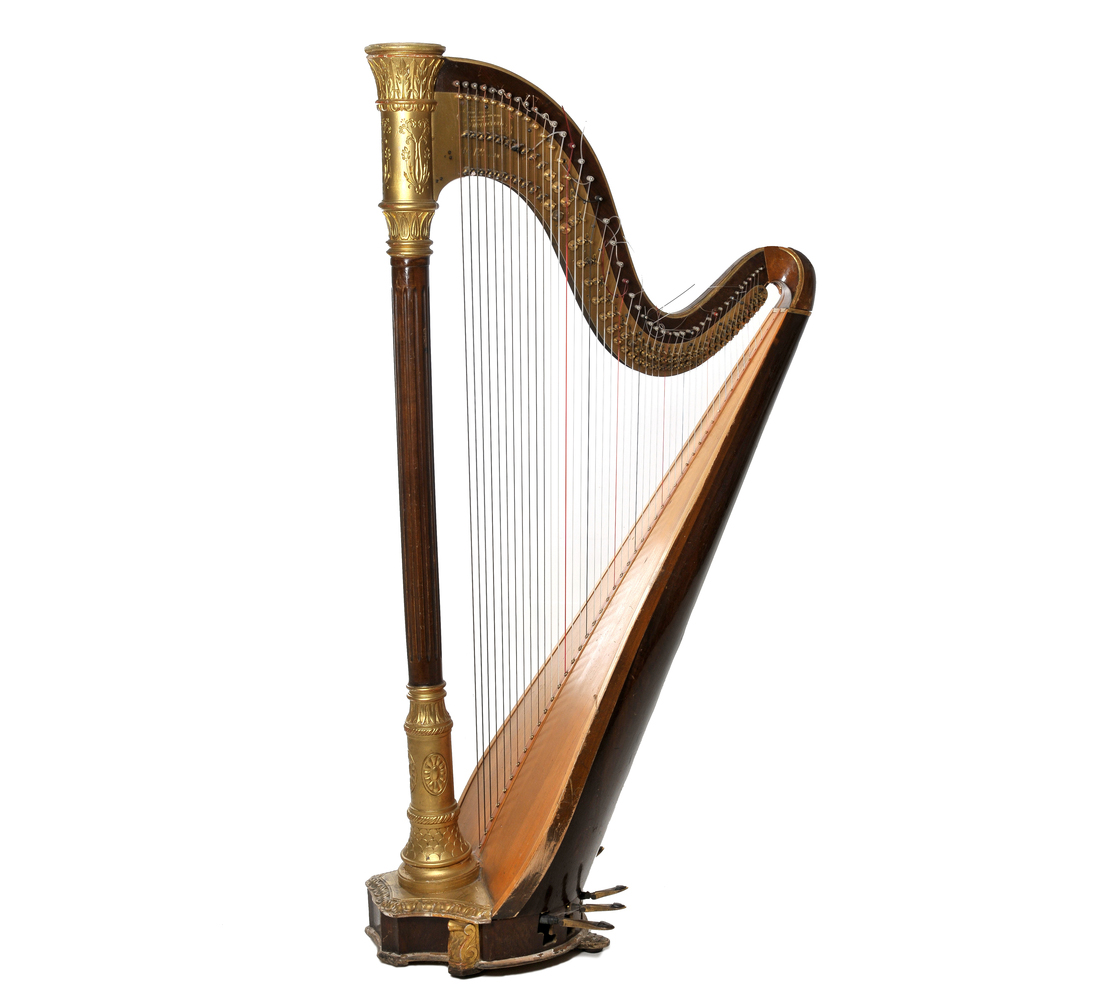
The harp may be a part-time fifth member of the orchestral strings, although it doesn't share any of the characteristics listed above.
Gallery
Now, click on the images below to hear the timbre of some well-known string instruments.
Composer: Maurice Ravel
-
"Violin Sonata No. 2 in G Major, M. 77: II. Blues: Moderato"
Composer: William Walton
-
"Viola Concerto: II. Vivo, con molto preciso"
Composer: Camille Saint-Saëns
-
"Carnival of the Animals"
Composer: Camille Saint-Saëns
-
"Carnival of the Animals" [ 18:15-23:30 ]05:15
Composer: Sergei Prokofiev
-
"Lieutenant Kijé, Op. 60: Lieutenant Kije Suite, Op. 60: I. The Birth of Kije" [ 00:12-00:32 ]00:20
Composer: Stanley Myers
-
"Cavatina"
Composer: Duke Ellington
-
"Searchin'" [ 02:30-03:27 ]00:57
Composer: Johann Sebastian Bach
-
"Cello Suite No. 1 in G Major, BWV 1007: III. Courante"
String Music Selections
Composer: Johann Sebastian Bach
-
"Cello Suite No. 1 in G Major, BWV 1007: III. Courante"
Composer: Antonio Vivaldi
-
"The Four Seasons, Violin Concerto in E Major, Op. 8 No. 1, RV 269 "
Composer: Wolfgang Amadeus Mozart
-
"Violin Concerto No. 1 in B flat major, K. 207: I. Allegro Moderato"
Composer: Ludwig van Beethoven
-
"String Quartet No. 4 in C Minor, Op. 18, No. 4: IV. Allegro"
Composer: Antonín Dvořák
-
"String Quartet No. 12 in F Major, Op. 96, B. 179 "
The Woodwinds
Introduction
Recall from the section on timbre that aerophones produce sound via vibrating columns of air. The family of instruments known as the woodwinds may be classified as aerophones. With these instruments, sound is produced by setting a column of air in motion inside the body of the instrument. A musician may blow a stream of air into one end of the instrument either directly (as in the recorder) or indirectly (as in the flute). In some woodwind instruments, the air is used to set a reed in motion that brings about vibration of the air column (as in the clarinet and oboe).
In string instruments, the length of the string determines pitch. In wind instruments (a designation that includes both woodwind and brass instruments), the pitch is determined by the length of the air column, which the performer alters by opening or closing small holes along the side of the instrument, either with the fingers or with small pads activated by a key mechanism. Volume depends on the energy with which the player produces the air stream.
The variety of timbres among the members of the woodwind family is much greater than that among the members of the string family. Each woodwind instrument has a distinctive tone color produced by a combination of factors, the most significant of which are shape, composition (metal, wood, etc.), and the different ways in which it may be played. The mouthpiece of a woodwind instrument is the part of the instrument that is partly placed in the player's mouth. The characteristics of the mouthpiece and reed also play a significant role on the sound of the instrument.
The way the performer places the lips, teeth, and tongue on the instrument's mouthpiece is a critical factor in tone production. The technical term for the use of the lips, facial muscles, tongue, and teeth in playing a wind instrument is embouchure (ahm-buh-sher)—a French term derived from the root bouche, 'mouth'. Embouchure is so important that learning how to do it correctly is crucial to playing the instrument well, regardless of the style of music played.
The term woodwind is something of a misnomer. Although most woodwind instruments are indeed made from wood, others may be constructed from metal, ivory, or bone. For example, nowadays flutes are made of metal, while clarinets and oboes are built from ebony (wood) or ebonite (hardened rubber). Electronic instruments that combine breath and MIDI (Musical Instrument Digital Interface) technology are able to duplicate the sounds of all woodwind instruments—no air column needed. However, the term woodwind has stuck, and it remains the designation for this wonderful group of instruments.
Woodwinds refer primarily to Western orchestral instruments. There are many other woodwind-type instruments dating as far back as prehistoric times. For example, the term flute applies to a wide variety of instruments encompassing many cultures from Africa, North and South America, Asia, and Europe, as well as to similar instruments in every historical period.
The woodwind section of the traditional symphony orchestra includes the flute, the oboe, the clarinet, and the bassoon. Let's look at each one of these individually.
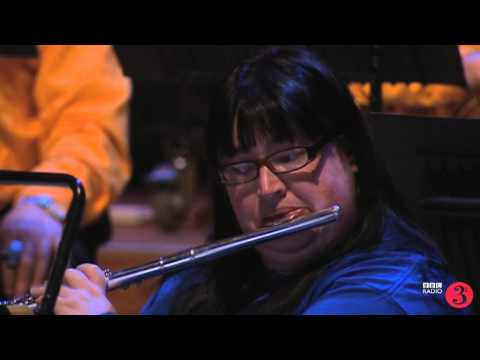
Woodwinds - BBC National Orchestra of Wales
The Flute
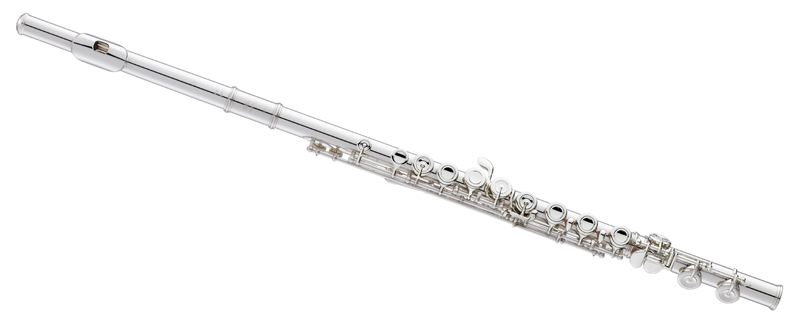
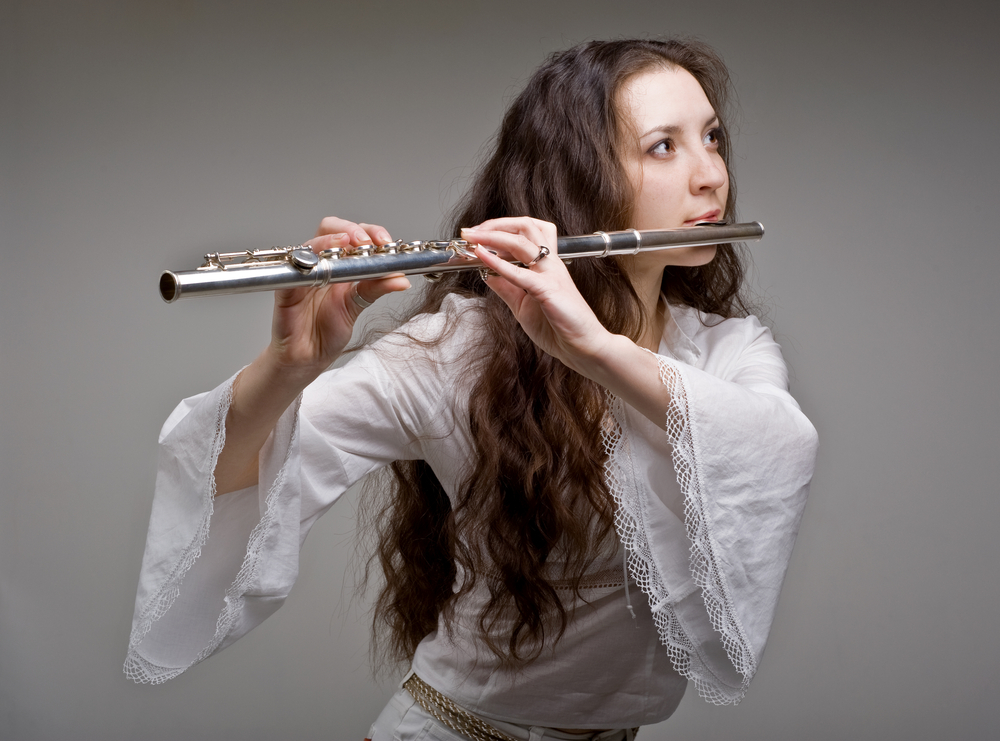
In the most general sense, the term flute may refer to any instrument for which an air column confined within a hollow body is set in motion by a stream of air released from a player's lips positioned against the sharp edge of a hole. The modern orchestral flute, patented in 1847 by the German maker Theobald Boehm, is a cylindrical tube of metal about 27 inches (66 cm) long and a bit less than an inch wide (2 cm). It has three sections:the head joint where the mouth-hole is located; the body, with most of the keys; and finally, the foot joint, which has a few keys activated by the right-hand little finger. In flute performance, most of the control of the sound comes from the player's lips.
Horizontally held flutes were present in China as early as 900 BC and first reached Europe around 1100 AD.
Visit the Dayton C. Miller Flute Collection at the Library of Congress to view a vast array of flutes. The collection contains specimens from as early as the 16th century.
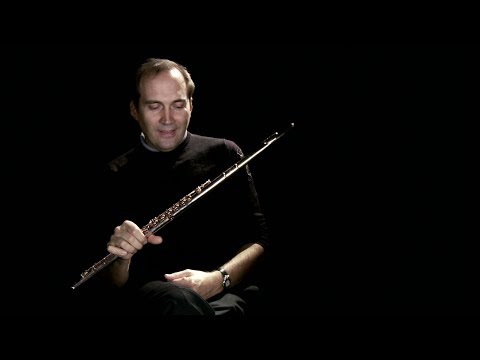
The Flute
Philharmonia Orchestra
Listening Examples
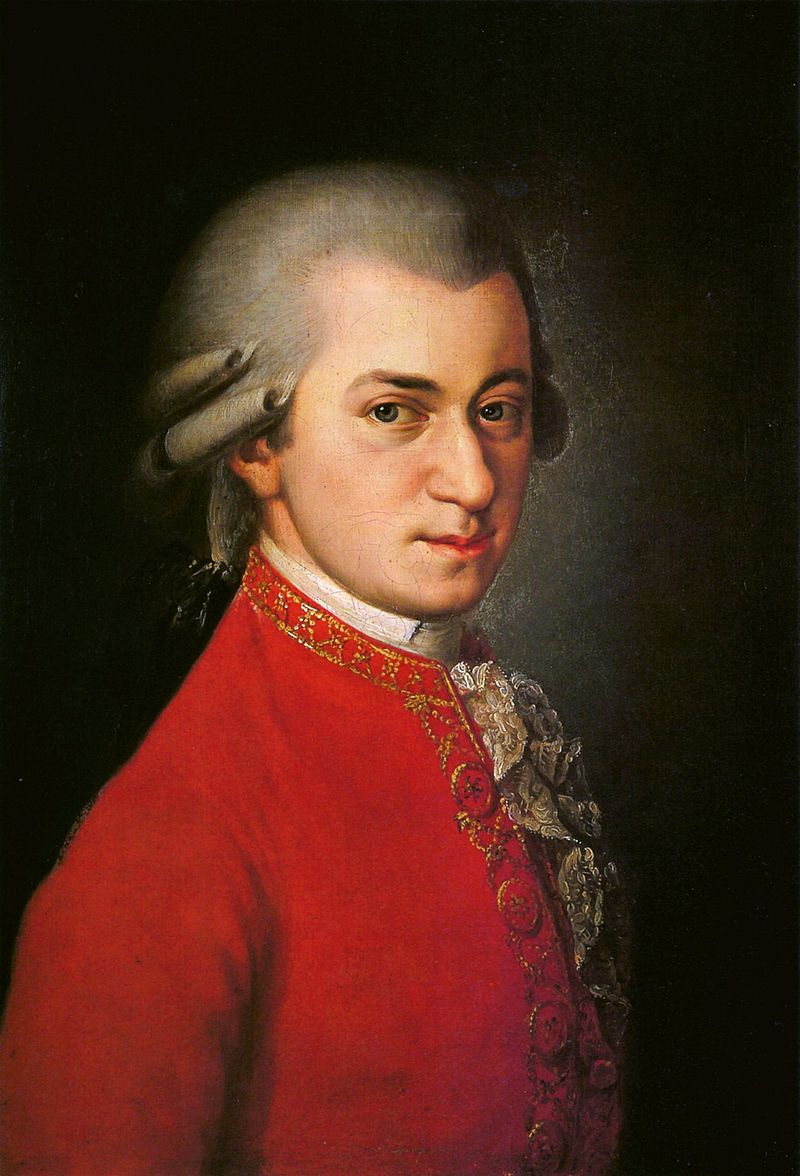
Composer: Wolfgang Amadeus Mozart
-
"Concerto for Flute & Harp in C Major, K. 299: Concerto for Flute and Harp in C Major, K. 299: II. Andantino"
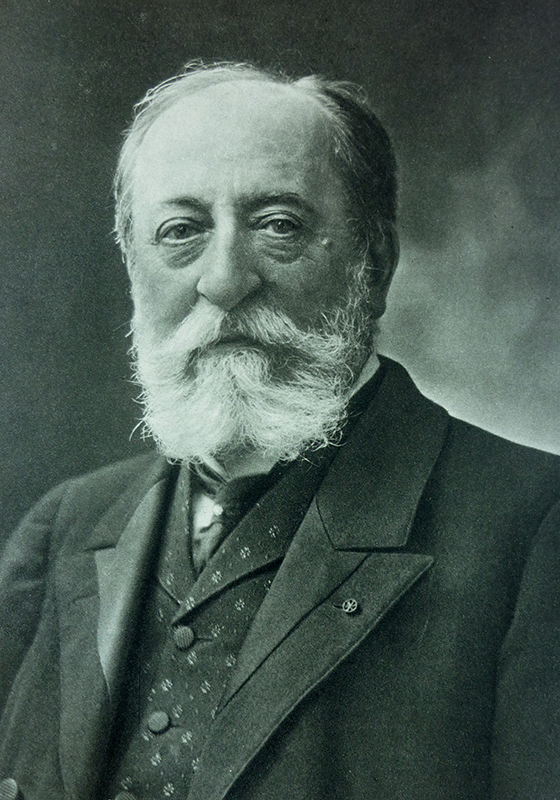
Composer: Camille Saint-Saëns
-
"Carnival of the Animals" [ 13:54-15:04 ]01:10
The Oboe
In his own words...
"Reed players are entirely dependent upon a short-lived vegetable matter of merciless capriciousness, with which, however, when it behaves, are wrought perhaps the most tender and expressive sounds in all wind music."
Baines, Woodwind Instruments and Their Histor
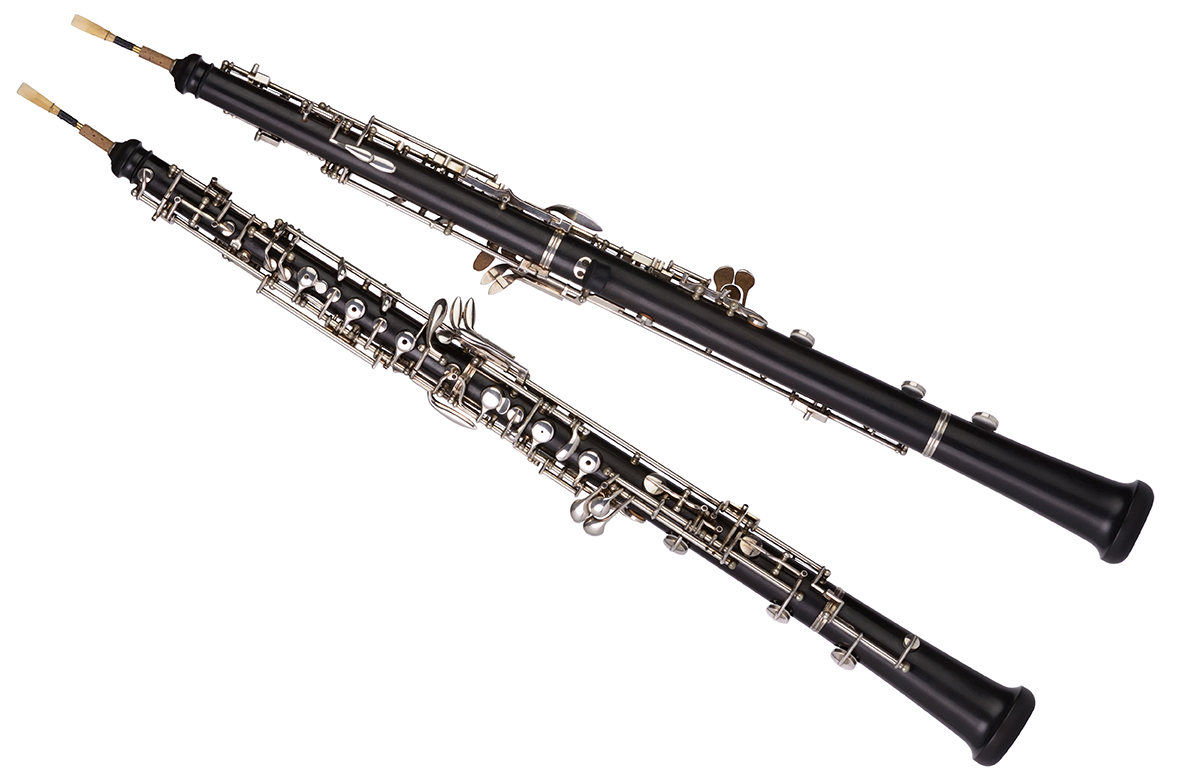
Some woodwind instruments are played using reeds. Reeds are blades of thin cane with the ends scraped down to a featheredge. Woodwind reed instruments may use a single reed or two reeds (a double reed) to produce sound.
The oboe is the main orchestral instrument that belongs to the double reed category. When the oboist places the two reeds between the lips and blows through, the reeds vibrate together, transmitting a burst of energy to the column of air inside the body of the instrument. Handling and working on reeds requires extreme skill. Oboists are forever shaving and adjusting them to achieve the right shape and thickness.
The English horn (which is neither English nor a horn) is simply a lower sounding oboe: a tenor oboe to be precise. During the 18th century, it was used mainly in music for military purposes. By contrast, the standard oboe (pictured at left) has a soprano register. Since the English horn is a member of the oboe family, many oboists also play it, and the instrument sits with the oboes in the symphony orchestra.
The predecessor of the oboe is the shawm, a very popular instrument in its time due to the loud, penetrating sound it was capable of producing. A French court musician, Jean Hotteterre, is credited with inventing the oboe around 1660. The oboe quickly gained popularity, and by 1700 most European orchestras included a pair.
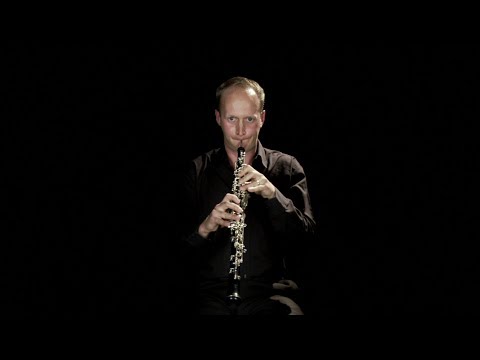
The Oboe
Philharmonia Orchestra
Composer: Alessandro Marcello
-
"Oboe Concerto in D Minor: II. Adagio"
The Clarinet
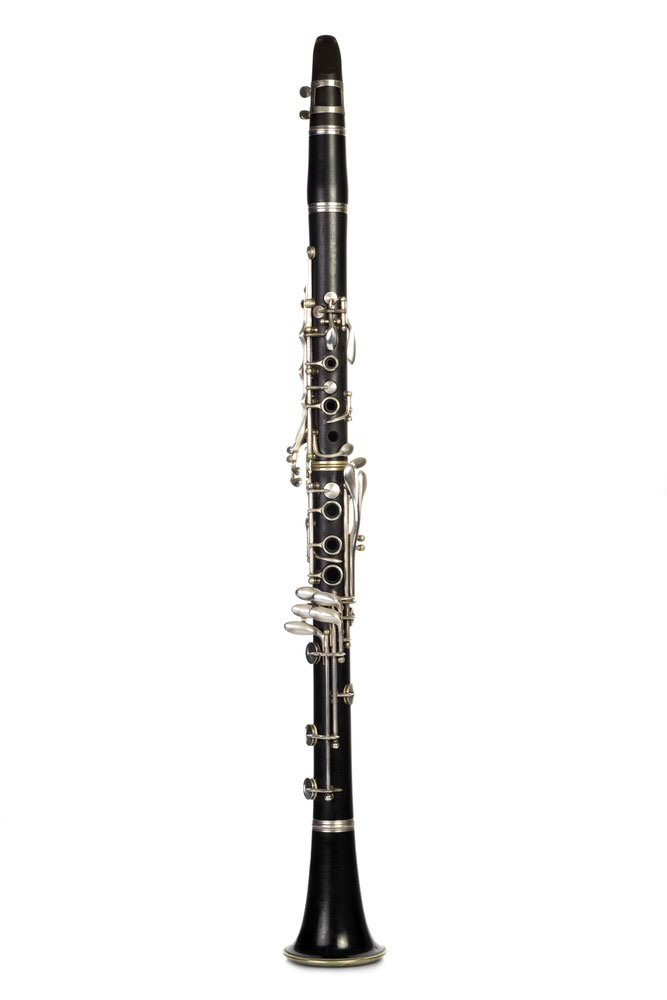
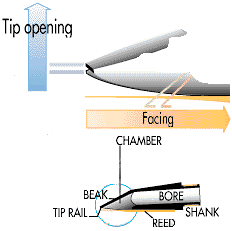
The clarinet is the most recently invented member of the woodwind family. Its shape and size are so similar to the oboe's that it is easy to confuse them. The clarinet, however, is very different from its relative in that a single reed sets in motion the column of air that produces the sound. Also, the clarinet is longer than the oboe—26 versus 23 inches—and its flared bell at the end is also wider than the oboe's. Its timbre, as you may hear from the examples, is also quite different.
Another interesting difference between the clarinet and the oboe is the way the performer uses his or her mouth and teeth to create an embouchure. A clarinetist plays his instrument by forming a tight grip on the mouthpiece with the reed at the bottom. The oboist forms a firm cushion of lips around the paired reeds.
The famous German flute maker Johann Christoph Denner invented the clarinet in Nürnberg in the early 1700s. He did so by adjusting a folk reed pipe to play in a higher register. Like the oboe, the clarinet was so quickly adopted that by about 1780, two clarinets were common in orchestras.
Different types of clarinets cover the usual registers from high to low. Out of about 13 that exist today, six are most commonly used. A symphony orchestra usually includes three clarinets in the keys of A, B-flat, and E-flat (when needed).
The lowest sounding clarinet, the contrabass clarinet, was perfected by Adolphe Sax (1814–1894).
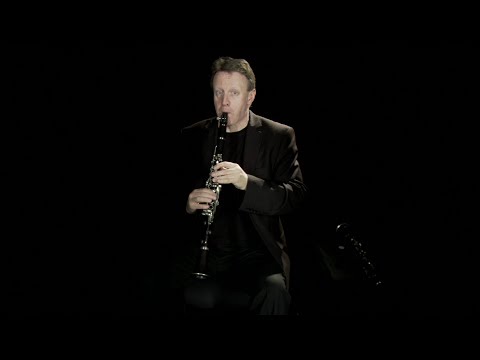
Composer: Wolfgang Amadeus Mozart
-
"Clarinet Quintet in A Major, Op. 108, K. 581: I. Allegro"
Composer: Wolfgang Amadeus Mozart
-
"Clarinet Concerto in A Major, K. 622: II. Adagio" [ 02:17-03:45 ]01:28
The Saxophone
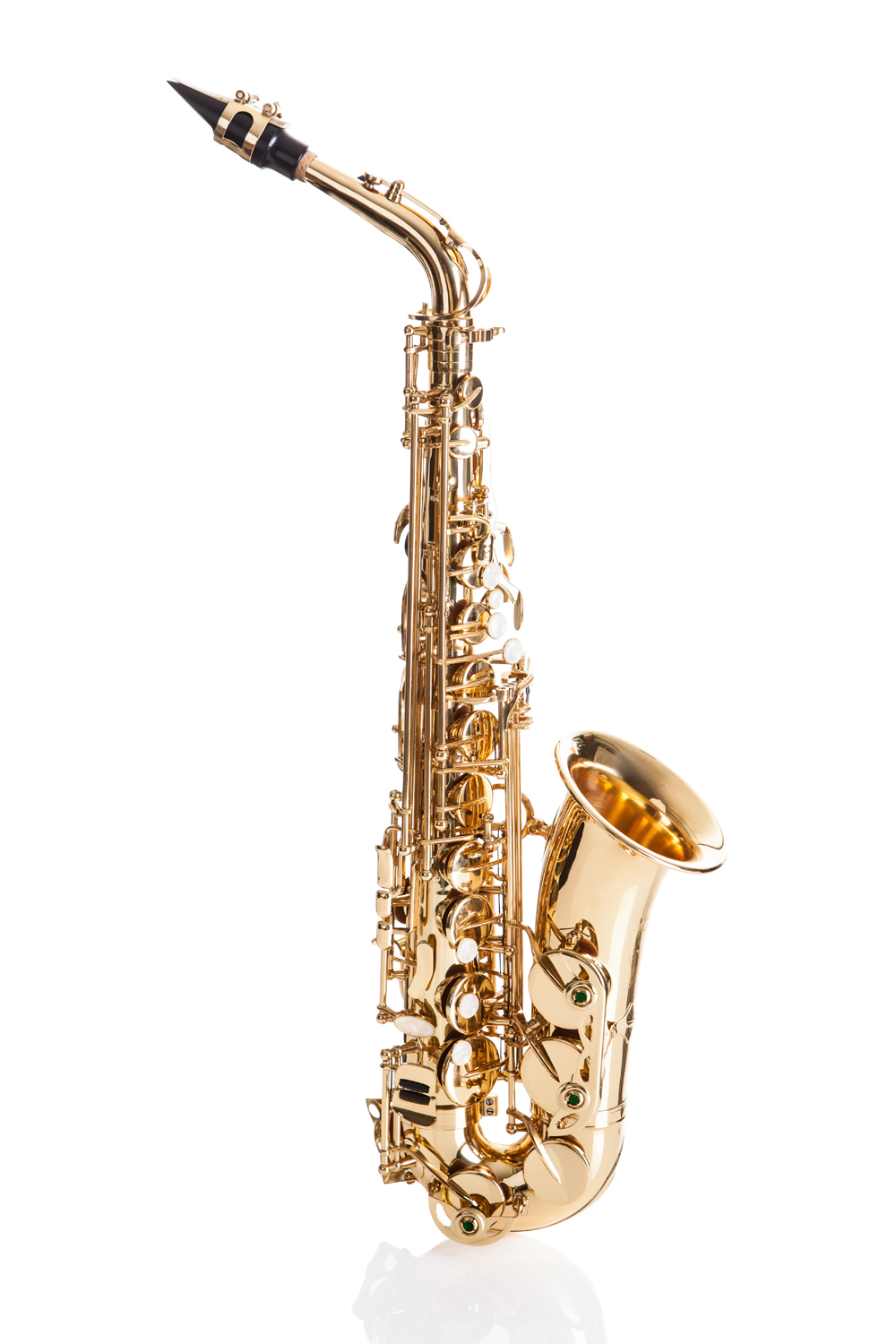
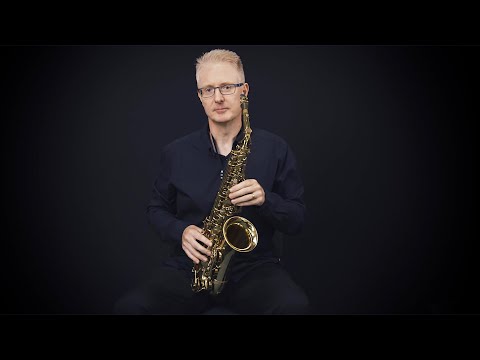
The saxophone (referred to colloquially as the sax) is a family of woodwind instruments usually made of brass and played with a single-reed mouthpiece. Although most saxophones are made from brass, they are categorized as woodwind instruments, because the sound is produced by an oscillating reed (traditionally made out of woody cane) rather than lips vibrating in a mouthpiece cup as with the brass instrument family. As with the other woodwind instruments, pitch is altered by covering holes in the body tube to control the resonant frequency of the air column by changing the effective length of the tube. The player covers or uncovers the holes by pressing keys.
The saxophone is used in classical music (such as concert bands, chamber music, solo repertoire, and, occasionally, orchestras), military bands, marching bands, jazz (such as big bands and jazz combos), and contemporary music. The saxophone is also used as a solo and melody instrument or as a member of a horn section in some styles of rock and roll and popular music. Saxophone players are called saxophonists.
The Saxophone
The Philharmonia Orchestra
Composer: Darius Milhaud
-
"Scaramouche, Op. 165c: II. Modere"
Composer: Claude Debussy
-
"Rhapsodie pour saxophone et orchestre, L. 98: Rhapsody for Alto Saxophone and Orchestra"
The Bassoon
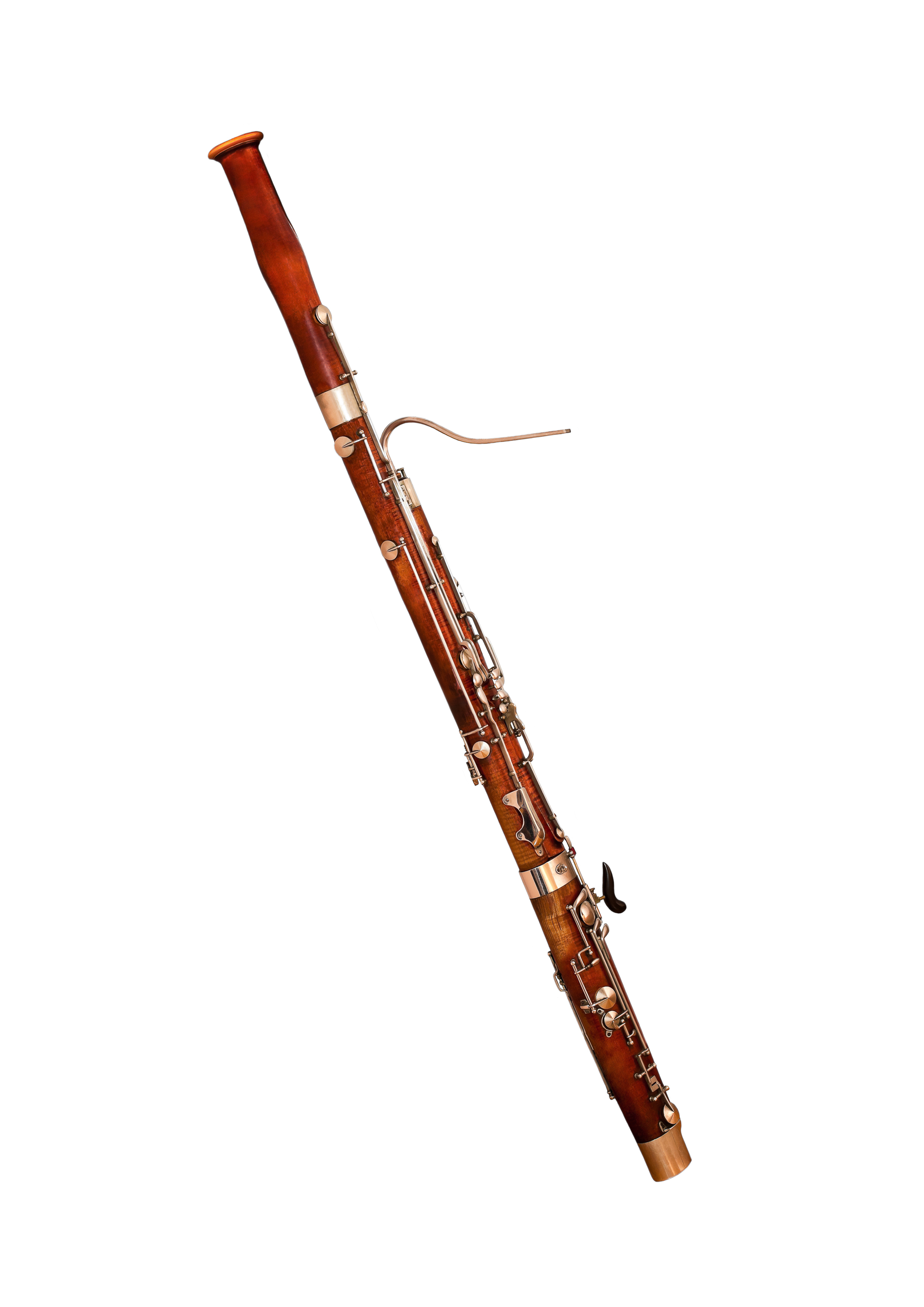
The bassoon is another member of the double reed category of woodwind instruments. Developed in the 17th century, its body consists of four sections. The modern version of this instrument was developed in France around 1636 and later perfected in Germany. Like its other woodwind relatives, the bassoon quickly gained recognition as a solo instrument. It also has a place as a significant member of the traditional symphony orchestra and figures prominently in orchestral, concert band, and chamber music literature. It is known for its distinctive tone color, wide range, variety of character, and agility. The modern bassoon exists in two forms; Buffet (or French) and Heckel (or German) systems. A bassoon player of either system is called a bassoonist.
The bassoon is the principal tenor and bass instrument voice of the woodwind family—and also its biggest member. Notice from the picture that the instrument is folded upon itself. If it were stretched out, the bassoon would measure over eight feet in length.
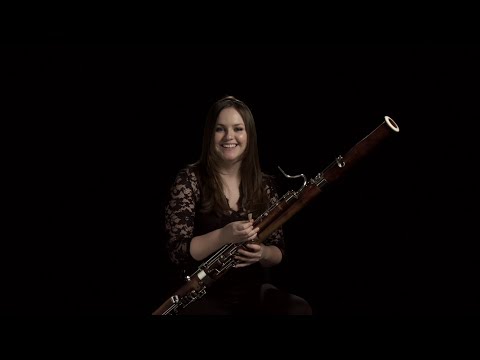
The Bassoon
Philharmonia Orchestra
Listening Examples
Composer: Igor Stravinsky
-
"Le Sacre Du Printemps (The Rite Of Spring): Part I: The Adoration of the Earth"
Composer: Marco Enrico Bossi
-
"Improvisation for Bassoon and Piano"
Composer: Wolfgang Amadeus Mozart
-
"Bassoon Concerto in B-Flat Major, K. 191: II. Andante ma adagio"