
Texture
Introduction
Monophony
Monophonic music, or monophony, consists of a single melody without accompaniment. The melody may be sung or played on an instrument by one or more performers. When many people sing or play exactly the same pitch in unison—or the same pitch duplicated at the octave (such as when men and women sing together)—the resulting texture is referred to as monophonic.
Monophony doesn't necessarily mean that only one singer or instrument is present. However, there may only be one voice. In the context of texture, the term voice refers to a single melody played or sung by one or more performers.
A large number of monophonic pieces are written in plainchant—also known as Gregorian chant. In "Quem quaeritis", a soloist alternates with a female group, but only one line of music (one voice) is sung from the beginning to the end of the piece:
Monophonic music, or monophony, consists of a single melody without accompaniment. The melody may be sung or played on an instrument by one or more performers. When many people sing or play exactly the same pitch in unison—or the same pitch duplicated at the octave (such as when men and women sing together)—the resulting texture is referred to as monophonic.
In the two examples to the right, we hear a single melody sung without accompaniment.
Composer: Anonymous
-
"Quem Quaeritis" [ 00:00-00:14 ]00:14
Composer: Anonymous
-
"Quem Quaeritis" [ 00:52-01:49 ]00:57
Composer: Anonymous
-
"Quem Quaeritis" [ 00:15-00:26 ]00:11
Composer: Anonymous
-
"Quem Quaeritis" [ 00:28-00:50 ]00:22
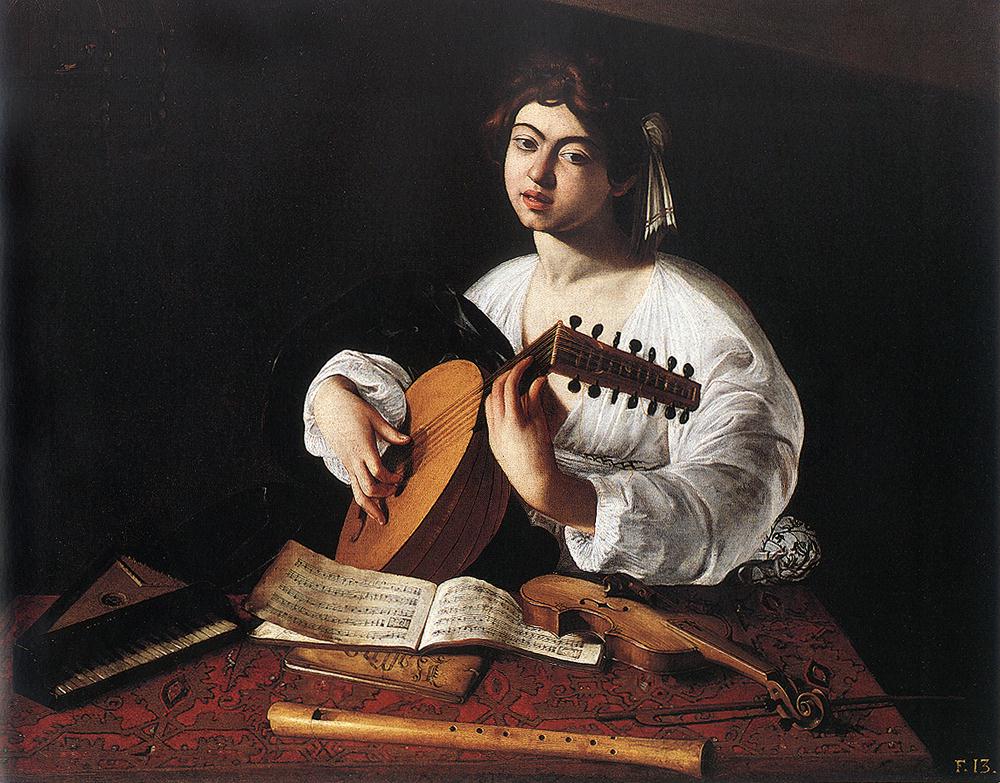
The instrumental introduction to "A la Nana" is a monophonic piece performed by a lute player (lutenist). The lute is a wooden instrument of Arabic origin that flourished throughout Europe from medieval times (13th century) to the 18th century. The original Arabic name for this beautiful instrument was al-oud, which literally means branch of wood. The Moors introduced it to Europe during their conquest and occupation of Spain (711–1492).
Polyphony
Polyphonic music consists of two or more independent melodic lines, roughly equal in their melodic and rhythmic activity, played together. The interaction of the parts creates its own harmony. Independence and equality of voices are the defining characteristics of polyphony. Again, it must be emphasized that in the context of texture, the term voice refers to a single melodic line. Independence refers to that line's ability to compete with other voices for the attention of the listener.
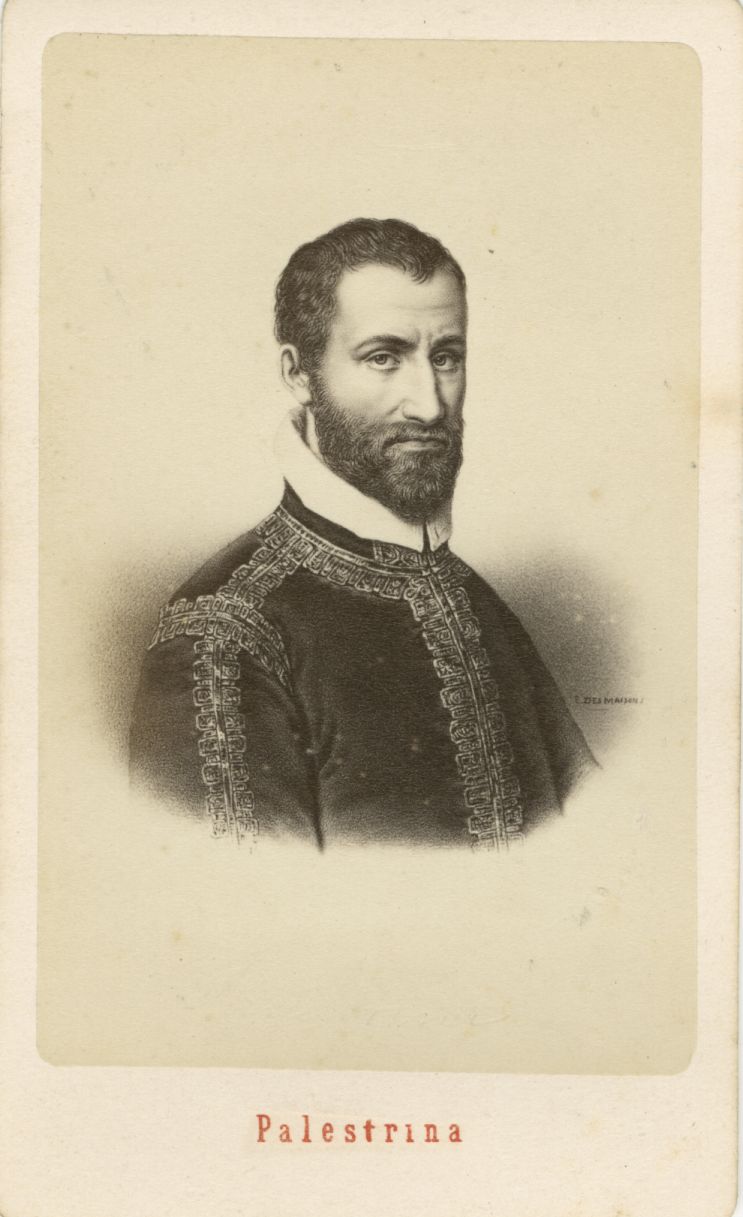
The Kyrie from the Pope Marcellus Mass by Giovanni da Palestrina is an excellent example of polyphony.
Composer: Giovanni Pierluigi da Palestrina
-
"Pope Marcellus Mass: Kyrie"
Texture
Homophony
Homophony is the most commonly found texture in Western music. In homophonic music, a single melodic line usually carries the melody (the “tune”). From most listeners' point of view, that melodic line is heard over the harmonic accompaniment. On most keyboard pieces, for example, the right hand usually carries the main melodic line while the left hand provides the harmonic accompaniment. In popular music, the lead singer sings the vocal melody over the band's harmonic accompaniment.
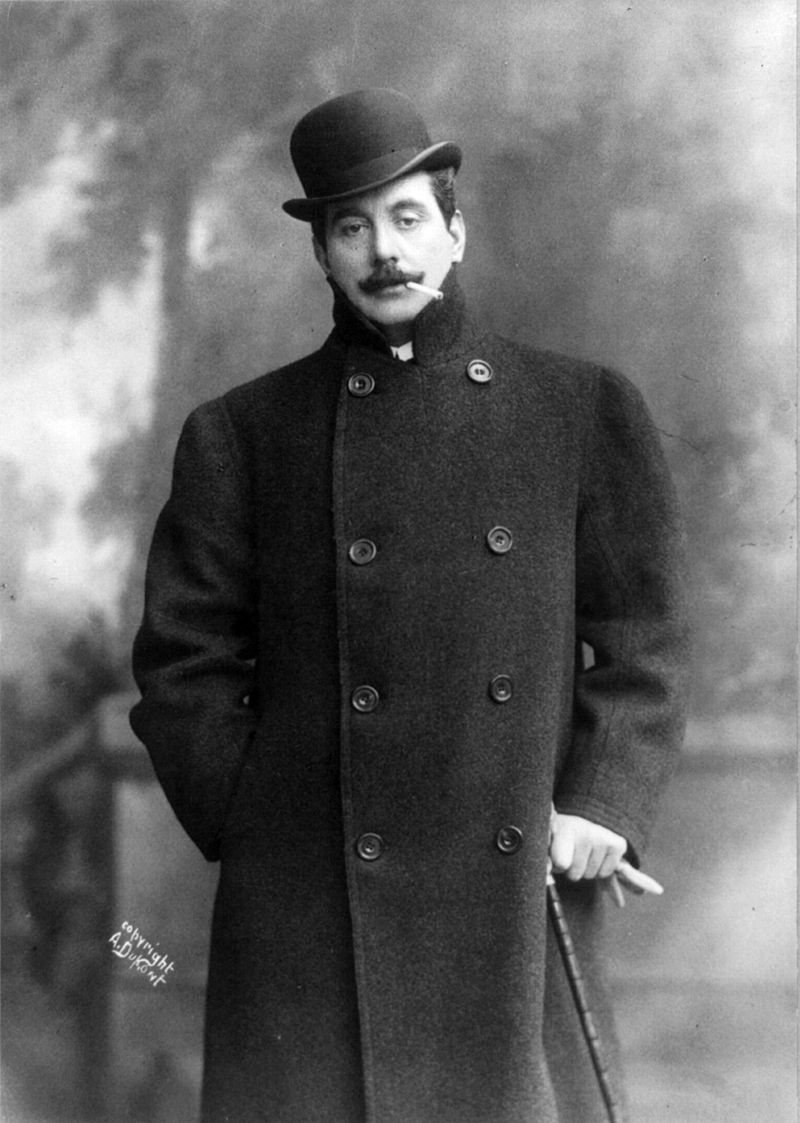
Operatic arias of the Romantic period, notably those by Giacomo Puccini, provide good examples of homophonic music. An aria is a song, tune, or melody sung by a single voice with or without accompaniment, and often, as in the following example, as part of a larger work. "Un bel di", an aria from Puccini's opera Madame Butterfly, is arguably one of the most popular pieces of all time.
Composer: Giuseppe Giacosa
-
"Madama Butterfly: Madama Butterfly, Act II: Un bel di, vedremo"
Mixed Textures
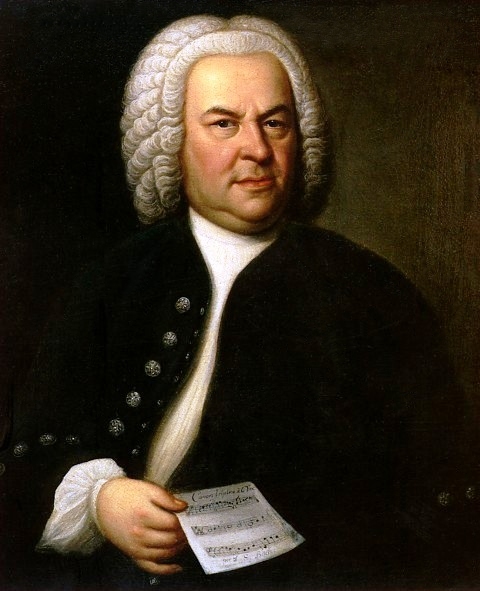
A piece of music doesn't necessarily have to feature only one type of musical texture. Compositions may—and often do—use a combination of textures to achieve different musical effects. An example of homophony and polyphony combined in one work is "Erbarme Dich" ("Have Mercy My God"), an aria from the oratorio St. Matthew Passion. An oratorio is large-scale musical setting of a sacred text, often lasting over two hours.
Considered one of the greatest exponents of polyphonic writing, Bach was a master of changing musical textures to help communicate the message of the text.
Composer: Johann Sebastian Bach
-
"St. Matthew Passion, BWV 244: Erbarme dich, mein Gott"
German
Erbarme dich, mein Gott,
Um meiner Zähren Willen!
Schaue hier, Herz und Auge
Weint vor dir bitterlich.
Erbarme dich, erbarme dich!
English
Have mercy, my God,
for the sake of my tears!
Look here, heart and eyes
weep bitterly before you.
Have mercy, have mercy!
Violin solo: homophony
Composer: Johann Sebastian Bach
-
"St. Matthew Passion, BWV 244: Erbarme dich, mein Gott" [ 00:00-01:01 ]01:01
Alto and violin: polyphony
Composer: Johann Sebastian Bach
-
"St. Matthew Passion, BWV 244: Erbarme dich, mein Gott" [ 01:01-02:50 ]01:49
Second violin solo: homophony
Composer: Johann Sebastian Bach
-
"St. Matthew Passion, BWV 244: Erbarme dich, mein Gott" [ 02:50-03:20 ]00:30
Alto and violin: polyphony
Composer: Johann Sebastian Bach
-
"St. Matthew Passion, BWV 244: Erbarme dich, mein Gott" [ 03:20-05:58 ]02:38
Final violin solo: homophony
Composer: Johann Sebastian Bach
-
"St. Matthew Passion, BWV 244: Erbarme dich, mein Gott" [ 05:58-07:08 ]01:10
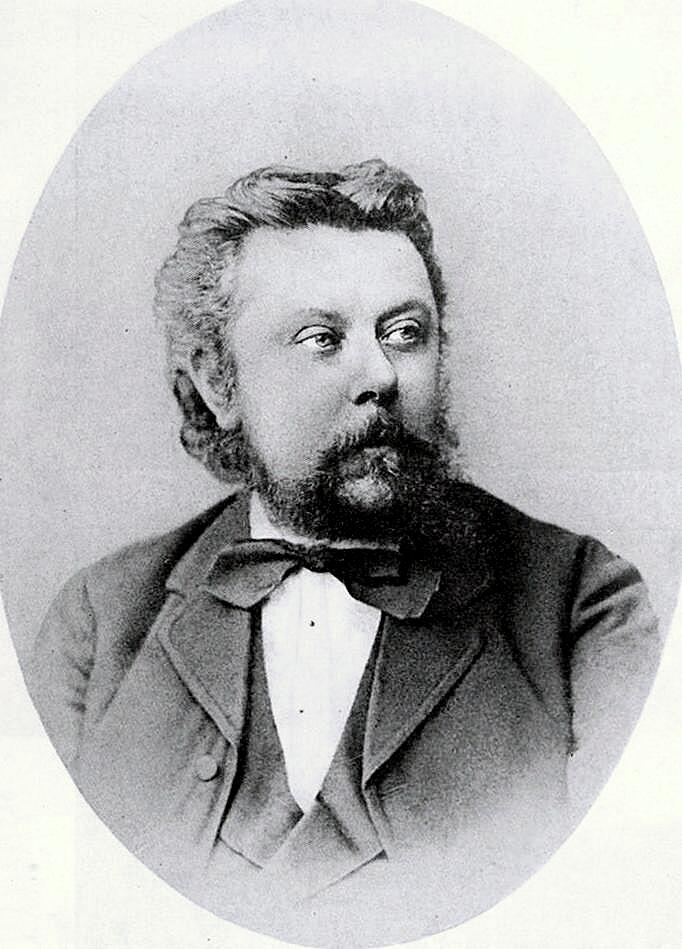
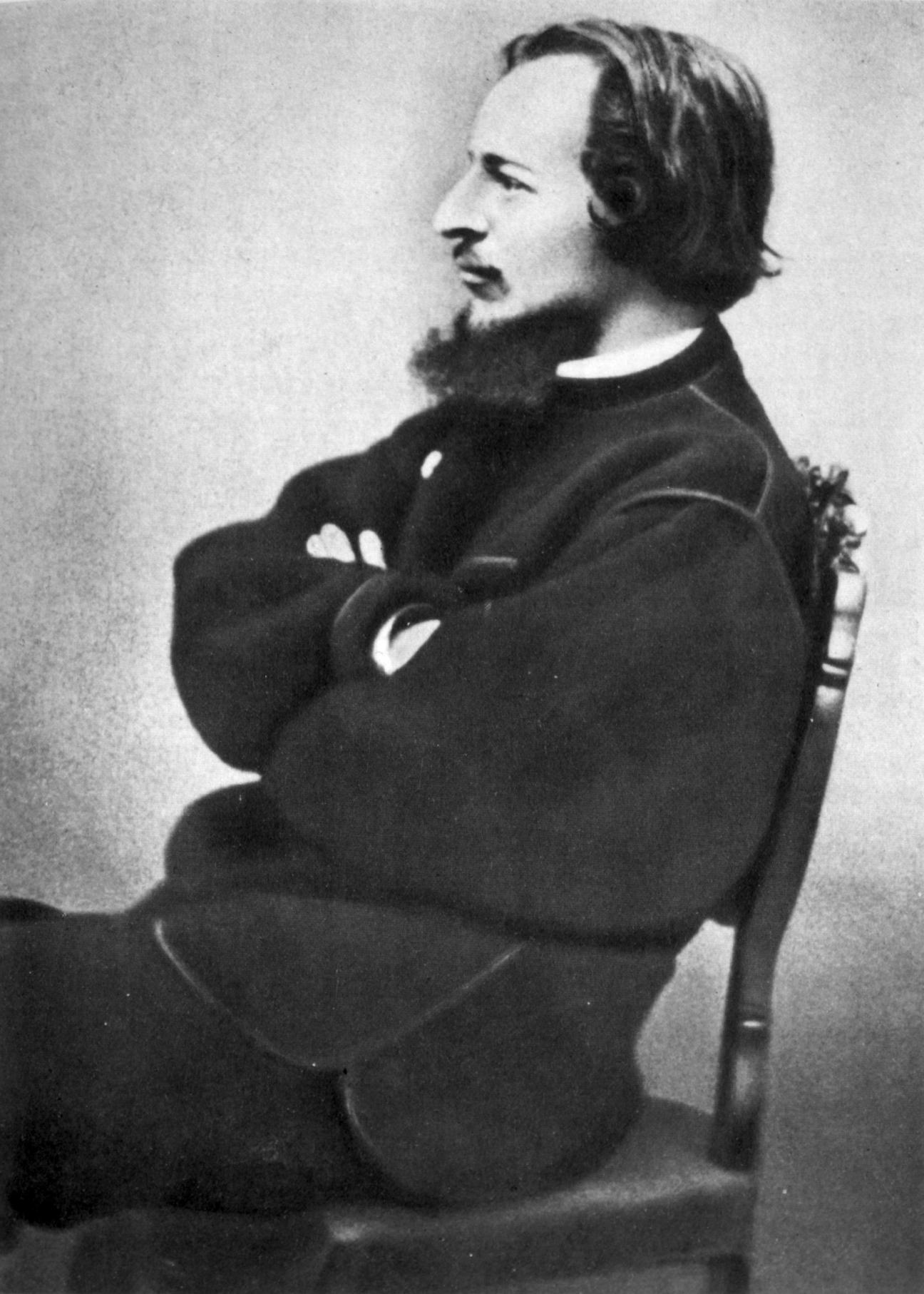
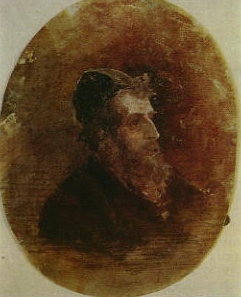
The famous work Pictures at an Exhibition by the Russian composer Modest Mussorgsky (1839–1881) was inspired by an exhibition of paintings by his close friend, Victor Hartmann (1834–1873). "Samuel Goldenberg and Schmuyle", a movement from this piece, portrays two men discussing a debt. One of them, Goldenberg (represented as Theme 1), is rich and powerful while the other, Schmuyle (Theme 2), is poor and common. This movement combines all three musical textures commonly found in Western music. Thus, taken as a whole, this movement is considered a work of mixed texture.
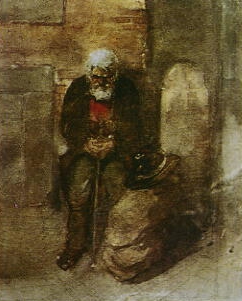
Theme 1 (Goldenberg): Monophonic texture
Composer: Modest Mussorgsky
-
"Pictures At An Exhibition" [ 17:12-17:58 ]00:46
Theme 2 (Schmuyle): Homophonic texture
Composer: Modest Mussorgsky
-
"Pictures At An Exhibition" [ 17:59-18:41 ]00:41
Themes 1 and 2 (Goldenberg and Schmuyle discuss debt): Polyphonic texture
Composer: Modest Mussorgsky
-
"Pictures At An Exhibition" [ 18:46-19:11 ]00:24
"Goldenberg and Schmuyle": Monophonic texture followed by homophonic, and polyphonic textures.
Composer: Modest Mussorgsky
-
"Pictures At An Exhibition" [ 17:12-19:12 ]02:00
Form
Introduction
Form may be thought of as a pattern or a roadmap—a plan. Form is essential to every art: literature, architecture, dance, music, etc. Like liquid poured into a container, each novel, building, dance composition, and symphony fits into a structure. For example, a novel is a literary form built around literary elements (characters, scenes, and plots) organized into chapters according to established literary and grammatical principles. Similarly, a symphony is a musical form built around musical elements organized into movements according to principles of music and composition.
In the last two sections, we have covered the fundamental elements of music, including concepts such as pitch, timbre, rhythm, melody, harmony, and texture. We are now ready to study how these elements come together into the framework of a musical form.
"Form: the constructive or organizing element in music."
New Grove's Dictionary of Music and Musicians.
Musical form may be defined as the overall structure and organization of the flow of musical time. Consider a symphonic work: even though each section or movement of that symphony has its own formal design, they ultimately fit into the overall design of the whole work (like chapters in a novel.) The form of a musical piece can act as its main unifying element. Understanding the big picture as well as the underlying components of musical form will greatly enhance your appreciation of music—it will show you how compositions are put together.
By studying form, it is possible to learn how composers hold the listener's interest through the manipulation of two essential factors already familiar to us: unity and variety. Unity is achieved mainly through repetition; variety is achieved through change and contrast. For music to be interesting, it must feature both. When a listener hears a composition, the mind remembers certain sounds and musical phrases that act as signposts. The recognition of these signposts calls attention to what is repeated and what is altered. That way, we maintain our musical bearings. For example, in Les Barricades Mistérieuses, François Couperin repeats a musical idea enough times to make sure that the listener becomes closely acquainted with it.
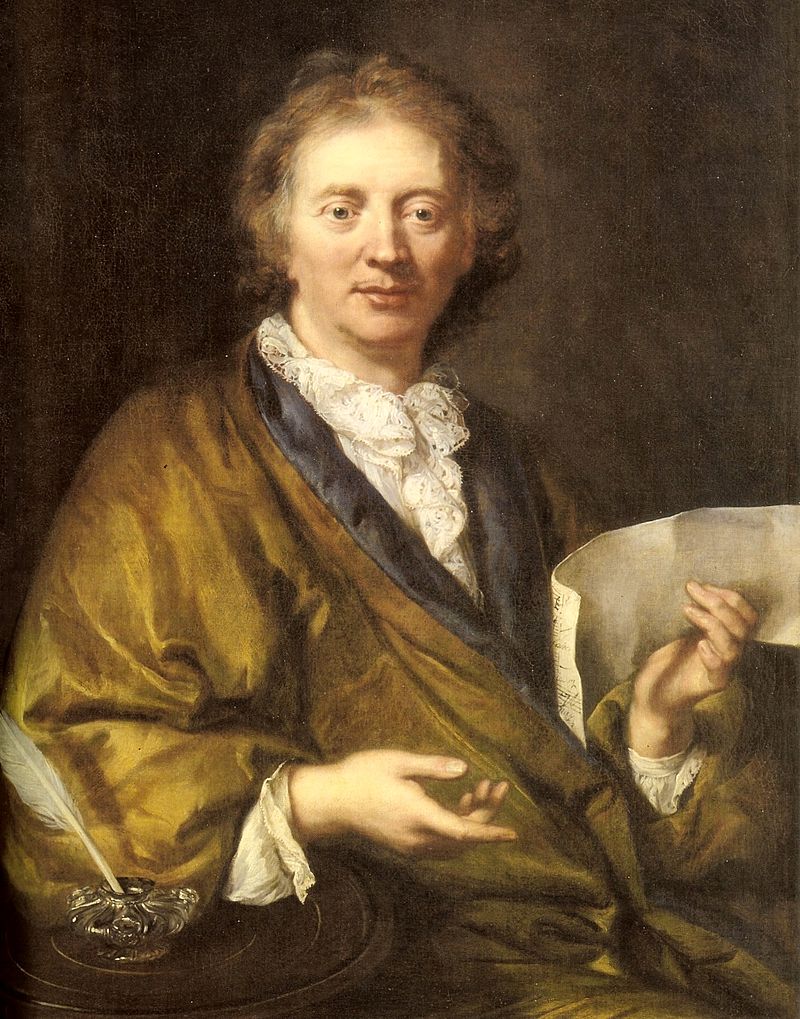
Form may be based on the principle of repetition, on the principle of contrast, or a combination of the two.
Among the musical forms based on the principle of repetition are the strophic form, theme and variations, and rondo form. Binary forms are based on the principle of contrast, while ternary form uses a mixture of repetition and contrast.
"My Lord What a Morning"
Anna Magdalena Bach Notebook, Book 2: Minuet in G Major, BWV Anh.114J.S. Bach: Cello Suite No. 5: Sarabande
F. Chopin: Mazurka No. 24 in C major
W.A. Mozart: Twelve variations on "Ah vous dirai-je, maman"
L. van Beethoven:
Sonata Op. 13 (Pathétique): III. Rondo
Let's start by looking at with forms based on the principle of repetition.
Rondo Form
Rondo form is another musical pattern based on the principle of repetition. In a rondo, the main theme reappears at least three times, often more. The theme and its repetitions are clearly separated by contrasting episodes.
The third and final movement of Beethoven's Pathétique Sonata in C minor, Op. 13 illustrates the outline of the rondo form. The form of this movement may be represented by the pattern A-B-A-C-A-D-A-E, where A is the theme and the letters in between represent the contrasting episodes.
Composer: Ludwig van Beethoven
-
"Piano Sonata No. 8 in C Minor, Op. 13, "
Strophic Form
Strophic form is mainly used in songs that contain verses (strophes), usually four to eight phrases long. In this form, each verse is sung to the same music with the melody and harmony unchanged. Joseph Joubert, the arranger of the African American spiritual "My Lord What a Morning", introduces two unusual elements of variation into the piece: an introduction (prelude) and a closing statement (postlude). These create interest without altering the basic form of the work. Listen also to the slight variations in the melody that vocalist Barbara Conrad uses to introduce Barbara Parker, the soprano that joins her. Can you detect where the changes occur?
Composer: Anonymous
-
"My Lord What a Morning"
Orchestral Introduction
Composer: Anonymous
-
"My Lord What a Morning" [ 00:00-00:16 ]00:15
After the orchestral introduction, the first verse—the refrain—comes back after each subsequent strophe. Each strophe is made up of two phrases. The form of the song may be summarized as follows:
Strophe 1: Phrase 1
My Lord, what a mornin'
My Lord, what a mornin'
Composer: Anonymous
-
" My Lord What a Morning" [ 00:18-00:31 ]00:13
Strophe 1: Phrase 2
My Lord, what a mornin'
When the starts begin to fall
Composer: Anonymous
-
"My Lord What a Morning" [ 00:32-00:45 ]00:13
The rest of the spiritual uses the same two-phrase structure for each strophe:
Strophe 2
You'll hear the trumpet sound
to wake the nations underground,
Lookin' to my God's right hand,
when the stars begin to fall
Composer: Anonymous
-
"My Lord What a Morning" [ 00:46-01:15 ]00:29
Refrain
My Lord, what a mornin'
My Lord, what a mornin'
My Lord, what a mornin'
When the starts begin to fall
Composer: Anonymous
-
"My Lord What a Morning" [ 01:16-01:45 ]00:29
Strophe 3
You'll hear the sinners mourn
to see the righteous marching home.
Lookin' to my God's right hand,
when the stars begin to fall
Composer: Anonymous
-
"My Lord What a Morning" [ 01:47-02:17 ]00:30
Refrain
My Lord, what a mornin'
My Lord, what a mornin'
My Lord, what a mornin'
When the starts begin to fall
Composer: Anonymous
-
"My Lord What a Morning" [ 02:16-02:43 ]00:26
Strophe 4
You'll hear the faithful shout
to wake the nations underground.
Lookin' to my God's right hand,
when the stars begin to fall
Composer: Anonymous
-
"My Lord What a Morning" [ 02:43-03:12 ]00:28
Refrain
My Lord, what a mornin'
My Lord, what a mornin'
My Lord, what a mornin'
When the starts begin to fall
Composer: Anonymous
-
"My Lord What a Morning" [ 03:12-03:44 ]00:31
Learn More about this African American spiritual.
Binary Form
Binary form is the simplest form composers use. Based on the principle of contrast, it consists of two sections, represented by the pattern A-B.
The two sections of a piece in binary form are clearly related, but they may differ in any one aspect or a combination of aspects—such as key, mood, texture, tempo, theme, or dynamic level. In the following example, the composer uses the same theme in both sections but introduces contrast by using different keys.
Binary form was commonly used in the Baroque era in short dances called minuets. The minuet has two sections that we can label "A" and "B." In the A section of a minuet, the exposition is stated. This section is usually repeated. The beginning part of the B section develops a slightly new musical idea to add variety. The "B" section can also be repeated.
Composer: Johann Sebastian Bach
-
"Notenbüchlein vor Anna Magdalena Bach, Book 2: Minuet in G Major, BWV Anh.114"
Section A
Composer: Johann Sebastian Bach
-
"Notenbüchlein vor Anna Magdalena Bach, Book 2: Minuet in G Major, BWV Anh.114" [ 00:00-00:44 ]00:44
Section B
Composer: Johann Sebastian Bach
-
"Notenbüchlein vor Anna Magdalena Bach, Book 2: Minuet in G Major, BWV Anh.114" [ 00:45-01:31 ]00:47
Now, listen to a more challenging example: The Sarabande from the Cello Suite No. 5 in C minor also by Johann Sebastian Bach. This piece is also in two-part. Note carefully the two sections:
Composer: Johann Sebastian Bach
-
"Cello Suite No. 5 in C Minor, BWV 1011: IV. Sarabande"
Section A
Composer: Johann Sebastian Bach
-
"Cello Suite No. 5 in C Minor, BWV 1011: IV. Sarabande" [ 00:00-01:27 ]01:26
Section B
Composer: Johann Sebastian Bach
-
"Cello Suite No. 5 in C Minor, BWV 1011: IV. Sarabande" [ 01:26-02:30 ]01:04
Ternary Form
Ternary form is based on a combination of the principles of repetition and contrast. If binary form is represented by the pattern A-B, then ternary form follows an A-B-A pattern.
While A represents one section and B represents a contrasting section, the recurrence of A may be varied or an exact repetition of the original section. It will be readily apparent to the listener that section B is in complete contrast to both A sections. Ternary form may be considered a “musical sandwich” consisting of an initial section, a second section that contrasts against both the first and the third sections, and a third section that is either the exact or a slightly varied repetition of the first. In ternary form, each section may contain subsections and various repetition schemes.
The Mazurka No. 24 in C major, Op. 33, No. 3 by Frédéric Chopin is a perfect example of ternary form:
Composer: Frédéric Chopin
-
"Mazurka No. 24 in C major, Op. 33, No. 3"
Variations
Composer: Wolfgang Amadeus Mozart
-
"12 Variationen über "
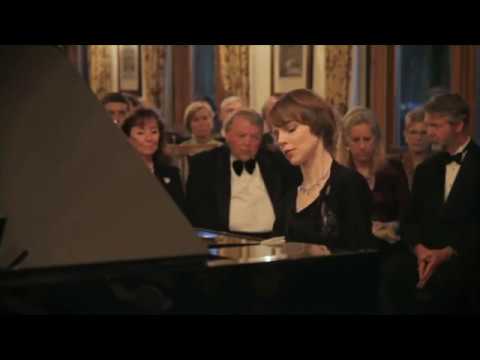
Mozart: Variations on "Ah vous dirai-je, Maman," K. 265/300e; Magdalena Baczewska, piano
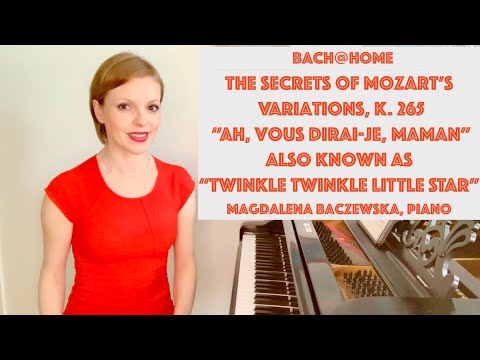
The Secrets of Mozart's Variations Ah, vous dirai-je maman (Twinkle Twinkle Little Star)