
Learning Objectives
- Explain the difference between casual listeners, referential listeners, critical listeners, and perceptive listeners.
- Discuss the casual listener's approach to music and the use of certain pieces of music, e.g., Johann Sebastian Bach's Air from Suite No. 3 in D major, BWV 1068, as background or mood music.
- Discuss the referential listener's approach to music and the use of certain pieces of music, e.g., Hector Berlioz's Symphonie Fantastique, as program music.
- Discuss the critical listener's motivation to music listening and how her/his approach differs from that of the casual and the referential
Types of Listeners
Introduction
People appreciate music for a wide variety of reasons. A given listener may enjoy a piece of music because of its depth of artistry, because it sounds nice, or because it triggers a particular memory. Over time, certain types of listeners have been identified and labeled to illustrate key differences in listening styles. Four of the most common classifications include:
- casual listeners,
- referential listeners,
- critical listeners, and
- perceptive listeners.
This list is not mutually exclusive; a person may be more than one type of listener at any given time. These categories are only useful to help illustrate how people approach music.
It is important to keep in mind that listening to music as an isolated activity is a recent phenomenon, relative to the history of music. The ability to record music has made it possible for people to listen to and enjoy it at their own convenience. The gramophone was invented in 1897, the electric phonograph in 1925, the personal stereo tape player in 1979, and digital players in 1998. One hundred years ago, people could not have imagined the amount of recorded material available today.
Historically, with some notable exceptions such as the Concert spirituel in Paris, concerts were not open to the general public; rather, they were intended for the private enjoyment of wealthy and royal patrons. In the nineteenth century, when the feudal system of government in Europe collapsed, a growing number of people started purchasing access to orchestral concerts by subscription. While music continued to be performed in the royal courts or aristocratic homes, the growing merchant and middle classes began to take pleasure in musical entertainment, and they viewed concert attendance as a form of social advancement. Before then, composers likely did not intend for their works to be heard in a concert or performance setting, but rather to be played or sung as part of a social or religious occasion in which the center of attention was something other than the music itself. Nowadays, evolving broadcasting, recording, and digital music technologies have made all types of music widely available to everyone.
The Casual Listener
In his own words...
"To listen is an effort, and just to hear is no merit. A duck hears also."
Igor Stravinsky (1882–1971)
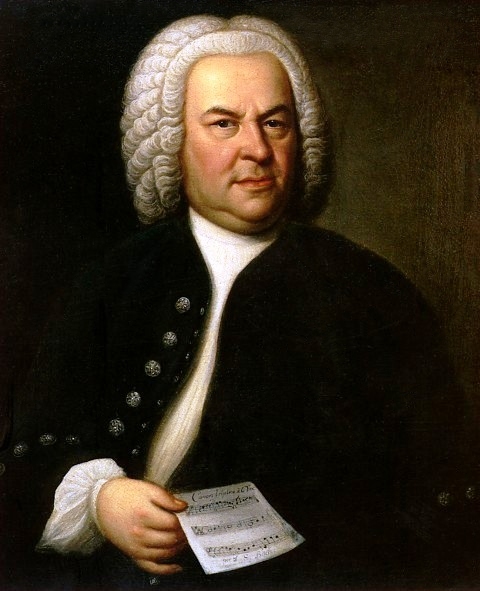
Composer: Johann Sebastian Bach
-
"Overture (Suite) No. 3 in D Major, BWV 1068 (arr. L. Rose for cello and piano): Suite No. 3 in D Major, BWV 1068: Air (trans. L. Rose)"
Casual listeners are probably the most common type of listeners. So, what is a casual listener? This type of listener likes having music fill the environment with sound. Whether present as a background to drive, study, work, exercise, or hang out with friends, music is an accompaniment to the casual listener’s daily activities. Sometimes the music simply masks the sounds of a noisy street. The casual listener may be conscious of the sound or merely consider it part of the environment. In any case, this type of listener views music primarily as a mood enhancer or as pleasant part of the environment.
In a hectic world, people often try to find relaxation through music. Music becomes a wash of sound that soothes nerves, calms the spirit, and in some cases, even aids the practice of meditation. A piece frequently used for this purpose is the"Air" from Suite No.3 in D major by J.S. Bach, an orchestral work characterized by its slow, carefully modulated pace. In general, slow movements tend to be relaxing. Tuning in to a favorite soothing piece of music may dispel tension and frustrations and help unwind after a stressful day.