
Learning Objectives
- Explain the difference between casual listeners, referential listeners, critical listeners, and perceptive listeners.
- Discuss the casual listener's approach to music and the use of certain pieces of music, e.g., Johann Sebastian Bach's Air from Suite No. 3 in D major, BWV 1068, as background or mood music.
- Discuss the referential listener's approach to music and the use of certain pieces of music, e.g., Hector Berlioz's Symphonie Fantastique, as program music.
- Discuss the critical listener's motivation to music listening and how her/his approach differs from that of the casual and the referential listener.
- Discuss the perceptive listener's approach to music listening and how their listening attitude combines, but is not limited by that of the casual, referential, and critical listener.
- Explain the difference between program music and absolute music.
- Review Berlioz's Symphonie Fantastique and Vivaldi's The Four Seasons (Le Quattro Stagioni) as examples of program music.
- Define the following musical terms: absolute music, ideé fixe, program music, symphony, tempo, and theme.
Types of Listeners
The Referential Listener
Sometimes music may remind people of past events, or it may bring to mind particular images, feelings, or situations. At times, these external references are so strong that the music is not really heard anymore; instead, the listener is caught up in the memories of the person, event, or feeling. Although it is undeniable that extra-musical connections or associations may be developed through listening, referential listeners tend to relate to music exclusively in that way.
Composers are aware of the associative power of music and sometimes intentionally title their compositions to bring certain connections to mind. Music of this type may follow an explicit story or program, and is therefore known as program music. By contrast, music that is not associated with a particular story, image, object, or event is called absolute music. Regardless of the composer’s intent, those whose main connection with music is through memories of some sort are known as referential listeners.
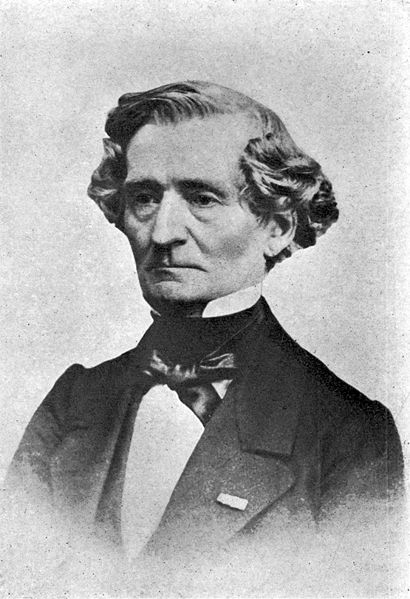
In 1827, Hector Berlioz, then a 23-year-old French composer, fell madly in love with an Irish Shakespearean actress named Harriet Smithson, who, much to his chagrin, coldly rejected him. To impress and win her affection, he set off to compose a gigantic autobiographical work, a love letter that occupied him for the next three years of his life. The Symphonie Fantastique was the first major symphony to include a detailed story (lurid details included) for each movement. Berlioz did eventually marry Smithson in 1833, with predictably disastrous consequences.
Example of Program Music
In the Symphonie Fantastique, a young, lovesick musician in the throes of a desperate, impossible passion takes a large dose of opium with the intention of killing himself. Instead, he has wild hallucinations. The five movements of the symphony represent different hallucinogenic episodes in the life of the artist.
Berlioz wrote lengthy program notes for this symphony. The ones excerpted here were published in 1845 (the capitalized words are his). The composer deemed them "indispensable for a complete understanding of the dramatic outline of the work."
The first movement represents the passion of the lovesick musician. In it, the beloved is represented by a musical theme that appears in every movement, recurring as an obsession or idée fixe—an idea that continually haunts the artist. About this movement Berlioz wrote:
Composer: Hector Berlioz
-
"Symphonie Fantastique, Op. 14: IV. March To The Scaffold"
In the second movement, "A Ball," the artist sees his beloved across the room, and the initially calm waltz evolves into a mad swirl. Berlioz wrote:
The third movement, "Scene in the Fields," depicts a peaceful country scene in which the artist's intoxicated mind is tinged with dark suspicions that his beloved is not being faithful to him. Berlioz wrote:
(The term ranz des vaches refers to a Swiss cattle herder's song, a type of folk song also used by other composers.)
To illustrate how Berlioz depicts events with music, the following description corresponds to a section of the fourth movement, which Berlioz titled "March to the Scaffold":
Composer: Hector Berlioz
-
"Symphonie Fantastique, Op. 14: IV. March To The Scaffold"
Composer: Hector Berlioz
-
"Symphonie Fantastique, Op. 14: IV. March To The Scaffold" [ 03:45-04:21 ]00:36
Composer: Hector Berlioz
-
"Symphonie Fantastique, Op. 14: IV. March To The Scaffold" [ 04:28-04:52 ]00:24
"March to the Scaffold" depicts the young artist as he marches to the scaffold to be executed for his crime of passion, having killed his beloved in a fit of jealousy. Berlioz wrote:
The drama increases with the fifth and final movement, "Dreams of a Witches' Sabbath." The artist burns in hell, while his beloved, transformed into a horrible witch, mocks him for all eternity. Of this movement Berlioz wrote:
Composer: Hector Berlioz
-
"Symphonie Fantastique, Op. 14: IV. March To The Scaffold" [ 01:33-01:39 ]00:06
Composer: Hector Berlioz
-
"Symphonie Fantastique, Op. 14: V. Dreams of a Witches' Sabbath" [ 01:40-02:59 ]01:19
Composer: Hector Berlioz
-
"Symphonie Fantastique, Op. 14: V. Dreams of a Witches' Sabbath" [ 07:02-09:52 ]02:50