
Overview
Objectives
- Examine Elvis Presley's music and his particular blend of many different styles and genres.
- Identify the key figures and institutions that helped turn Presley into the cultural phenomenon that he became during the 1950s
- Examine ways in which Presley was turned into a commodity through television appearances and Hollywood films
The Hillbilly Cat
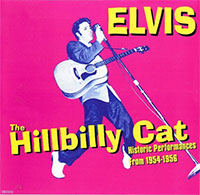
Presley’s recordings for Sun presented a serious marketing dilemma because they did not fit neatly into any generic boxes. Were they country and western? Rhythm and blues? Presley was proud of his fluidity between genres even before he signed his first recording contract: according to Sam Phillips’s secretary at Sun Records, when asked what kind of singer he was and who he sounded like, Presley would only say, "I don’t sound like nobody."
He was initially billed as "The Hillbilly Cat" or "The King of Country Bop," both titles attempting to convey his simultaneous country and rhythm and blues sounds. All ten sides that Presley recorded for Sun Records were marketed as country recordings, although they combined country with rhythm and blues. But Presley was not exactly a country star, at least as far as country music audiences and other country musicians of the time were concerned. Phillips secured Presley a performance at the Grand Ole Opry, in which he sang "Blue Moon of Kentucky ♫" to a nearly silent audience. Jim Denny, a talent scout for the Opry, suggested that Presley take up truck driving again.
Yet others heard Presley as a rhythm and blues artist, not a country singer. Nobody could agree on a place for this young singer’s music. According to Sam Phillips, "I recall one [disc] jockey telling me that Presley was so country he shouldn’t be played after 5 AM. And others said he was too black for them." During a now-legendary radio interview with Memphis disc jockey Dewey Phillips (no relation), Phillips made it a point to ask Presley which high school he had attended. By responding that he had attended Humes High School, which was all white, Presley thus indirectly told the audience that he was white—a fact that surprised many listeners.
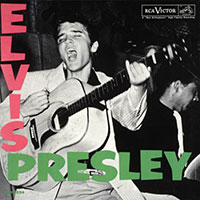
Phillips knew that he had a star in the making, but he had to figure out how to market him. According to Phillips’s secretary, "Over and over, I remember Sam saying, ‘If I could find a white man who had the Negro sound and the Negro feel, I could make a billion dollars.’"
Regardless of the marketing dilemma, Presley’s music quickly became infectious. Sam Phillips sent a recording of Presley’s "That’s All Right ♫" to the disc jockey Dewey Phillips, who ended up playing the record thirty times in a single night on his Red, Hot, and Blue radio show. The on-air support of Dewey Phillips helped secure 5,000 orders for the record by the time it was pressed. Sam Phillips then sent his brother, Jud, to Cleveland with a several records by Presley. Most of the Cleveland disc jockeys rejected the records, but Bill Randle — with a keen musical ear and a shrewd businessman’s killer instinct—knew he was listening to pure gold. He played one Presley recording every fifteen minutes all weekend long. According to Randle, "I don’t know what those Presley records have, but I put them on yesterday, and the switchboard lit up like Glitter Gulch in Las Vegas. He hits them [the kids] like a bolt of electricity. My phone hasn’t stopped ringing and I haven’t been able to stop playing those records." This hybridity of styles contributed to what is now known as the rockabilly style, which we will focus on in greater detail in later lessons.
Although these early recordings at Sun Records were an important part of Presley’s career and output, he did not achieve his meteoric rise to superstardom and international celebrity until he began working with Colonel Tom Parker.



Sam Phillips did the original recording for Jackie Brentson's "Rocket 88" on March 5, 1951. The song was famously covered by Bill Haley later that year.
