
Overview
Objectives
- Examine the roots of soul music and the cultural and economic factors that led to its creation
- Identify several prominent artists from the genre of soul music including Sam Cooke, the Supremes, the Temptations, and Aretha Franklin
- Identify several record labels that were critical to the development of soul music, including Motown, Atlantic, and Stax
Atlantic and Stax
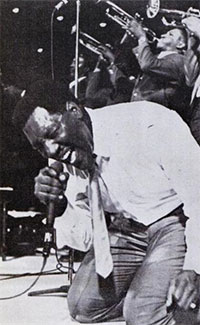
Atlantic was formed in 1947 by Ahmet Ertegun, the son of the Turkish ambassador to the United States. Journalist and critic Jerry Wexler joined Atlantic in 1953, and he was a critical force in the signing and recording of such artists as Ray Charles, Wilson Pickett, and Aretha Franklin.
Atlantic prided itself on created a sound that was different from the sweet soul of Sam Cooke and from the Motown sounds produced by Berry Gordy in Detroit. Atlantic focused on a style called southern soul a style developed at Atlantic Records that drew significant influence from gospel music , which drew significant influence from gospel music and was typically more enthusiastic and expressive than its northern counterparts. Many white listeners believed that gospel music was an "authentic" expression of African American culture, and, for better or for worse, the crossover success of Atlantic recording artists took advantage of this white fascination with the sounds of gospel-influenced southern soul music. They worked closely with a smaller label, Stax, in order to find the artists who best captured this sound and style.
Stax was a small, Memphis-based label that formed a relationship with Atlantic during the 1960s. Frequently, a large record company would license recordings from smaller record labels; this allowed small labels to focus their energies on recording new and exciting musicians while large labels handled the pressing of records and the promotional aspects, both of which were often beyond the financial means of a small company. During the 1960s, Atlantic had right of first refusal on any music produced by Stax, an arrangement which proved to be beneficial for both companies.
Like Motown, Stax relied on a studio band. Booker T and the MGs provided the music for artists such as Otis Redding, Wilson Pickett, and Sam and Dave. Unlike Motown’s studio band, Booker T and the MGs did not play from prepared arrangements. Instead, they often came up with their backing tracks on the spot. The Stax sound included a horn introduction and a delayed backbeat, in which the entrances of the guitar and snare on beats 2 and 4 come so late on the beat that they almost feel like they are out of time. Like the music of Motown, most Stax songs are in simple verse form and do not use choruses. Booker T and the MGs also achieved some success as a band, recording "Green Onions ♫" in 1962, which went to number 1 on the rhythm and blues charts.
Another huge hit-maker for Stax (and Atlantic) was the singer-songwriter Otis Redding. Redding recorded a number of crossover hits during the 1960s, including "These Arms of Mine ♫," "Try a Little Tenderness ♫," and "Sittin’ on the Dock of the Bay ♫." Redding was at his best when he sang ballads, and his gospel-soaked vocal style brought a plaintive sound to many of his recordings. He would often interpolate words such as "please" and "gotta" between the phrases of his songs, which lent the recordings a pleading quality. Redding was killed in a plane crash in 1967, just after he performed at the Monterey Pop Festival, backed by Booker T and the MGs. Redding was the only African American musician who performed at Monterey except for Jimi Hendrix. Redding’s singles brought significant exposure to the Stax sound and to Southern soul music more generally. Redding was also a songwriter. He was the first artist to record his most famous song, "Respect (Redding) ♫," but he did not record the definitive version of it. That honor belongs to Aretha Franklin.
Aretha Franklin grew up in Detroit, the daughter of the famous Reverend C.L. Franklin. Rev. Franklin’s sermons were frequently broadcast on the radio and released on records. Aretha Franklin was exposed to some of the greatest gospel singers in the world, and she absorbed all of these influences and became a remarkable gospel and popular music singer herself. Her most famous song, "Respect ♫," was written by and originally recorded by Otis Redding, but Franklin’s version is regarded as the defining recording of "Respect ♫." She transformed Redding’s plaintive cry into an anthem of female empowerment.
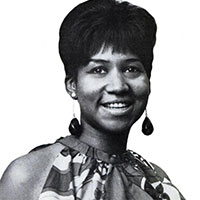
Franklin’s explosive vocal delivery, impassioned articulation, and tone color inflections all stem from her gospel roots. This gospel style is typical of the Southern soul style and the Atlantic Records approach to soul in the 1960s. Although Franklin’s singing includes clear gospel influences, the backup singers in "Respect ♫" are restrained and much more akin to the girl group tradition.



"The backing band on almost all of the Motown recordings are a group of highly dedicated and tight-knit group of musicians called The Funk Brothers. The surviving members received The Grammy Legend Award in 2004 and were induced into The Musicians Hall of Fame in Nashville in 2007"
