
Overview
In this lesson we will look at several types of popular music from the nineteenth century, including many different types of parlor songs. All of this music was available to purchase as sheet music, and it could be performed at home. Domestic music-making was an important part of American musical life during the nineteenth century, and performing music was an acceptable pastime for women. As we will see, sheet music was carefully marketed toward different types of audiences in order to ensure maximum commercial appeal. In addition to purchasing sheet music to play at home, people also enjoyed attending blackface minstrel shows, which were the most popular form of live entertainment during the nineteenth century.
Objectives
- Recognize the earliest types of American popular music and how this music was written and sold to be played and performed
- Identify examples of different types of parlor songs
- Examine music-making before the advent of recording technology
- Define blackface minstrelsy
- Identify the renowned figures in blackface minstrelsy
Introduction: America in the Colonial Era
The United States of America is a nation largely comprised of immigrants, and our popular culture has formed at the intersection of the different traditions that we brought with us from our old countries. After the first permanent British settlement was established at Jamestown in 1607 (in what later became the state of Virginia), it was inhabited primarily by two groups of people: the British colonists who first arrived in 1607, and West-African slaves who were brought there beginning in 1619. This unequal interaction between peoples—the Europeans who came here willingly to seek a new life and the enslaved Africans who were forced into a new life here against their wills—laid the foundation of a cultural interaction between European and African diasporic aesthetic values that has defined the development of American popular music from the colonial era to the present day.
British and other European colonists brought with them specific popular musical practices from the old world, including broadside ballads, fiddle tunes, ballroom dancing, and military brass band music.English broadside balladsPrinted sheets that consisted of lyrics only, but included the title of another song to which the printed lyrics were to be sung. were an early form of popular music consisting of a single sheet of paper (called a broadside) printed with lyrics that were intended to be sung to well-known tunes of the day.
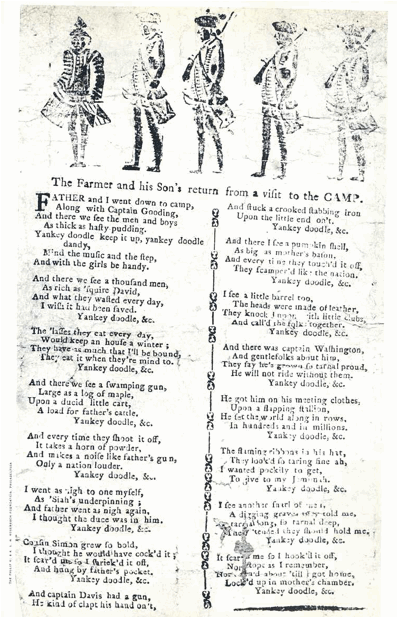
Inexpensive enough for anyone to purchase, broadside ballads were a common means of pop-music distribution in America through the seventeenth and eighteenth centuries. One example of a broadside ballad that remains popular to this day is "Yankee Doodle," ♫, which was published around the time of the American Revolution (though scholars disagree on when precisely the "original" version came out). Scottish and Irish fiddle tunes also provided many of the popular melodies to which broadside ballads were sung, and one example of an Irish fiddle-tune that has remained popular from the nineteenth century to the present is "Turkey in the Straw" ♫ (also known by the name "Natchez Under-the-Hill").
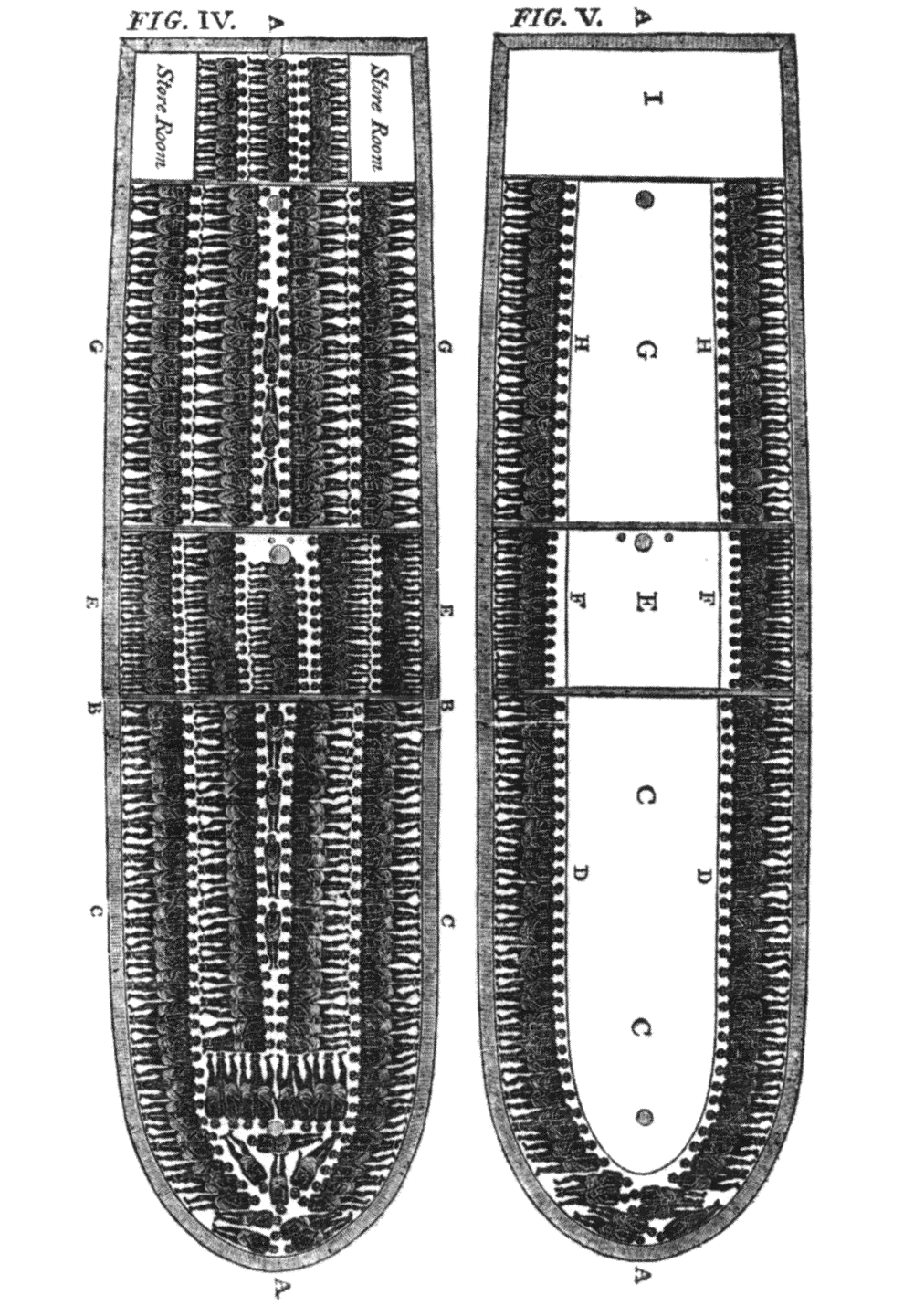
The West African people who were brought here as slaves endured a horrific journey in the cargo hold of slave ships, a journey that is referred to as the Middle Passage. Many Africans lost their lives on the Middle Passage; those who survived were not permitted to bring any musical instruments with them, and when they arrived in the colonies slaveowners typically separated Africans from their fellow tribespeople (those who had come from the same regions and spoke the same language) out of fear that allowing African slaves to continue speaking their native languages and playing their native musics would lead to slave revolts. This had the effect of disrupting many of the specific cultural traditions that West-Africans had practiced back in their countries of origin. Nonetheless, enslaved Africans in the new world retained their African cultural aesthetics and values, and by using them to reshape and transform the European-derived musical practices they encountered in the American colonies, they were able to survive the institution of slavery and create the synthesis of African- and European-American traditions that defines American popular music to this day.
Cakewalks and Minstrel Shows
As an example of this interaction between European and African aesthetics is the Cakewalk, a nineteenth century dance craze that set an early template for cultural crossover and appropriation. One of the musical traditions that British colonists brought with them was ballroom dancing, and as the colonies became more established and prosperous, dance came to occupy and important place in colonial social life. Some dances were informal country dances like the Jig or the Reel, while others were more formal upper-class dances like the Cotillion, Minuet, and Quadrille.
Dance was an even more important aspect of African cultural life, and enslaved Africans on plantations altered the upper-class European ballroom dance traditions according to their own aesthetics, creating a new tradition called the Cakewalk. In a Cakewalk, plantation slaves would adapt the ballroom dances of the plantation owners, often poking fun at the white owners with exaggerated dance moves while competing against each other to see who was the better dancer (with the winner literally "taking the cake"). For their musical accompaniments, slaves would often play the fiddle (i.e. violin, an instrument of European origin) and the banjo (an instrument invented by slaves and based upon an older African stringed instrument), with rhythms often marked by syncopation and structures featuring call-and-response interaction (both important aesthetic values associated with music of the African diaspora).
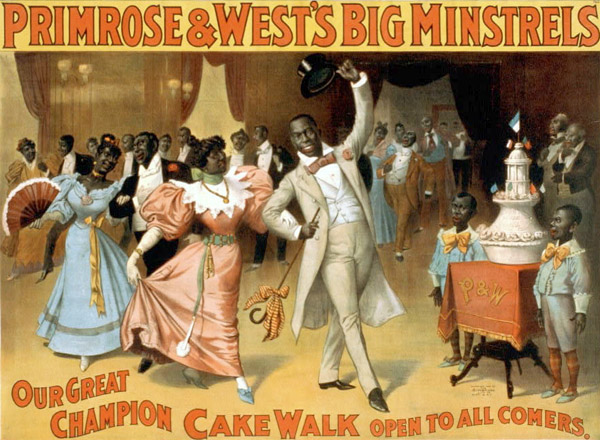
When plantation owners saw slaves performing the Cakewalk they apparently did not comprehend the satirical intention behind the exaggerated dance moves, and were instead delighted by the new style. By the end of the nineteenth century, Cakewalk dances were so popular with white audiences that they were regularly included in large fairs and exhibitions—including the 1876 Centennial celebration of American independence in Philadelphia and the 1893 World’s Columbian Exposition (also called the World’s Fair) in Chicago—and became part of the nineteenth century’s most popular entertainment form, the Minstrel Show.
As with the Cakewalk, Minstrel Shows (and the practice of Blackface Minstrelsy) were based upon a white interpretation of African-American plantation life. In sum, both the Cakewalk and the Minstrel Show were examples of how African-American people created new pop music traditions by adapting mainstream European-American cultural practices according to African diasporic aesthetic values, and of how these new African-American cultural practices in turn "crossed over" and became popular with white society.
The Sheet Music Industry and the Civil War
American prosperity increased following the revolutionary war and accelerated with the advent of the industrial revolution of the late eighteenth and early nineteenth centuries, allowing more families to own pianos. Music lessons became a staple of middle class life in America, and printed sheet music was the dominant form in which popular music was bought and sold. This gave rise to the music publishing industry, as songwriters and publishers worked to supply consumers with popular songs in a variety of genres, from humorous minstrel songs to sentimental parlor songs, romantic courtship songs, social reform songs, and patriotic songs.
In the mid-nineteenth century, tensions in our young country over economic prosperity, slavery, and state versus federal powers came to a boiling point with the Civil War (1861-1865), when a consortium of slave-holding Southern states called the Confederacy attempted to secede from the union. Abraham Lincoln issued the Emancipation Proclamation midway through the war, in 1863, and Congress passed the Thirteenth Amendment to the constitution that officially abolished slavery in the United States in 1865, shortly before the Confederate army surrendered. Throughout the years of the Civil War, music was important to both North and South, with soldiers singing popular minstrel show songs in their camps while back at home their loved ones kept heart with sentimental or patriotic ballads published by the nascent American sheet-music industry.



