
What is the history of public speaking? Continued
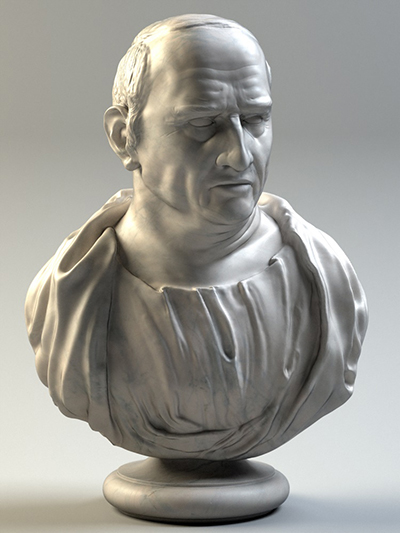
Although the earliest teachings on public speaking, rhetoric, and communication are attributed to the ancient Greeks, later Latin rhetoricians including Cicero and Quintilian also played important roles in the development of early studies of public speaking. Ancient public speaking handbooks such as Aristotle’s Rhetoric, the ancient Roman rhetorical exercise Suasoria, Cicero’s De Oratore, and Quintilian’s Institutio Oratoria include sample speeches and lectures, and they have been used for instruction in public speaking and rhetoric for hundreds of years.
Non-western traditions also contributed to the development of public speaking. A sophistic movement developed in China in the fifth and fourth centuries BCE, almost in parallel with the sophist movement in ancient Greece (Herrick 267). A century or two later, India also experienced a sophistic movement.
Communication and rhetorical traditions existed in China, but the country did not have a practice of public speaking akin to that of ancient Greece; instead, Chinese sophists serviced princes and dignitaries, and the Chinese practice of rhetoric occurred in private, royal spaces instead of in public (Herrick, "email communication with author"). Ancient Chinese texts on rhetoric are typically presented as stories or histories rather than as public speaking manuals or handbooks on effective persuasion. However, instruction on persuasive speaking was not absent in ancient Chinese culture. Chinese rhetorician Han Fei-tzu wrote Records of the Grand Historian around 280 BCE, and he offered suggestions about rhetoric:
The term “rhetoric” is frequently found in the study of the history of public speaking. Rhetoric can be defined broadly as "the art of persuasion" (Lanham 131). Although the term "rhetoric" is often associated with deceit or inaccuracy, in ancient Greece, rhetoric was an essential component of decision-making, problem-solving, conflict mediation, and public discussions of major issues. The theories of public speaking and rhetoric in ancient Greece began with traveling lecturers who were known as sophists. Sophists made speeches themselves and also taught lawyers and politicians how to speak logically and in a manner that was appropriate for the courts and deliberative councils of the society.
Because rhetoric was so important for participation in the democratic society, public speaking became part of the formal education in ancient Greece. At the age of fourteen, boys received instruction in public speaking and were exposed to sophistic instruction where they pretended to address a courtroom.
On the whole, the difficult thing about persuading others is not that one lacks knowledge needed to state his case nor the audacity to exercise his abilities to the full. On the whole, the difficult thing is to know the mind of the person one is trying to persuade and to be able to fit one’s words to it (Herrick 267).
Composer:
-
" Han Fei-tzu"
Records of the Grand Historian is also known as The Intrigues of the Warring States. The text reports events that occurred in China between the third and first centuries BCE.
As we have seen, rhetoric was an important element of many ancient societies, including Greece, Rome, China, and India. Many of the philosophies and rulebooks that governed appropriate public speaking and rhetoric are still in use today. Over time, these rules have changed, expanded, and been adapted to suit the needs of specific cultures and periods of time. What remains consistent, however, is a need for effective communication between a single speaker and an audience of at least ten listeners.