
Overview
Objectives
- Examine the roots of soul music and the cultural and economic factors that led to its creation
- Identify several prominent artists from the genre of soul music including Sam Cooke, the Supremes, the Temptations, and Aretha Franklin
- Identify several record labels that were critical to the development of soul music, including Motown, Atlantic, and Stax
Motown Continued
The Motown studio musicians were mostly jazz performers who enjoyed the new financial rewards of working for Motown Records: Benny Benjamin on drums, Earl Van Dyke or Joe Hunter on keyboards, Dave Hamilton on vibes or lead guitar, James Jamerson or Carol Kaye on bass, and Robert White on rhythm guitar. Secretaries and friends filled in on tambourines and handclapping. To get more backbeat a strong accent on beats 2 and 4 of a four-beat meter, which are traditionally the unaccented beats of the bar, a studio carpenter had bolted a couple of two-by-fours together with a hinge. It could make a strong and crisp smack on counts two and four of the measure.
This layered big-band mix was captured at different times on two homemade eight-track tape recorders a device first used at Motown Records that could separately record eight different tracks and mix them together into one cohesive whole Producers could bring in the rhythm section, horns and strings, background singers, and lead vocalists all at different times while recording, and this approach made all the difference in the final product. A young electronics wizard named Michael McClain built these eight-track facilities, and Motown was one of the first record companies to use this approach to recording. Most other companies were still using two- and four-track recording systems.
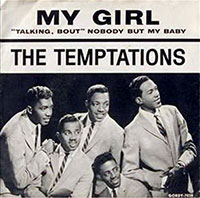
Like Aldon Publishing, Berry Gordy and Motown employed several songwriting teams who were responsible for writing most of the major Motown hits in the 1960s. Brothers Brian and Eddie Holland and Lamont Dozier (known collectively as Holland-Dozier-Holland or HDH) wrote and produced all of the Supremes' hits from 1964 and to early 1968. They also wrote most of the material recorded by the Four Tops and the Isley Brothers during the years between 1965 and1968. They composed several tunes for the Miracles and for Martha and the Vandellas. Typically, Eddie Holland worked with the vocal leads in the various groups, Lamont Dozier helped with vocal backgrounds and instrumental tracks, and Brian Holland handled the overall composition and assisted with backup vocal tracks. Another important songwriting duo at Motown was that of Strong and Whitfield. Barrett Strong gave up a singing career to write songs for others. He and writer-producer Norman Whitfield had a string of hits for Gladys Knight and the Pips and the Temptations. They also penned Motown’s biggest hit of the 1960s, "I Heard It Through the Grapevine ♫," which was recorded by Marvin Gaye.
Holland-Dozier-Holland, Strong and Whitfield, and other Motown songwriters often took a portion of a song’s chorus to use as an introduction, which can be heard in The Supremes’ "Stop! In the Name of Love ♫" (1965). Another feature of most Motown songs is a harmonic modulation to change keys within a song; in popular music, it is common for Motown songs to modulate up a half step about two-thirds of the way through the arrangement that occurs about two-thirds of the way through the song; in most cases, the key of the song would move up a half step before the final choruses. Like other songwriters, Motown songwriters also introduced a hook a catchy phrase or melodic motive that is featured prominently in a song—a catchy phrase or melodic motive that would hook the listener into buying the record. Unlike other songwriters, Motown hooks usually did not appear until later in the song, whereas other popular tunes of the time had hooks from the very beginning of the song.
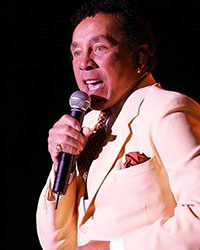
In addition to HDH and Strong and Whitfield, one of the best songwriters for Motown was Smokey Robinson. Robinson was not only a gifted songwriter but also a performer in his own right. When Gordy first began his record label, the first group he put on the payroll was Smokey Robinson and the Matadors. Changing their name to the Miracles, they plunged in to make the idea of Motown work. So obvious was Robinson’s talent and business skill that Gordy named him vice president in 1961, well before the corporation had any major success at all. The Miracles eventually rose to the top of the industry with dozens of Top 40 hits, including five songs in the Top Ten. Smokey Robinson did it all— gifted vocalist, songwriter, producer, adviser, business executive, talent scout, premier backup singer, and emotional anchor of Motown. His compositions are outstanding representations of the Motown sound from the 1960s: "My Guy ♫," "I Second That Emotion ♫," and "My Girl ♫," to name a few.



"The backing band on almost all of the Motown recordings are a group of highly dedicated and tight-knit group of musicians called The Funk Brothers. The surviving members received The Grammy Legend Award in 2004 and were induced into The Musicians Hall of Fame in Nashville in 2007"
