
Overview
In the 1950s, disc jockey Alan Freed was an important figure in the promotion of African American popular music, and he began calling it “rock and roll.” Soon, white artists such as Bill Haley and His Comets and Pat Boone began recording cover versions of black artists’ songs, most of which were more commercially successful than their black counterparts. The most successful of all the early rock and rollers, of course, was Elvis Presley. Presley’s ascent to stardom in the 1950s secured the popularity and commercial viability of the genre of rock and roll.
Objectives
- Recall the technological changes and its impact in the music industry
- Examine the influence of disc jockey Alan Freed
- Identify various rhythm and blues artists
- Examine some of the ways that white artists modified the music of black artists in their cover versions
- Recall the music that Elvis Presley recorded during the 1950s
Conclusion
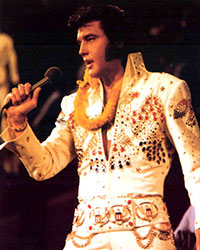
The earliest rock and roll music was simply a rebranding of rhythm and blues music by black artists. Disc jockey Alan Freed hoped that the term "rock and roll" would be more appealing to his white listeners compared to "rhythm and blues." As the new rock and roll music caught on, white artists began covering rhythm and blues recordings, frequently achieving significantly more financial success than the black artists who had originally recorded the tune. These covers ranged from the safe and sanitary versions by Pat Boone to the renditions by Elvis Presley that had teenagers swooning and parents nervous.



