
Overview
Elvis Presley’s early recordings for Sun Records were in a musical style that was called rockabilly, which was a mixture of rhythm and blues, country and western, honky tonk, boogie woogie, and gospel music. When Elvis made the move to RCA, other recording artists continued making records in this rockabilly style. Artists such as Buddy Holly, Johnny Cash, Carl Perkins, and Eddie Cochran all made names for themselves as rockabilly artists.
Objectives
- Examine the defining musical characteristics of rockabilly and consider how artists combined different genres of music to create a new style
- Examine the shift in rock and roll that occurred at the end of the 1950s, often marked by “The Day the Music Died”
- Identify various rockabilly music artists and defining characteristics of their musical styles
Introduction
Elvis Presley’s early recordings for Sun Records were in a style called rockabilly, which was a mixture of rhythm and blues, country and western, honky tonk, boogie woogie, and gospel music. When Elvis made the move to RCA, other recordings artists continued making records in this rockabilly style because it was still commercially viable. Artists such as Buddy Holly, Johnny Cash, Carl Perkins, and Eddie Cochran all made names for themselves as rockabilly artists.
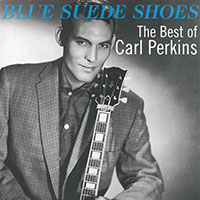
After Elvis left Sun Records, Sam Phillips produced "Blue Suede Shoes ♫," a song recorded by Carl Perkins in 1956. "Blue Suede Shoes ♫" charted on the pop, rhythm and blues, and country and western charts that year, a feat that was still quite unusual at the time. Of course, in the following years, Elvis Presley’s music would consistently cross over all three charts, but in 1956, Perkins’s success was still remarkable. Perkins’s success story was cut short, though, when he and his band members were seriously hurt in an automobile accident. He was unable to resume a recording or touring career for many years after the accident. Despite the brevity of his career, many artists paid tribute to Perkins: Elvis frequently mentioned "Blue Suede Shoes ♫" and covered the song, and the Beatles covered many of Perkins’s songs as well.



