
Overview
Objectives
- Recall the British blues revival tradition, which began as British musicians studied and emulated the music of Chicago blues musicians such as Howlin' Wolf and Muddy Waters
- Recall the early days of the Rolling Stones and consider how their style changed as they moved from recording mostly covers of blues music to writing their own material
- Identify the many ways in which the Rolling Stones were the opposite of the Beatles, apart from being a British rock band that was popular beginning in the middle of the 1960s
Introduction
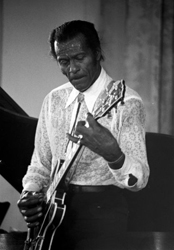
In the last lesson, we looked at the Beatles. The Beatles’ music showed the influence of American rock and roll artists such as Buddy Holly and Chuck Berry. In this lesson, we will consider their counterparts in the British Invasion, the Rolling Stones. The Rolling Stones had a very different trajectory than the Beatles did. They began as a blues cover band in London, playing covers of Chicago bluesa louder, electrified styled of the blues featuring electric slide guitar, harmonica, and a weighty bass line that was centered in Chicago and exemplified by artists such as Howlin’ Wolf, Elmore James, and Muddy Waters; this style of blues was particularly influential on British blues and rock bands artists such as Muddy Waters and Bo Diddley. Although their career exploded at about the same time as the Beatles’, the Rolling Stones far outlived their Fab Four counterparts as a group. Today, the band is over half a century old (most of the individual members are in their seventies), and they are still going strong despite their personal, legal, and financial battles over the years.



"Before joining The Stones, Brian Jones used the stage name Elmo Lewis. He was in the duo Lewis and Ponds with Paul Jones, who used the name "Paul Pond." Paul Jones was offered the job of Stones lead singer, but turned it down. "
