
Overview
The role of African American musicians in rock and roll had changed drastically by the 1960s. Black musicians were largely relegated to roles where they took direction from major record labels, record producers, or television show producers. As rock music included more and more white performers and listeners, many African American musicians and listeners began seeking out new modes of musical expression, which came to fruition in a new genre of music that would be called soul. Soul music came in many different variations, such as sweet soul, the Motown style, and southern soul.
Objectives
- Examine the roots of soul music and the cultural and economic factors that led to its creation
- Identify several prominent artists from the genre of soul music including Sam Cooke, the Supremes, the Temptations, and Aretha Franklin
- Identify several record labels that were critical to the development of soul music, including Motown, Atlantic, and Stax
Introduction
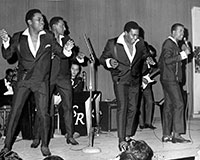
As we saw a few lessons ago, many of the earliest rock and roll musicians were African American. In order to play rhythm and blues records on the radio, disc jockey Alan Freed retitled them "rock and roll." With the successes of artists such as Bill Haley, Elvis Presley, and Buddy Holly, more and more white artists began to perform rock and roll. By the 1960s, the presence of African American musicians in rock had dwindled significantly. A few black artists had some commercial success, but usually only when they had the full support of a record company or producer.
Chubby Checker’s "The Twist ♫" was a smash due to its presence on Dick Clark’s American Bandstand, and the African American girl singers of groups such as the Ronettes and the Crystals were chosen by producers almost as an afterthought in the recording process. The place of black musicians in rock had shifted by the 1960s, and many artists were headed toward a new genre of music called soul.



