
Overview
Objectives
- Identify two important figures in early American folk music, Pete Seeger and Woody Guthrie
- Recall why Pete Seeger and Woody Guthrie were inspirational figures in the folk revival of the 1960s
- Examine the music and career of Bob Dylan
- Recall why Bob Dylan's electric performance at the 1965 Newport Folk Festival was so upsetting to folk music purists
- Recall the many stylistic and generic reactions to Dylan "plugging in," namely, the rise of the genre of folk rock
Folk Music Before the 1960s
The 1960s saw a revival of earlier folk music, and it is therefore imperative that we understand what music people were interested in reviving during this period. During the 1930s, singer-songwriter Woody Guthrie traveled the western United States to hear the music and stories of people who had been affected by the Dust Bowl and by the Great Depression. In addition to learning about people’s music, Guthrie also wrote a number of his own songs. Guthrie’s music reflected his left-wing politics. For example, Guthrie’s "This Land is Your Land ♫" was a satirical response to Irving Berlin’s song "God Bless America ♫."
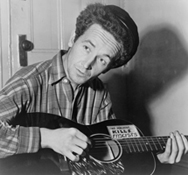
In "This Land is Your Land ♫," Guthrie points out what he perceived as the hypocrisy of "God Bless America" and other patriotic songs:
Other Guthrie songs, such as "So Long, It’s Been Good to Know You ♫" express similar leftist political sentiments. Guthrie was one of the first musicians who created the association between left-wing politics and folk music. His guitar had a label on it that read, "This machine kills fascists." Guthrie gained the admiration of many folk musicians in the 1960s, most notably, Bob Dylan.
Pete Seeger was also an active folk musician and outspoken political activist. In 1941, Guthrie and Seeger formed the Almanac Singers. The Almanac Singers would frequently revise the lyrics of familiar songs in order to convey protest lyrics. In the 1950s, Seeger was a member of the Weavers, a group that was more pop-oriented and less fiercely political. During the 1960s, Seeger was a tireless advocate for the Civil Rights Movement, and he performed "We Shall Overcome ♫" at any opportunity. A number of artists covered and made Seeger’s songs popular during the 1960s. Despite the popular appeal of his music, Seeger himself never tried to sign a deal with a major record label or add any rock music styles or instruments into his songs. Seeger continued performing and leading protests until his death in January 2014.



Woody Guthrie became part of the mass migration of dust bowl refugees known as "Okies." Without food or money, Woody hitchhiked, rode freight trains, and even walked to California, developing a love for traveling on the open road -- a practice he would repeat often.
