
Overview
In an earlier lesson, we encountered a number of subgenres of country and western music that became popular during the 1940s, such as the country crooner and honky-tonk. In this lesson, we will focus specifically on the genre of bluegrass. Bluegrass music had had devoted followers since its earliest days, but during the 1960s, more and more people came to listen to and appreciate the music. The folk revival movement, coupled with mainstream exposure in Hollywood films, introduced a new generation of listeners to bluegrass.
Objectives
- Identify three key figures of bluegrass: Bill Monroe, Earl Scruggs, and Lester Flatt
- Examine the three musicians and the key characteristics of bluegrass music, such as instrumental techniques, instrumental combinations, and the connections between bluegrass music and earlier types of hillbilly music such as the string band
Bluegrass and the Folk Music Revival
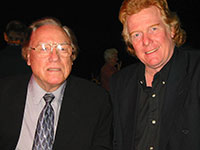
As we will see in the next lesson, the 1950s and 1960s saw a massive revival of folk music and folk music genres. Bluegrass was suddenly embraced as an "authentic" type of music that had not been marred by commercial interests. Many bluegrass musicians, including Bill Monroe's band and the Foggy Mountain Boys, experienced a surge in popularity. They suddenly found themselves invited to perform at folk music festivals, college campuses, and even major venues such as Carnegie Hall.
Flatt and Scruggs probably benefited the most from this revival. "The Ballad of Jed Clampett ♫" was composed and performed for The Beverly Hillbillies television show, and the song itself was the number 1 country song for several months in 1962 and 1963. Their "Foggy Mountain Breakdown ♫" appeared in the 1967 film Bonnie and Clyde, and this Hollywood exposure led to a resurgence of interest in recordings by the group that were over two decades old. In 1969 Flatt and Scruggs separated. Flatt took most of the members of the Foggy Mountain Boys with him and formed a new band called the Nashville Grass. He performed with this group until his death in 1979. Scruggs continued to play as a soloist, but he did experiment with other styles and genres of music. For example, he and his sons formed a group called the Earl Scruggs Review that experimented with combining bluegrass and modern rock sounds. Scruggs continued to perform until his death in 2012.



