
Overview
The mid-1960s were a time of upheaval for young people in the United States. The Civil Rights Movement, protests against the Vietnam War, and the movement for women’s rights inspired many people to become suspicious of the American institutions that they were supposed to trust. This distrust and sense of separation led to the development of a countercultural movement that was passionate about maintaining its distance from the mainstream. In particular, many young people sought a new vantage point from which to view the world. In response, musicians began recording psychedelic rock, which was also intended to change the listener’s consciousness or point of view.
Objectives
- Examine how and why psychedelic music became popular in the mid-1960s
- Recall how the Beach Boys changed their earlier styles of music and began recording psychedelic rock
- Recall how guitarists such as Jimi Hendrix experimented with distortion and feedback to create new sounds on the electric guitar
- Recall how new recording techniques, instruments, technologies, and lyric sources all guided these musicians as they began explore different modes of expression and realms of consciousness in their music
- Examine the Woodstock Music and Art Festival of 1969, regarded as the pinnacle of the music and culture of the late 1960s
Toward a Higher Consciousness
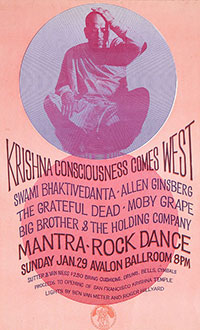
As we saw in the lesson about folk music, Bob Dylan and other members of the folk and folk rock movement encouraged their listeners to consider deeper and more meaningful topics. The folk movement played a significant role in inspiring many people to search for deeper meaning and higher modes of consciousness in both their music and in their everyday lives. Many people turned to Eastern religions and philosophies in order to increase their consciousness. These quests for higher consciousness were often augmented by the use of recreational drugs.
Timothy Leary's 1964 book The Psychedelic Experience was a handbook for many members of the 1960s countercultural movement. Leary advocated both Eastern spirituality and drug use as a means of achieving higher consciousness. Drawing information from the ancient Tibetan Book of the Dead, Leary and his coauthors encouraged readers to enhance their spiritual experiences with drugs. The drug of choice for this burgeoning movement was LSD.
LSD (lysergic acid diethylamide) was first developed as a migraine cure, but during the 1950s, scientists experimented with it both as a truth serum and as a cure for alcoholism. By the 1960s, many people in the United States were using LSD recreationally. Many LSD users believed that the drug was capable of eliminating fake or misleading information, leaving behind only the truth and the world exactly as they truly existed. Users of LSD believed that taking it, or "dropping acid," could offer them windows into new knowledge, realms of understanding, and consciousness.
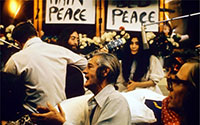
In 1966, the Byrds released "Eight Miles High ♫," which was their first single that had been written by the band and that was not a cover of a folk artist's music. "Eight Miles High ♫" evokes two important aspects of the countercultural movement: Eastern spirituality and drug use. The success of "Eight Miles High ♫" suggested that both Eastern philosophy and the use of drugs to achieve higher consciousness were very much a part of the mainstream.
In the rock music of the late 1960s, the influence of psychedelia, drug use, and higher consciousness can be felt in two different ways. First, the music was written and recorded as a means of enhancing a drug trip. A listener would drop acid and turn on the music, and the music would augment the trip. Second, the music was written and recorded to simulate a drug trip. In this case, no drugs were necessary because the music itself was considered the drug, and the listening experience was the trip. The music shed light on new realities for the listener. By using novel sounds, new instruments, innovative recording techniques, and distortion, rock artists created new types of music that were intended to help the listener on their voyage to higher consciousness, both with and without the help of LSD.



