Generating page narration, please wait...

Overview
The mid-1960s were a time of upheaval for young people in the United States. The Civil Rights Movement, protests against the Vietnam War, and the movement for women’s rights inspired many people to become suspicious of the American institutions that they were supposed to trust. This distrust and sense of separation led to the development of a countercultural movement that was passionate about maintaining its distance from the mainstream. In particular, many young people sought a new vantage point from which to view the world. In response, musicians began recording psychedelic rock, which was also intended to change the listener’s consciousness or point of view.
Objectives
- Examine how and why psychedelic music became popular in the mid-1960s
- Recall how the Beach Boys changed their earlier styles of music and began recording psychedelic rock
- Recall how guitarists such as Jimi Hendrix experimented with distortion and feedback to create new sounds on the electric guitar
- Recall how new recording techniques, instruments, technologies, and lyric sources all guided these musicians as they began explore different modes of expression and realms of consciousness in their music
- Examine the Woodstock Music and Art Festival of 1969, regarded as the pinnacle of the music and culture of the late 1960s
Conclusion
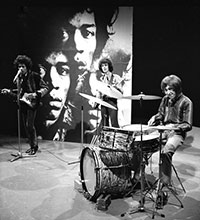
Psychedelic rock affected recording artists and their music in many different ways during the 1960s. Artists such as the Beatles and Brian Wilson of the Beach Boys began writing music that was designed for studio recording, not for live performance. Jimi Hendrix, steeped in the blues tradition, incorporated psychedelic themes, guitar effects, distortion, and a sense of showmanship in his music. Above all, musicians of this era sought new types of consciousness. For many, Woodstock came to symbolize the apex of the countercultural movement and its music. In the 1970s, rock and popular music would take on entirely new identities.

“But when I played Woodstock, I'll never forget that moment looking out over the hundreds of thousands of people, the sea of humanity, seeing all those people united in such a unique way. It just touched me in a way that I'll never forget.”
-Edgar Winter

“When I was a kid growing up in the '60s, music was an outlet for enlightenment, frustration, rebellion. It was more about individualism.”
-Joey Ramone

Janis Joplin's Idol was Bessie Smith. When Joplin learned that Bessie Smith was buried at an unmarked grave, she purchased a headstone that read "The Greatest Blues Singer in the World Will Never Stop Singing."
