
Overview
Objectives
- Recall the significance of several predecessors of progressive rock, such as the Who, the Moody Blues, and Procol Harum, all of whom integrated rock and classical music
- Identify the key groups of the prog rock movement, including King Crimson, Yes, and Emerson, Lake, and Palmer
- Recognize several defining factors of prog rock, including virtuosic performing, classical or classically-inspired instrumentation, prominence of keyboard instruments, spiritual themes, experimental forms, and the importance of concept albums
Origins of Prog Rock
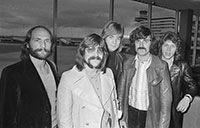
Musicians had begun experimenting with symphonic sounds in order to bring an added dimension of intellect to their music. The Moody Blues were one of the first rock bands to incorporate the sounds of a full orchestra into their music. Days of Future Passed (1967) was a concept album that included the members of the London Festival Orchestra. Days of Future Passed is a song cycle that depicts a typical day in the life of the narrator.
A song cycle a concept borrowed from nineteenth-century classical music (most notably the composers Robert Schumann and Franz Schubert); a collection of songs that are based on a cycle of poems that deal with a unified idea and which are meant to be performed as a unit; The Moody Blues album Days of Future Passed (1967) is an example of a song cycle in rock is a concept borrowed from nineteenth-century classical music. Romantic-era composers such as Franz Schubert or Robert Schumann would write cohesive collections of songs that were based on a cycle of poems. The songs were supposed to be performed as a unit and not be separated from each other. The Moody Blues borrowed this idea for Days of Future Passed, although they did release singles from the album. "Nights in White Satin ♫" features an accompaniment by the full orchestra, and the song also includes a spoken-word poem called "Late Lament." The Moody Blues were forerunners of the prog rock movement because their music featured classical instrumentations, classical forms, and themes of spirituality.
Another rock band that included a symphony orchestra was Procol Harum. The group is best known for its 1967 single "A Whiter Shade of Pale ♫." The song is inspired by the music of the Baroque period because the descending bass line that is repeated throughout "A Whiter Shade of Pale ♫" was borrowed directly from a composition by Johann Sebastian Bach. Following the success of this single, Procol Harum began augmenting their instrumental lineup that had initially consisted of guitar, bass guitar, piano, organ, and drums.
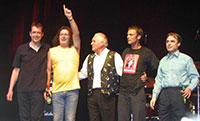
They used a studio orchestra during their recording sessions, but they also overdubbed instruments such as recorder, celesta, marimba, congas, and tambourine. In the early 1970s, they began touring with a symphony orchestra, and in 1971, they released Procol Harum Live: In Concert with the Edmonton Symphony Orchestra. This album successfully captured the richness of their live symphonic performances. By incorporating themes borrowed directly from classical music and by performing with a symphony orchestra, Procol Harum were also important predecessors of prog rock.
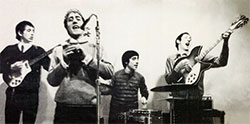
The Who are also considered one of the forerunners of prog rock, but they are not typically regarded as a prog rock band. As we saw in an earlier lesson, the Who started their career as musical spokespeople for the London Mod movement. By the late 1960s, the members of the Who had tired of the Mod movement and were looking for new musical forms of expression.
The manager of the Who during this time was Kit Lambert, son of the British classical composer Constant Lambert. Lambert encouraged Pete Townshend to explore classical music themes and concepts in the music that he was writing for the Who. In 1969, the Who released the album Tommy, which was billed as a rock opera. The album was intended to be heard as a single cohesive unit that told a compelling tale. Tommy is the story of a boy who is deaf, mute, and blind, and he is regularly abused by members of his family. Tommy becomes a pinball champion despite his disabilities. When his mother smashes a mirror, his lost senses return. Tommy then becomes a guru, touting his "miracle cure" to his followers. Tommy was an incredibly ambitious album: it required over eight months to produce, and it included complex musical arrangements and dozens of instruments, including many orchestral instruments such as trumpets, French horns, gongs, and timpani. Other operatic gestures in the album include the use of musical motives that recur throughout the entire work. The Who released five singles from Tommy, and "Pinball Wizard ♫" had some success on both the British and American charts.
Tommy was a precursor to the prog rock movement for several reasons. First, Townshend and the other members of the Who created a concept album which was meant to be heard in its entirety. Second, they incorporated instruments and themes from classical music. Third, the message of Tommy was meant to address the superficial aspects of spirituality and encourage listeners to pursue genuine spiritual pursuits. At the time of its release, some critics found Tommy to be a masterpiece, while others found it quite pretentious. Many musicians in the prog rock movement would find themselves treading this fine line between pretentiousness and the quest for deeper meaning.



"The Moody Blues were the only band to regularly use a Mellotron (an early sort of synthesizer that used tape loops instead of electronic tone generators) in concerts. They could do this because Mike Pinder had worked for the company that had invented it, and he knew its workings so well. "
