
Overview
Country music took many different roads during the 1960s and 1970s, and in this lesson, we will examine a few of the major trends from this period. Television increased the visibility of and market for country music and country artists. Country musicians also continued to embrace the honky-tonk style of music. Further, artists became stars (or at least increased their star power) when they promoted themselves as “outlaws,” musicians who refused to conform to the rules of the Nashville establishment.
Objectives
- Examine the role that television played in country music during the 1960s
- Recall the growth and progression of honky-tonk music after the death of Hank Williams
- Identify the roles of female country singers during the 1960s and 1970s
- Recall the significance of the outlaw image and how it helped the careers of musicians such as Merle Haggard and Waylon Jennings
The Outlaws of Country Music
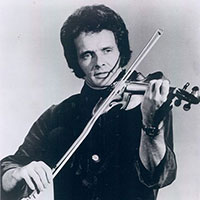
In 1967, Haggard began his ascent to stardom when began incorporating narratives and themes from his criminal past into his songs. Many of his songs from the late 1960s addressed crime, isolation, and imprisonment, and it was with these themes that Haggard began to top the country singles charts. His first number 1 single, "I'm a Lonesome Fugitive ♫," was also written by Liz Anderson and was released at the end of 1966. Haggard followed this single with several others that focused on outlaw themes, such as "Branded Man ♫" (1967) and "The Legend of Bonnie and Clyde ♫" (1968). Beginning with "Branded Man ♫," Haggard wrote his own songs.
In addition to outlaw themes, Haggard's songs focus on figures from the 1930s, such as migrant workers, railroad bums, and California labor camps. He also wrote songs about regional and national pride. For example, "Okie from Muskogee ♫" (1969), arguably Haggard's most famous song, was a statement about his regional pride. In the verses of the song, Haggard positions himself and his fellow Okies in direct opposition to the members of the counterculture who were using LSD, protesting the Vietnam War, and burning their draft cards. As Haggard explains, leather boots are the preferred footwear for Okies, not leather sandals. As an "Okie from Muskogee ♫" (Muskogee is a city in Oklahoma, and Oklahomans are sometimes called "Okies"), Haggard expressed his pride in being a "square":
A place where even squares can have a ball
We still wave Old Glory down at the courthouse,
And white lightnin's still the biggest thrill of all
"Okie from Muskogee ♫" went to number 1 on the country charts, and it also had moderate crossover success on the pop charts. In spite of (or perhaps because of) the critique of the counterculture, the song has been covered by psychedelic rock groups such as the Grateful Dead.



