
Overview
Not since the early 1960s and the days of Chubby Checker’s “The Twist” and other dance crazes had rock been considered a music for dancing. By the 1970s, most rock was consumed by listening, not by dancing. That all changed with the rise of disco music, which was for dancing. Disco was a stark contrast to rock music in many ways, such as its embrace of the single and the prominent role played by the DJ and record producer in the creation of a disco record. In this lesson, we will consider many cultural and musical influences on disco in order to examine how and why this dance music was the dominant genre of popular music in the United States by the end of the 1970s.
Objectives
- Identify several musical and cultural predecessors of disco music
- Recall the influence of the gay community and the Stonewall Riots on disco music
- Identify several defining features of the style of disco music
- Examine several significant disco artists and their contributions during the 1970s
Predecessors and Roots of Disco
The music of disco evolved in order to suit the needs of different types of dance clubs that were popular during the 1970s. The earliest types of American discotheques were modeled on French clubs that were socially exclusive, opulently decorated, and consciously classy. In stark contrast to the leather jackets and ripped jeans that rockers wore, people who wanted to enter a discotheque needed to dress a certain way or else they were denied admittance to the club. During the 1960s, discotheque attendees danced to the latest rock and roll or rhythm and blues dance crazes, such as Chubby Checker's "The Twist ♫" or the Vibrations' "The Watusi ♫."
During the 1970s, different types of discotheques catered to different types of clientele. In many cases, the clubs offered a place for people who felt marginalized by society to gather, dance, drink, and have a good time.
Specific clubs embraced different populations, such as ethnic minorities, women, young people, and gays. Gay clubs were one of the most powerful influences in the emergence and rise of disco music during the 1970s.
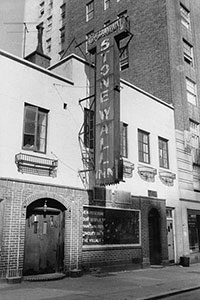
In the late 1960s, the gay populations of major cities were becoming increasingly visible. In 1966, New York City's government made some changes that reduced police harassment of gays and helped many in the gay community live publicly and legally. Clubs such as Bosco's, the Candlelight and Piccadilly, and the Tabletop offered a place for members of the LGBT community to gather. Unfortunately, the police continued to single out, harass, arrest, and brutalize members of the gay community, which led to the Stonewall Riotsa riot that occurred in 1969 after the police conducted a raid on the Stonewall Inn, a gay club in New York; members of the gay and lesbian community began rioting, protesting, and forming activist groups to fight back against discrimination and to work to create spaces where gays could be open without fear of being arrested or harassed of 1969. The police conducted a raid on the Stonewall Inn, a club on Christopher Street. Although the police regularly raided gay clubs, after Stonewall, members of the gay and lesbian community began rioting, protesting, and forming activist groups. They fought back against discrimination and worked to create spaces where gays could be open without fear of being arrested or harassed.
In the wake of the Stonewall Riots, as members of the gay and lesbian community began fighting for their rights, discotheques and dancing became important tools for making political statements. Discotheques offered members of the gay community the chance to gather openly in large groups and make a statement while they danced and had a good time. Dance created a sense of community. The Electric Circus club issued an advertisement reading, "We'll be open to the general public as usual, but we're especially encouraging gay people to come, and we really hope that everyone will dance together and dig one another." Clubs in other major cities such as San Francisco and Los Angeles quickly followed suit, and across the country, discotheques offered a safe space for LGBT people to unite.

“Disco is a major influence in the world of fashion. It is a dynamic factor in contemporary advertising. It is a message from every consumer that there has been a rediscovery of America's greatest by-product: fun.”


