
Overview
As the term “disco” lost favor in the late 1970s and early 1980s, different types of dance music continued to develop and be played in clubs in the Midwest, especially in Chicago and Detroit. The first important genre of dance music to develop during this period was Chicago house, and this music strongly influenced musicians in the nearby city of Detroit. Young African American musicians from Detroit would travel to Chicago every weekend to hear house music, and they began creating their own style of and approach to electronic dance music at home. This genre of music came to be called techno. Musicians created techno with electronic instruments such as synthesizers, computers, samplers, drum machines, and multi-track mixers.
Objectives
- Recall several important technological developments and instruments from the late 1970s and early 1980s
- Identify the musical predecessors of Detroit techno music
- Recall the musical and socioeconomic factors that led to the development of Detroit techno
- Examine the development and dissemination of techno into the 1990s
Detroit Techno continued
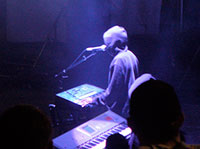
In 1988, a British A&R scout named Neil Rushton collaborated with May to create an album called Techno! The New Dance Sound of Detroit, which was released on Ten Records and Virgin UK. The album was a smash hit in the United Kingdom, and it helped draw a clear line between the styles of Chicago house and Detroit techno. Techno! not only established the name for this new genre of music, but it also helped the music reach an international audience.
Within six months of the release of Techno!, a Detroit club named Music Institute (also called MI) opened, and Friday nights at the club always featured techno.
May and Saunderson were two of the most popular DJs who performed at the Music Institute, and they often completed a new mix in the afternoon and tested it on the dance floor that same night. The Music Institute offered a place for free expression of musical ideas, camaraderie on the dance floor, and a sense of belonging and ownership, as the club was members-only. In addition, the Music Institute did not serve alcohol and strongly discouraged the use of drugs. It is worth noting that the association of Ecstasy, raves, and techno music did not originate with the genre's African American musicians in Detroit but rather with the music's fans in Europe.
In the late 1980s and early 1990s, artists started dozens of new record labels in Detroit, inspired by the successes of Atkins, May, and Saunderson. The environment for new techno artists in Detroit become less hospitable by 1990 because the Music Institute had closed and radio stations were playing hip-hop, not techno. Emerging techno musicians struggled to find support for their music in Detroit, and many of them went to Europe because audiences were far more receptive. Techno artists frequently traveled to Europe to play their music for clubs and raves. In the early 1990s, techno was featured at enormous European raves that had over five thousand people in attendance.
Much of the music from this period catered to the tastes of the European rave scene, and it had a faster tempo and harsher sound than that of earlier techno music. This sound of the rave scene can be heard in music by artists such as Jeff Mills and Octave One. Songs such as Octave One's "Modernism ♫" (1996) are far weightier and more dramatic than earlier music of the Detroit techno scene.
As techno proliferated, dozens of subgenres began to emerge, such as drum and bass, acid trance, and ambient techno. Eventually, "Detroit techno" came to refer to a specific style of techno music rather than to a group of musicians who were from Detroit. Even as new technologies were introduced, musicians committed to the Detroit techno aesthetic continued to record music using the same types of synthesizers and drum machines that were heard in early examples of Detroit techno.

"The spirit of house music, electronic music, in the beginning was to break the rules, to do things in many different ways."


