
Overview
In the late 1970s and early 1980s, several British and American bands brought increasing diversity to heavy metal. This new approach to heavy metal still had the weight and riff-based sound of earlier heavy metal, but it was infused with the speed and anger of punk rock. In this lesson, we will trace several major developments in heavy metal, beginning with the second generation of British heavy metal musicians and then observing a number of subgenres of American heavy metal.
Objectives
- Recall the new developments in heavy metal music that occurred in the mid-1970s in the music of bands such as Motörhead
- Identify several significant American and British heavy metal bands from the early 1980s
- Recall the major subgenres of heavy metal, including hair metal and thrash metal, and discuss the stylistic characteristics of each
Conclusion
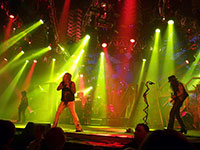
Beginning with Motörhead, heavy metal received a welcome infusion of punk's speed and anger in the late 1970s. Heavy metal's tempos sped up, its guitar solos became increasingly complex and virtuosic, and its lyrical topics ranged from the death and darkness expressed by Iron Maiden to lighter and more pop-oriented topics addressed by Poison. Several important American metal bands such as Mötley Crüe, Van Halen, and Guns N' Roses emerged from the Los Angeles scene, but other groups such as Metallica found Los Angeles too shallow for their tastes.
By the early 1990s, a few metal bands such as Metallica had achieved significant commercial success . Interestingly, some metal bands and musicians from this period achieved some crossover success with they teamed up with pop or hip-hop musicians, such as Michael Jackson, Run-DMC, and the Beastie Boys.


“My biggest influences were 1980s punk and metal. Metallica were my biggest influence because they were good at everything - riffs, energy - but with such an ear for melody, it was hard not to get pulled into it and become a fanatic.”

