
Overview
Objectives
- Identify several musical and cultural predecessors of disco music
- Recall the influence of the gay community and the Stonewall Riots on disco music
- Identify several defining features of the style of disco music
- Examine several significant disco artists and their contributions during the 1970s
Disco Enters the Mainstream continued
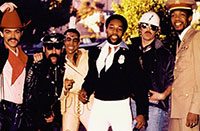
Another star disco group that emerged during the late 1970s was the Village People. Record producer Jacques Morali and his business partner Henri Bololo took out an ad to recruit young men to sing on some disco tunes that Morali had written. The ad read, "Macho types wanted. Must dance and have a mustache." Morali cast and costumed the racially diverse members of the Village People according to various stereotypes of the gay men who wore fantasy costumes to Greenwich Village clubs, such as the construction worker, the cowboy, the Native American, and the leather man.
The group’s name was a reference to Greenwich Village. The Village People’s songs and costumes were over-the-top stereotypes and parodies of underground gay life, and many of the songs contained inside references to aspects of gay culture. For example, "YMCA ♫" (1978) is about using the athletic club to meet other gay men. These references went unnoticed by many mainstream listeners who simply found the songs catchy, the dance moves infectious, and the costumes silly. Morali’s strategy worked, because the Village People were the best-selling pop music group in the United States in the late 1970s. Singles such as "YMCA ♫" (1978) and "In the Navy ♫" (1979) sold well and involved their listeners in statements of gay culture, whether they knew it or not.
Novelty disco records were also common in the late 1970s. Rick Dees and his Gang of Idiots released "Disco Duck ♫" in 1976, which went to number 1 on the Billboard singles charts. Walter Murphy’s "A Fifth of Beethoven ♫" (1976) was a disco rendition of the Fifth Symphony by Ludwig van Beethoven, and it was so popular that it was featured on the Saturday Night Fever soundtrack the next year. Many artists, including the Rolling Stones, Barbra Streisand, and Kiss all recorded disco-inspired singles or albums in an attempt to capitalize on the disco craze.
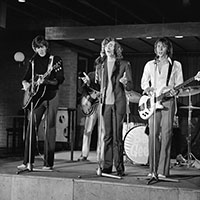
Yet disco was not universally loved by any stretch of the imagination. Although Travolta’s character in Saturday Night Fever and the Bee Gees and their music had helped to established a masculine, heterosexual identity for disco music, some listeners rejected the music on the basis of its association with gays and its origins in the LGBT community. Some devoted rock listeners hated disco because the music was about dancing and having fun rather than listening intently and quietly. Others simply despised the music for its mass commercial appeal and the rapidity with which artists seemed to jump on the disco bandwagon. Rolling Stone magazine advertised T-shirts that read, "Disco sucks."
A Chicago DJ organized a massive destruction of disco music in 1979. During a White Sox baseball game in Chicago’s Comiskey Park, several hundred disco albums were blown up to the rallying cry of, "Disco sucks!" The explosion caused so much damage on the field that the game was called off. Clearly, disco had the potential to incite a significant amount of negative energy from those who disliked it.

“Disco was like the celebration of music through dance and my God! When you heard the music sometimes it was like, if you don't get up and dance, you aren't human!”

“Disco is a major influence in the world of fashion. It is a dynamic factor in contemporary advertising. It is a message from every consumer that there has been a rediscovery of America's greatest by-product: fun.”

