
Overview
Objectives
- Identify the similarities and differences between punk rock and New Wave
- Recall the significance of CBGB in the early careers of New Wave bands such as Talking Heads and Blondie
- Examine the role of earlier styles of rock and popular music in the recordings of groups such as the B52s, the Cars, and the Knack
Conclusion
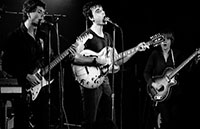
The musicians of the New Wave movement wanted to create space between themselves and emotions, between humans and technology, and between the past and the present. Some groups such as Devo stressed the increasing mechanization of human existence. The Talking Heads were quirky and awkward, creating distance in their songs with abstract lyrics or unsympathetic subjects. A number of groups such as the B52s and the Cars rejected the music of the present and instead embraced the sounds and styles of the 1950s and early 1960s.
Although the music of New Wave artists was not as confrontational or violent as that of punk musicians, the New Wave movement found its own way to rebel against the rock mainstream.

“Undoubtedly the rock disco helped in breaking the year’s first new wave / disco crossover hit, Blondie’s chart-topping smash “Heart of Glass,” and there would be many more such success stories to follow as rock discos began to spread to nearly every metropolitan center throughout North America.”

“At its best New Wave/punk represents a fundamental and age-old Utopian dream: that if you give people the license to be as outrageous as they want in absolutely any fashion they can dream up, they'll be creative about it, and do something good besides.”

"Before Blondie, Debbie Harry was in a folk band called Wind in the Willows, named after the children's book by Kenneth Grahame."
