
Overview
By the early 1990s, hip-hop had become a major commercial and artistic force in the United States. The music continued to grow and diversify in both style and geography. Although New York had been the center of hip-hop’s development since the 1970s, in the early 1990s, the West Coast became the new hot spot for hip-hop. Soon, New York artists reestablished the significance of the East Coast in hip-hop. In this lesson, we will consider the musical styles of the East and West Coasts in the 1990s, and then we will turn to the feud between the two coasts that culminated in the murders of two young rappers who were at the heights of their careers.
Objectives
- Recall the musical style that defined West Coast hip-hop, in particular the production style of Dr. Dre
- Identify the significant musicians in the new style of East Coast hip-hop
- Recall the feud between East Coast and West Coast hip-hop artists and the roles played by Tupac Shakur and the Notorious B.I.G. in that feud
East Coast vs. West Coast continued
By the mid-1990s, the most famous West Coast rapper was Tupac Shakur, whose name was also styled "2Pac." Tupac recorded music on a variety of topics, and he often lamented the less glamorous aspects of the gangsta life in tracks such as "Shorty Wanna Be a Thug♫" (1996). Although he did engage with gangsta topics such as the disrespect and distrust of women, he also recorded a number of tracks such as "Keep Ya Head Up ♫" (1993) and "Dear Mama ♫" (1996) that praised women in general and mothers in particular. Despite the diversity and sensitivity in many of Tupac's recordings, he often faced criticism for his more explicit tracks and was accused of inciting violence on more than one occasion.
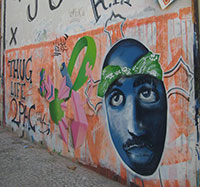
Although he was from Northern California, Tupac did collaborate with Los Angeles-based artists. For example, he frequently featured Snoop Dogg as a guest rapper, and Dr. Dre produced several of Tupac's tracks, including "California Love ♫" (1995). In 1995, Suge Knight of Death Row Records bailed Tupac out of jail on the condition that the rapper join Death Row Records. Tupac's first release on Death Row was 1996's All Eyez on Me, which is his best-selling and most critically acclaimed album. Tupac's association with Death Row Records exacerbated an existing conflict with East Coast rapper and Bad Boy Records artist the Notorious B.I.G.
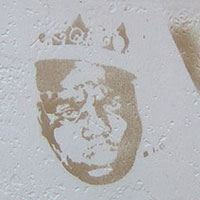
If Tupac was the star of the West Coast in the mid-1990s, his East Coast counterpart was the Notorious B.I.G., who was also known as Biggie Smalls. Smalls was from Brooklyn, and much of his music was semi-autobiographical. Until his music career took off, Smalls had supported himself financially by selling drugs, a fact to which he frequently referred in his lyrics. In 1992, Sean Combs signed Smalls to his new label Bad Boy Records, and Smalls provided guest verses on several singles for other artists. His first solo album, Ready to Die, was produced by Combs and released in 1994. The lead single, "Juicy ♫," is representative of Smalls's style. The song is a rags-to-riches tale in which Smalls raps about early hip-hop artists he admired and then boasts about his newly-found success. Like many of Smalls's songs, "Juicy" is boastful yet also tinged with darkness and bitterness. Smalls began recording his second album in 1995, but it was not completed until just before his death in 1997.

"I'm no reporter. That's for the man with a suit and tie. I'm just relating to my people the best way I know, bringing them what they know and what they see out on the streets. I'm bringing it to them in a musical way, through a way of partying rather than violence. Now they can party their way through their problems."


