
Overview
Objectives
- Identify several major artists and movements from the 1980s that drew heavily on earlier forms and styles of rock music
- Examine how each artist incorporated earlier styles of music into their new albums and singles
- Recall the significance of MTV in the promotion of musicians such as the Replacements and Peter Gabriel
Hardcore Punk
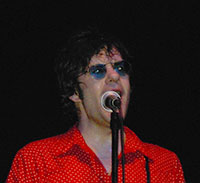
In Washington, D.C., a hardcore punk scene was developing that sounded very similar to that of Los Angeles hardcore. In contrast, though, musicians in the D.C. hardcore scene spoke out against drugs, promoted racial tolerance, and advocated intellectual government rather than anarchy. Ian MacKaye, a singer, songwriter, and guitarist, founded Minor Threat in 1980 with drummer Jeff Nelson. Releasing music on their own label, called Dischord, Minor Threat’s music had the distortion, screaming, and rough edges of British punk and the Los Angeles hardcore punk, but their messages advocated a drug- and alcohol-free lifestyle.
Their single "Straight Edge ♫" (1981) inspired the name for a movement of musicians and fans who avoided drugs and alcohol.
The hardcore punk scene of Minnesota’s Twin Cities was a contrast to the sounds and styles of Los Angeles and Washington, D.C. Bands such as the Replacements and Hüsker Dü had a more melodic style than other hardcore punk bands of the period, which often made their music far more accessible to listeners. The Replacements were led by singer, guitarist, and songwriter Paul Westerberg, who retained the speed, distortion, and compactness of punk rock while adding catchy melodic hooks and more harmonic complexity. The single "Color Me Impressed ♫" (1983) represents the Replacements’ musical style from this period with its brief length, catchy melody, fast tempo, unpolished performing style, and instrumental hooks. The Replacements recorded and released their early albums on the local independent label Twin/Tone, but by the mid-1980s, they had signed with the major label Sire Records and even had music videos on MTV. True to the punk rock do-it-yourself aesthetic, the Replacements’ video for "Bastards of Young ♫" (1985) was three and a half minutes of a stereo system playing.
Like the Replacements, Hüsker Dü was from Minnesota and recorded a melodic style of hardcore punk. They also became popular with the growing college rock market, and some of their videos aired on MTV. Songs such as their cover of the Byrds’ "Eight Miles High ♫" (1984) and their original song "Makes No Sense at All ♫" (1985) combined catchy hooks with a punk sensibility. First signed to an independent label, Hüsker Dü also joined a major label during the mid-1980s, recording two albums for Warner Brothers before disbanding in 1986. Both Hüsker Dü and the Replacements received relatively regular exposure on the MTV program 120 Minutes, a weekly program devoted to independent and underground musicians whose videos were not played in MTV’s regular video rotation.

“It was a really interesting time in New York in the late 70s and early 80s, and the music scene was really, really interesting because you didn't have to be a virtuoso to make music, it was more about your desire to express things.”

“The E Street band casts a pretty wide net. Our influences go all the way back to the early primitive garage music, and also, we've had everything in the band from jazz players to Kansas City trumpet players to Nils Lofgren, one of the great rock guitarists in the world.”

"[Peter Gabriel] composed the music for Martin Scorsese's movie The Last Temptation Of Christ. The soundtrack won a Grammy for best New Age performance."
