
Overview
Objectives
- Identify several major artists and movements from the 1980s that drew heavily on earlier forms and styles of rock music
- Examine how each artist incorporated earlier styles of music into their new albums and singles
- Recall the significance of MTV in the promotion of musicians such as the Replacements and Peter Gabriel
Conclusion
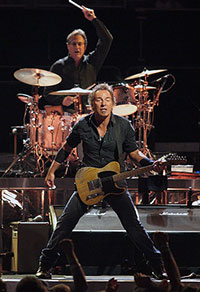
During the late 1970s and 1980s, musicians drew from tradition in many different ways. Some groups were direct descendants of earlier genres, such as the hardcore punk musicians of Los Angeles, Washington, D.C., and Minnesota’s Twin Cities. Others combined a number of earlier genres and styles, such as Bruce Springsteen’s blend of a Bob Dylan-esque folk sensibility with traditional rock instrumentation and production values from Phil Spector and his wall of sound. Still others reinterpreted styles of the past, such as Peter Gabriel, whose version of 1960s soul mixed funk grooves and world music instruments with lyrical ideas of the blues and soul. Every artist in this lesson was deeply indebted to the music of the past, but each interpreted those influences in a very different way.

“Bob Dylan and John Lennon and Bruce Springsteen, these are soul guys. Bruce Springsteen might not sing like Otis Redding, but he sings with white soul. He's singing and he's writing songs from the bottom of his gut.”

“It was a really interesting time in New York in the late 70s and early 80s, and the music scene was really, really interesting because you didn't have to be a virtuoso to make music, it was more about your desire to express things.”

"[Peter Gabriel] composed the music for Martin Scorsese's movie The Last Temptation Of Christ. The soundtrack won a Grammy for best New Age performance."
