
Overview
By the 1990s, country music had become the most popular and bestselling genre of music in the United States. In this lesson, we will consider how and why country music rose to commercial dominance in the late 1980s and 1990s. The so-called “new country” music of the 1980s was actually in many ways a revival of older, traditional styles of country music. By the 1980s, a number of the top country stars such as Dolly Parton had become increasingly pop-oriented in their sounds and musical styles. The 1980s saw a return to the earlier days of country music, including the fashion, instrumentation, and lyric themes.
Objectives
- Recall how and why George Strait and Reba McEntire were important figures in the “new” country of the 1980s
- Recall the significance of Garth Brooks’s musical style and lyric message and how he was similar to and different from other country artists
- Examine the careers of other popular country artists from the 1990s, including LeAnn Rimes and Shania Twain
Garth Brooks continued
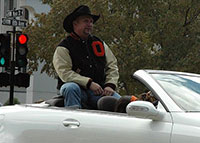
Brooks's music did not focus exclusively on the sentiments of traditional country music, however. He also addressed topics that drew controversy. For example, "The Thunder Rolls," also from the No Fences album and co-written by Brooks and Pat Alger, addressed a woman who reached a breaking point as the result of her husband's infidelity. Although themes of heartbreak and infidelity are common in country music, in "The Thunder Rolls," the female protagonist takes revenge on her cheating husband by shooting him.
The third verse of "The Thunder Rolls" describes the wife's retribution, and the original studio version and single of the song did not include the third verse; however, Brooks added the third verse in live performances, and the version with this third verse is included on his live albums as well.
In the music video for "The Thunder Rolls," Brooks opted to leave out the third verse but allude to the wife's actions in the video's imagery. In the video, Brooks plays the husband, who is not only a philanderer but also physically abusive of the wife. The video was almost immediately banned by both the Nashville Network (TNN) and Country Music Television (CMT), the two cable channels devoted to country music videos. Both channels claimed that the music video promoted gratuitous violence. In contrast, several radio stations and cable channels claimed that the music video helped raise awareness about issues of domestic violence. VH-1, the music video cable channel that typically aired pop, rock, and adult contemporary videos, began airing the video for "The Thunder Rolls," despite the fact that the station rarely played country music videos. "The Thunder Rolls" remains one of the most controversial country music videos ever recorded.
In 1992, Brooks released the single "We Shall Be Free ♫," which he co-wrote with Stephanie Davis. "We Shall Be Free ♫" was written in response to the 1992 Los Angeles Riots, and the lyrics express optimism for a world in which people are free of oppression, hunger, homophobia, racism, and religious discrimination. "We Shall Be Free ♫" was unusual among country songs because it was a protest song in the vein of the 1960s, and Brooks also made references to gay rights in the lyrics. Although some country artists such as Willie Nelson had embraced political causes in their music, Brooks's broad inclusiveness was still an anomaly among many country songs of the period. For the most part, if country musicians engaged with political or social issues in their music, they tended to be conservative in their messages. Brooks's song was a contrast to that perspective. Brooks has noted that "We Shall Be Free ♫" is the most controversial song he has ever recorded, and it was his first single in several years that did not reach the top 10 of the country charts.
Regardless of the controversy Brooks may have faced for "We Shall Be Free ♫," he continued to sell millions of other singles and albums during the 1990s and into the 2000s. By the end of 1993, Brooks's six albums had sold over five million copies each, and both No Fences (1990) and Ropin' the Wind (1991) sold over ten million copies each. According to Brooks, he and his band are "just a bunch of country bumpkins who got lucky and know that they got lucky."

"You know, traditional country music is something that's going to be around forever."


