
Overview
Music is an ever changing expression of the time, place, and people who create it. In the border areas of Mexico and the U.S. and in Mexican-American populations around the country, unique musical forms and styles have been developed to entertain, educate and uplift audiences. In this chapter we will discuss the genre of conjunto in its traditional and modern forms in Texas. These musical styles appeal to the working class and function in large part to accompany couple dancing. Forms will include the popular polka dance, the corrido (a type of narrative ballad) and the ranchera, (a popular type of Mexican song). The development of the traditional conjunto ensemble will be traced from the early 1900s through the 1960s. Examples are given of innovative hybrid musical styles formed in combination with mainstream popular music and Latin American music of recent years. Most of the music is sung in Spanish with the exception of some cross-over English songs.
Objectives
- Identify the ensembles and selected genres and forms of Conjunto aurally
- Recall the bajo sexto and accordion and their musical roles and functions
- Identify the following song/dance forms: polka, corrido, ranchera, cumbia
- Recognize the major artists of Conjunto music
- Analyze the cultural context that these ensembles, genres, and forms originate from as part of an ongoing, bi-cultural musical expression
Introduction
Conjuntoa “group” or small band playing popular dance music originating along the border between Texas and Mexico, characterized by the use of accordion, drums, and 12-string bass guitar and traditionally based on polka, waltz, and other dance rhythms music originated in the cantinas and bars near the Mexican/U.S. border around the turn of the 20th century. It quickly became a symbol of the working class and served as a voice of the people. Conjunto is a variant of Mexican norteño style, as evidenced by the instruments used in both styles:
- Diatonic, button accordion
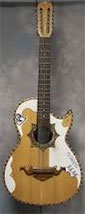
- Bajo-sexto, a 12-string guitar
The accordion initially played chordal accompaniment but gradually assumed a more melodic function in the ensemble, due to the influence of virtuoso player Narciso Martinez. The primarily instrumental repertory of the early conjunto groups include couple dances of European and Mexican origin such as the polkacouple dance in lively 2/4 meter that originated in Europe, waltzcouple dance in ¾ meter originating in Europe, mazurka, schottische, and huapango. The bajo sexto12 string Mexican guitar ("6th bass") utilizes 12 strings in 6 double courses and provides bass lines and chordal accompaniment.

. . . "conjunto" continues to represent an alternative musical ideology, and in this way it helps to preserve a Mexican, working-class culture wherever it takes root on American soil. Endowed with this kind of symbolic power, conjunto has more than held its own against other types of music that appear from time to time to challenge its dominance among a vast audience of working-class people.


