
Overview
The music of contemporary Mexican American culture ranges in style from traditional Mexican styles such as norteño and mariachi, to hybrid forms that combine the polka/ranchera sound with country, rock and roll, and cumbia, to hip hop and rap styles. Often the term Tejano is used generally to indicate any of these styles that have developed in Texas. However, for our purposes, the term Tejano will be used more specifically to indicate a modern, expanded conjunto style (electrified bajo sexto, bass, accordion, drumset, synthesizer and additional instruments). Individual artists and bands from California, Arizona, and Texas have driven the innovation of new approaches to traditional music with a resultant diversity of material. The selected artists and genres in this chapter will include Little Joe y la Familia, Jimmy Gonzalez y Mazz, David Lee Garza y los Musicales, Patsy Torres, Linda Ronstadt, Los Lobos, and Selena.
Objectives
- Identify the instrumental ensembles and musical styles of La Onda Chicana, Mariachi, Tejano, Rock and Tejano/Cumbia aurally
- Recall the contributions and innovations of selected artists to Mexican American popular music
- Identify the following song/dance forms: polka, cumbia, son jarocho, son jalisciense
- Examine the cultural context that these ensembles, genres and forms originate from and understand them as part of an ongoing, bi-cultural musical expression
Linda Ronstadt: Mariachi
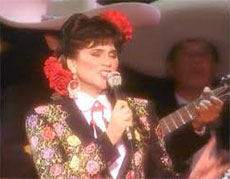
In the fall of 1987, successful pop singer Linda Ronstadt released her mariachi recording, Canciones de Mi Padre (Songs of My Father), accompanied by the world's best mariachi, Mariachi Vargas. Though Ronstadt grew up in Arizona in a Spanish-speaking Mexican-German-Dutch household, she had to learn Spanish to sing these songs since she was not bi-lingual. The music she had heard her father sing and listened to as a child became a personal recording project requiring her to step into unfamiliar musical territory. Consummate artist that she was, she thoroughly learned the singing style and language while bringing her own vocal training and expertise to the music.
Mariachi Vargas and Ronstadt packed houses on tour, and won a Grammy for the recording. It stands as the best-selling non-English-language album in U.S. music history to date.
The independent efforts of Los Lobos, Linda Ronstadt and others brought new visibility and popularity to Mexican American styles of music, and through music, brought mainstream America's attention to the profound contributions made by Mexican Americans to our musical and cultural profile.
Listening Examples

"My belief is that the marriage between conjunto music and orquesta music became Tejano music."


