
Overview
Objectives
- Examine some of the musical characteristics of the earliest rock and roll hits and how these musical genres relate to earlier genres studied in the previous lessons such as blues, gospel music, rhythm and blues, and hillbilly music
- Describe the technological changes and its impact in the music industry
- Examine the influence of disc jockey Alan Freed
- Identify various rhythm and blues artists
- Examine some of the ways that white artists modified the music of black artists in their cover versions
Introduction
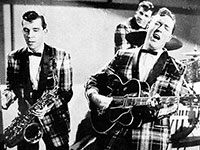
In the early 1950s, many different musical threads came together to create the earliest rock and roll. Blending elements of gospel music, blues, popular song, hillbilly music, and rhythm and blues, artists such as Ray Charles, Chuck Berry, and Fats Domino wrote and recorded some of the earliest crossover hits. Soon, white artists such as Bill Haley and the Comets and Pat Boone began recording cover versions of black artists’ songs, most of which were more commercially successful than their black counterparts.
The early 1950s were an exciting time for recording artists, listeners, and record companies. Changes in technology, new and hybrid musical forms, and shifts in music consumption patterns all contributed to a reworking of the American popular music landscape that would forever alter the history of popular music consumption in the United States.



"Ray Charles was given a star on the Hollywood Walk of Fame in 1981, and was one of the first inductees to the Rock & Roll Hall of Fame in 1986."
