
Overview
In the 1920s, a new type of jazz emerged that was related to, but separate from, Dixieland. Called swing or big band, this music often had less improvisation, more dancing, and more instruments than its Dixieland counterpart. Led by bandleaders such as Duke Ellington, Benny Goodman, and Fletcher Henderson, swing bands provided the soundtrack for dancing and merrymaking during what were becoming increasingly difficult times in the United States.
Objectives
- Recognize the difference between swing music and Dixieland jazz such as instrumentation, form, purpose, and composition
- Examine how race relations affected the performance and recording of swing music throughout the 1930s and 1940s
- Identify various bandleaders and the way each cultivated a specific style within their individual groups such as Count Basie’s Kansas City swing style
Conclusion
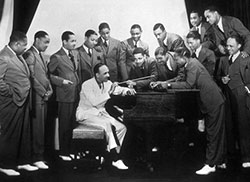
During the early part of the 1920s, society syncopators provided the music for dancing, drinking, and socializing. These big bands played arrangements of popular songs and largely avoided the flashy solos or complex melodies of jazz. During the 1920s, bandleaders such as Fletcher Henderson and Duke Ellington began writing innovating compositions and arrangements that moved away from the style of the society syncopators. Called swing or big band, this music featured large ensembles and still allowed people to dance, but the focus was increasingly on soloists and the vision of the composer or arranger.
During the 1930s, bandleaders such as Benny Goodman, Paul Whiteman, and Count Basie played on the radio, in live performances, and, to a lesser extent, in recordings. Each bandleader brought to his group a unique vision or sound, such as Count Basie’s Kansas City swing style.



