
Overview
First called “hillbilly music” by record labels, early country and western music was recorded in southern areas of the United States by ambitious record producers who were looking for a new, commercially-appealing sound. With the advent of radio, this type of music became incredibly popular, spawning a number of subgenres, such as bluegrass, honky-tonk, and country crooning. The film popularity of singers such as Gene Autry also cemented the image of the singing cowboy in the minds of many Americans. As we will see, early country and western music had many themes and images that continue to permeate country music to this day.
Objectives
- Examine how country music was first discovered by record executives such as Ralph Peer and what made it so commercially appealing
- Identify early recording artists who increased the commercial appeal of hillbilly music
- Recognize the several subgenres of country music developed during and after World War II
- Identify instruments played in a bluegrass ensemble
- Recall the BMI and the ASCAP strike in the early 1940s and how it helped the development and distribution of early country music
The Earliest Country Music
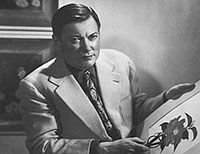
The roots of country music are in the Anglo-American musical traditions from the southern United States. Country music lay buried in the mountains and flatlands of the southeastern United States until the early 1920s, when Ralph Peer, the recording director for Okeh, sought new genres of music to record, promote, and sell. Folklorists had studied and catalogued this Celtic music earlier in the twentieth century, but Peer was not interested in scholarly investigations or preservation. A businessman, Ralph Peer wanted to find white folk music that would have commercial appeal in radio and recordings.
The majority of early hillbilly music focused on instrumental performances, and only rarely did the musicians create identities as singers. For example, Riley Puckett, a blind singer, recorded "Rock All Our Babies to Sleep ♫" in 1924, and this song is generally regarded as the first recorded example of yodeling in country music. Fiddlin’ John Carson also recorded several songs on which he both fiddled and played, such as "The Little Old Log Cabin in the Lane ♫." It is worth noting that when Peer first heard Carson, he thought Carson’s singing was terrible and only wanted to record his fiddle tunes. Polk Brockman, the director of the phonograph department of an Atlanta record store, convinced Peer to record Carson’s singing. Brockman told Peer that Carson’s sounds would appeal to Southern listeners, and he even offered to buy five hundred copies of the recording before it was even pressed. Those five hundred copies sold almost immediately, and Polk ordered five hundred more. Recognizing his mistake, Peer invited Carson to sign with Okeh and record twelve songs.
By 1927, Peer had left Okeh and formed his own publishing firm, and he was now lining up talent for the big record companies. He advertised in local newspapers and set up temporary recording locations in order to encourage local talent to record for him. In exchange for his services, Peer retained copyright ownership of all of the music he recorded. In fact, he is listed as co-author on much of this music, which allowed him to earn royalties from its sales. Country music history was made in August 1927, in Bristol, Tennessee. Several dozen acts responded to Peer’s advertising, and two of these groups were among the most influential forces in early country music.



