
Overview
As we saw in earlier lessons, solo singers became increasingly important during the 1930s. Singers such as Ella Fitzgerald and Bing Crosby built long, successful careers with their interpretations of jazz and Broadway standards. More and more singers followed in this mold in the 1940s and early 1950s, including Frank Sinatra, Perry Como, Patti Page, and Doris Day. Singing groups were common as well, such as the Ink Spots and the Boswell Sisters. Although many singers began in the Broadway or big band mold, many branched out into covers of all types of tunes from a variety of genres.
Objectives
- Examine a number of popular singers and singing groups from the 1940s and 1950s
- Examine how each singer or group offered a unique perspective for the interpretation of standard tunes
- Recognize the different interpretations of the same standard
- Examine how each artist was able to create an identity while performing much of the same repertory
The Boswell Sisters
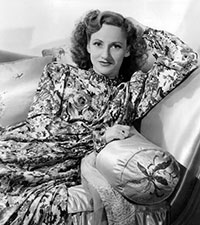
During the 1940s and 1950s, singing groups also performed both with big bands and on their own as solo acts. In the early days of radio, the Boswell Sisters (Connee, Martha and Helvetia) made themselves a household name in the South singing pop songs on a New Orleans radio station. Their intonation and their bluesy harmonies established the model for several later female trios. Brunswick Records signed them in the 1930s, and they were backed by the famous Dorsey Brothers Band for many recordings. "When I Take My Sugar to Tea ♫" is their most famous trio number. They became regular guests on the Kraft Music Hall at NBC, appeared in the movies such as The Big Broadcast, Moulin Rouge, and Transatlantic Merry-Go-Round, and toured Great Britain in 1933 and again in 1935.
They disbanded in 1936, and Connee went on to a distinguished solo career even though she was confined to a wheelchair by childhood polio.
Connee Boswell was one of the first female pop singers to change notes and rhythms in her treatment of a song. This jazz technique created a different feeling from the stiff interpretations that were common at the time. "They Can't Take That Away From Me," "I Cover the Waterfront ♫," "That Old Feeling ♫" were among the seventy-five million records she sold before her death in 1976. It is worth noting that Boswell’s paralysis was never acknowledged publicly, and when she appeared in films, she was never shown in a wheelchair. In fact, in some of her film appearances, the crew would place Boswell in a metal frame that made it look as if she was standing up. The frame would then be covered with the skirt of a long, ornate dress in order to disguise her disability.



