
Overview
While white audiences were listening to the sounds of Frank Sinatra, Patti Page, and Perry Como in the 1940s and 1950s, black listeners were consuming gospel music, doo-wop, and rhythm and blues. Although all of these genres are related to earlier styles of African American music, such as the blues, ragtime, and jazz, they all have specific features that make them unique. Technological advances in recording and broadcasting made it easier and easier to access music. As we will see, there were no color lines on the radio, which meant that white listeners began listening to rhythm and blues.
Objectives
- Identify several important types of African American music from the early part of the twentieth century, including gospel music, doo-wop, and rhythm and blues
- Examine genres of African American music and their distinct musical style and social function
- Examine the enormous appeal of rhythm and blues music with white audience and how this music became the foundation of rock and roll
Gospel Music
During the Great Migrationa period during the early twentieth century when many African Americans moved from the rural South to the urban North in search of better work and quality of life that occurred between the First and Second World Wars, many African Americans left the South and moved North in search of better work and quality of life. As people moved to new areas and sought new friends and community, churches became an essential part of many people’s lives. The soundtrack for these new churches, communities, and cities was gospel musicblack sacred music that included instrumental accompaniment, borrowed from popular music and hymns, and contained melodies intended for improvisation. Gospel music was almost always performed with instrumental accompaniment. Early gospel music was accompanied by piano or organ, but over time, gospel music began to incorporate wind instruments, guitars and banjos, and drums. Gospel music borrowed characteristics from popular music and hymns, such as verse-chorus form. Composers of gospel music purposely wrote melodies with the intention of people improvising, adding percussion from their bodies, crying out, or adding blue notes, all of which are common gestures in African American music, both sacred and secular.
Gospel music also drew from religious movements such as the Holiness-Pentecostal movementa movement in American Christianity that encouraged congregational participation and expression and eschewed polished performance styles, which encouraged congregational participation and expression and eschewed polished performance styles. Like spirituals, however, gospel music continued to include call and response structures.
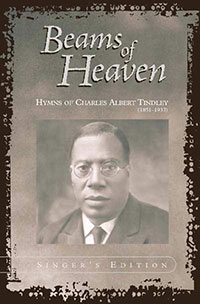
Some of the earliest gospel music was composed by Charles Albert Tindley, a Methodist minister who composed songs that were designed to complement the topics of his sermons. Many of Tindley’s compositions are still sung today, such as "We Will Understand It Better By and By ♫" and "Stand By Me ♫," and many have been incorporated into the hymnals of different denominations, not just African American churches.
The father of traditional gospel music is Thomas A. Dorsey, who played organ in his father’s Baptist church as a child but also worked in a vaudeville theater. His exposure to secular music strongly influenced his compositions of sacred music. Like Tindley, Dorsey composed nearly all of his songs in verse-chorus form with plenty of call and response. Unlike Tindley, however, Dorsey inflected his music with harmonies, melodies, and rhythms that reflected his knowledge of blues and jazz idioms. Although not necessarily notated in the music, many gospel songs offer opportunities for a performer to sing a melismamany notes sung to a single syllable of text, which is a single syllable of text that includes many different pitches. It is important to note that many notated gospel songs do not specify instrumentation or ornamentation, which leaves many options available for the performers.
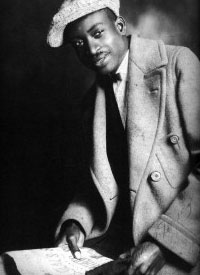
Many church congregations initially rejected Dorsey’s music because of its audible links to secular music genres. As we will see in later lessons, some of the earliest examples of rock and roll came when singers such as Ray Charles adapted the lyrics of gospel songs to address secular topics. Dorsey formed an allegiance with gospel singer Mahalia Jackson to promote his music much in the way of Tin Pan Alley song pluggers: They would set up on a street corner, Jackson would sing the music, and Dorsey would sell sheet music to passersby with the hope that they would take the music to their churches. The plan worked, and Dorsey's music became so popular that during the 1940s and 1950s, new gospel compositions were called "Dorseys." As gospel music gained popularity, churches began buying instruments that would allow them to perform this new type of music.
"Precious Lord, Take My Hand ♫" (1932) is a one of Dorsey’s best-known compositions (see Discover Music guide). The song took on a life of its own when sung by Mahalia Jackson. In fact, during the Civil Rights Movement, Rev. Martin Luther King, Jr. frequently invited Jackson to sing "Precious Lord, Take My Hand ♫," and she also performed it at King’s funeral. (Aretha Franklin sang "Precious Lord, Take My Hand ♫" at Jackson’s funeral a few years later.) The melody of "Precious Lord, Take My Hand ♫" is borrowed from a nineteenth-century hymn by George Nelson Allen called "Must Jesus Bear the Cross Alone ♫," but Dorsey’s incorporation of jazz and blues elements separate the two songs from each other.



