
Overview
Objectives
- Examine how and why the producer was such a critical part of the recording process, focusing specifically on Phil Spector and how he created his wall of sound
- Recognize the stylistic characteristics of surf rock
- Examine the different influences that contributed to surf rock
Phil Spector

Co-writer of Ben E. King’s "Spanish Harlem ♫" and Gene Pitney’s "Dream for Sale ♫," Phil Spector worked as a freelance studio assistant for Leiber and Stoller and for several other established composers and producers. At age 21 he teamed up with Lester Sill, and, combining their names, they formed a new record label called Philles.
Spector was interested in innovative studio techniques. He frequently recorded with triple rhythm sections, that is, three drummers, three bass players, and three pianos. Spector also included multiple guitars and plenty of wind instruments in his recordings.
He placed all of his musicians into a relatively small space, which meant that each instrument’s sound would be heard not only in its own microphone but also in the adjacent microphones. He also required a variety of types of doubling two different instruments playing the exact same line, in which two different instruments would play the exactly same line. Doubling thickened the sound while also creating many different interesting combinations of instruments. Spector also included generous amounts of reverb. Spector wanted to create an atmosphere of sound; hearing the individual instruments was less important than hearing the collective enormity of the ensemble. Spector would often record the instrumental track before he hired the singers. Next, the singers would come in and record their part over the instrumental backing track. Finally, Spector would combine all of the recordings into what he called the wall of sound a technique developed by Phil Spector which included recording a large number of instruments, blending the sounds together, and adding reverb. Spector likened himself to the nineteenth-century German opera composer Richard Wagner, whose operas lasted several hours and required orchestras of unprecedented sizes. In fact, Spector frequently referred to his works as "teenage symphonies."
"Be My Baby ♫," which was recorded by the Ronettes, is a classic example of Spector’s wall of sound production style. The Ronettes were just one of many girl groups that were popular in the early 1960s, and these girl groups were almost always made up of black teenage girls who were gifted singers. "Be My Baby," like many tracks recorded by the Ronettes, featured the distinctive voice of lead singer Ronnie Bennett. (Bennett and Spector eventually married.) A heavy, reverberating drum beat in the opening of the song suggests the enormity of the space in which the track was recorded.
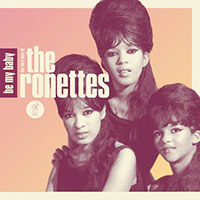
Rather than blasting the listener with the wall of sound for the track’s entirety, though, Spector introduces one part of the wall at a time. In fact, the first two lines of the first verse feature only Bennett’s lead singing and the rhythm section. Each statement of the verse and chorus adds an additional layer of sound. The result is a dramatic final statement of the chorus that includes the entire ensemble.
The records produced by Spector were unusual, to say the least, and they were commercially successful, especially the Ronettes’ "Be My Baby ♫," "Walking in the Rain ♫," and "(The Best Part of) Breakin’ Up ♫." Spector also had big hits with the Crystals, another African American girl group, including "Uptown ♫" and "Da Doo Ron Ron ♫." By 1964, the popularity of Spector’s sound had begun to fade. He did produce a final smash hit in 1965, "You’ve Lost that Loving Feeling ♫," which was penned by the songwriting team of Barry Mann and Cynthia Weil and recorded by the Righteous Brothers. In 1967, Spector sold the label and hired himself out as a freelance celebrity producer.



