
Overview
While white audiences were listening to the sounds of Frank Sinatra, Patti Page, and Perry Como in the 1940s and 1950s, black listeners were consuming gospel music, doo-wop, and rhythm and blues. Although all of these genres are related to earlier styles of African American music, such as the blues, ragtime, and jazz, they all have specific features that make them unique. Technological advances in recording and broadcasting made it easier and easier to access music. As we will see, there were no color lines on the radio, which meant that white listeners began listening to rhythm and blues.
Objectives
- Identify several important types of African American music from the early part of the twentieth century, including gospel music, doo-wop, and rhythm and blues
- Examine genres of African American music and their distinct musical style and social function
- Examine the enormous appeal of rhythm and blues music with white audience and how this music became the foundation of rock and roll
Conclusion
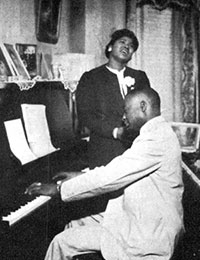
Many different types of African American music were popular in the 1940s and 1950s, including gospel, doo-wop, and rhythm and blues. Although record labels kept this music confined first to the "race" label and then to the "rhythm and blues" label, white audiences eventually began hearing and consuming rhythm and blues. As we will see in the next lesson, rhythm and blues underwent a number of musical and racial changes as it was transformed into rock and roll.



