
Learning Objectives
- Outline the social, cultural, and political impact of WWI and WWII.
- Discuss the growth of the United States as a world power.
- Describe the impact of technological advancements on the development of music in the twentieth century.
- Describe, compare and contrast the main stylistic differences of Contemporary music styles including impressionism, post-Romanticism, serialism, and expressionism.
- Summarize the changing nature and application of the concept of tonality throughout the century.
- Discuss the impact of Claude Debussy's "Prelude to the Afternoon of a Faun" in light of the Symbolist movement in literature.
- Illustrate how the Russian composer Igor Stravinsky experimented with rhythm, new instrumental combinations, and the percussive use of dissonance, and discuss the impactof these techniques on contemporary music.
- Describe the impact of Arnold Schoenberg and the Second Viennese School on 20th-century music.
- Distinguish the main stylistic differences of nineteenth- and twentieth-century composers and styles.
- Describe the musical and political impact of “national schools” of composition that developed across Europe during the 20th century.
- Explain the impact of composer Aaron Copland on American contemporary music.
- Describe the impact of Latin American composers on the larger "art music" scene and repertoire.
- Define and analyze the main differences between jazz, ragtime, and blues.
Jazz
One of the most important musical developments in the 20th century was the exponential growth and recognition of all kinds of popular music styles and genres. A study of the roots of American music and of the many different types of music and popular entertainment that have evolved over time—jazz, blues, gospel, country/western, rock and roll, acid rock, punk rock, hip-hop, etc.—would fill another course!
Nevertheless, there has been such a strong connection between jazz and art music that we must include a brief overview of jazz music within the larger context of contemporary music.
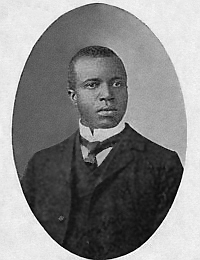
Scott Joplin
Born: 1868
Died: 1917
Period: Contemporary
Country: USA
Jazz evolved as a product of four different types of music from the American South: blues, spirituals, work songs, and ragtime. The "Maple Leaf Rag" by Scott Joplin (1868-1917) was published in 1900 and immediately became a bestseller. It featured a new piano style characterized by rhythmic complexity and syncopation. The "Rose Leaf Rag," another of Joplin's popular compositions, is played here by a clarinet ensemble.
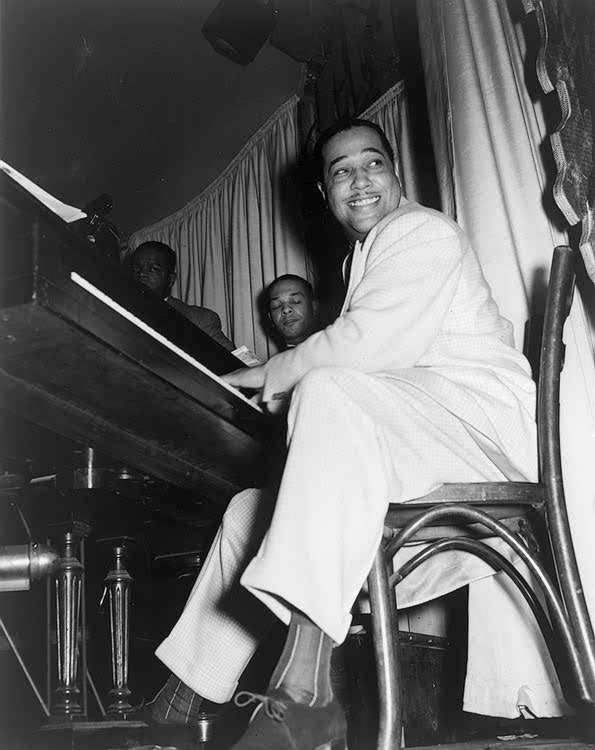
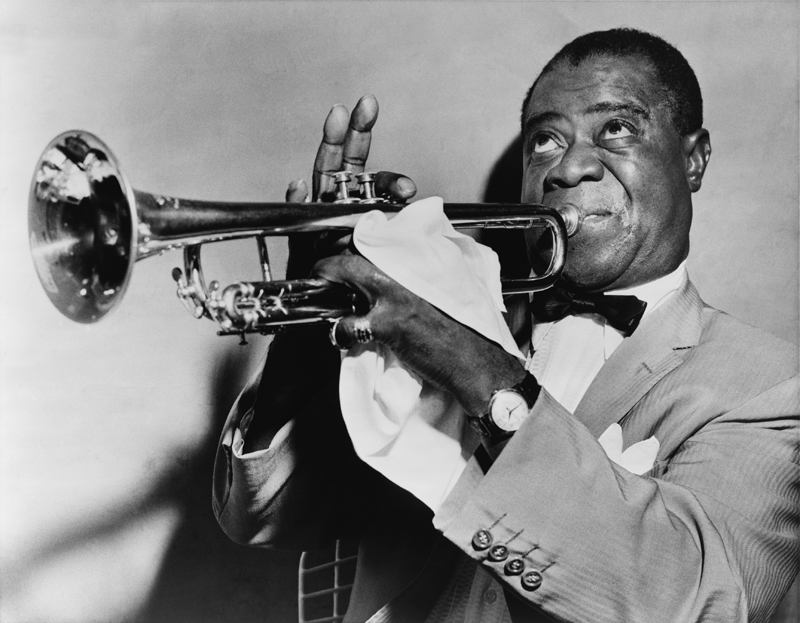
Jazz soon followed with the Dixieland sounds of Ferdinand "Jelly Roll" Morton (1890-1941) and Louis Armstrong (1901-1971). In the 1930s, jazz grew more sophisticated with the “Big Band” arrangements of significant figures such as Edward Kennedy "Duke" Ellington (1899-1974) and Benny Goodman (1909-1986).
From the 1930s onwards, art music composers tried to find ways to incorporate jazz into their music with varying degrees of success. Igor Stravinsky, Darius Milhaud, and Aaron Copland, to name just a few, wrote compositions with strong jazz components.
Composer: Scott Joplin
-
"Maple Leaf Rag"
The composer who combined the sounds of jazz and art music most successfully was George Gershwin, whose music extended from the Broadway stage to concert works such as An American in Paris and Rhapsody in Blue, his masterpiece for piano and orchestra, a work full of syncopated rhythms heavily influenced by American jazz. His folk opera Porgy and Bess remains one of the most successful examples of the marriage of classical form and popular style.
George Gershwin was born in Brooklyn, New York. In his formative years he was influenced by the violinist Max Rosen, who later became a good friend. Although Gershwin used jazz rhythms and harmonies in his music, he was not a jazz composer. In fact, his style was closer to that of composers of the commercial musical world, a group known as Tin Pan Alley.
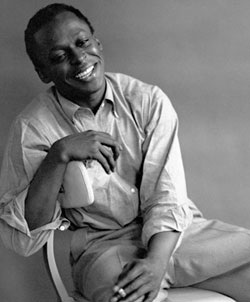
After World War II, jazz groups became smaller and there was more emphasis on improvisation. This period, commonly called bebop, established jazz as a serious art form as opposed to a popular form of entertainment. Performers such as Charlie "Yardbird" Parker (1920-1955), John Coltrane (1926-1967), Miles Davis (1926-1991), and Thelonious Monk (1917-1982) numbered among the significant figures of the bebop period.
Over time, jazz evolved and incorporated other genres of music. For example, Antonio Carlos "Tom" Jobim (1927-1994) and Stan Getz (1927-1991) introduced Latin jazz, a mixture of jazz and Latin American music. Latin jazz was practiced by Poncho Sanchez (b. 1951) and Arturo Sandoval (b. 1949). Fusion, a marriage of jazz and rock rhythms, may be found in the music of Chick Corea (b. 1941) and in Miles Davis' later works. Today, jazz may be heard in any of its original forms: Dixieland jazz, Big-band jazz, straight-ahead jazz (usually referring to bebop), Latin jazz, or fusion.
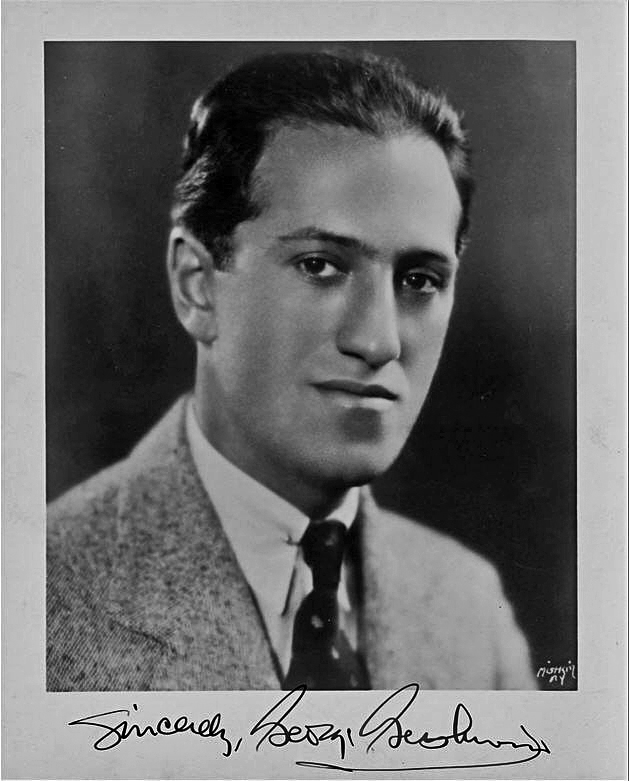
Composer: George Gershwin
-
"Rhapsody in Blue"