
Overview
While history is inherently polemic, recent jazz history is even more so, because it lacks a linear stylistic evolution and, as such, departs from characteristic developments in jazz during the first 75 years of its existence.
It’s no surprise then, that the decades since 1980 have been the most diverse and controversial in the history of jazz. Over this time, there has been a proliferation of artistic approaches and a host of superb musicians that made them happen, keeping in mind that it is difficult, if not impossible, to single out a single towering figure in jazz among Morton, Armstrong, Ellington, Parker, Gillespie, Monk, Davis, Coltrane, and, some would argue, Mingus, Coleman, and Ayler.
In this section we will focus on those artists who came to prominence in the late 1970s and 1980s. Admittedly, the grouping of these musicians is somewhat arbitrary, given the lengthy careers many of them enjoyed. Accepting, then, that no survey of the past three decades can be completely satisfying, we offer these artists as among those deserving of our attention.
Objectives
Upon completion of this lesson, you will be able to do the following:
- Appreciate postmodernism as it relates to jazz
- Appreciate neo-classicism as it relates to jazz
- Identify leading postmodern and neo-classical musicians and their contributions to jazz
Anthony Braxton
A number of organizations of progressive musicians sprang up in American cities in the mid-1960s to promote avant-garde jazz, notably in New York, Los Angeles, St. Louis, Detroit, and Chicago. The most influential of these groups was the Association for the Advancement of Creative Musicians (AACM), founded in Chicago in 1965. (As a non-profit organization, the AACM has continued to the present with an emphasis on music education for Chicago inner city youth.)
Among the early members of the AACM were composer, saxophonist, and multi-instrumentalist Anthony Braxton as well as members of the group Art Ensemble of Chicago (AEC), led by saxophonist, clarinetist, flautist, and multi-instrumentalist Roscoe Mitchell. While avant-garde and free jazz of the early 1960s provided a creative stimulus for these musicians, their musical explorations have since been far ranging and enduring. By and large, the Chicago musicians demonstrated a fascination with sound, space, and textures — an interest that would lead many of them to become multi-instrumentalists.
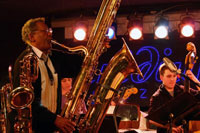
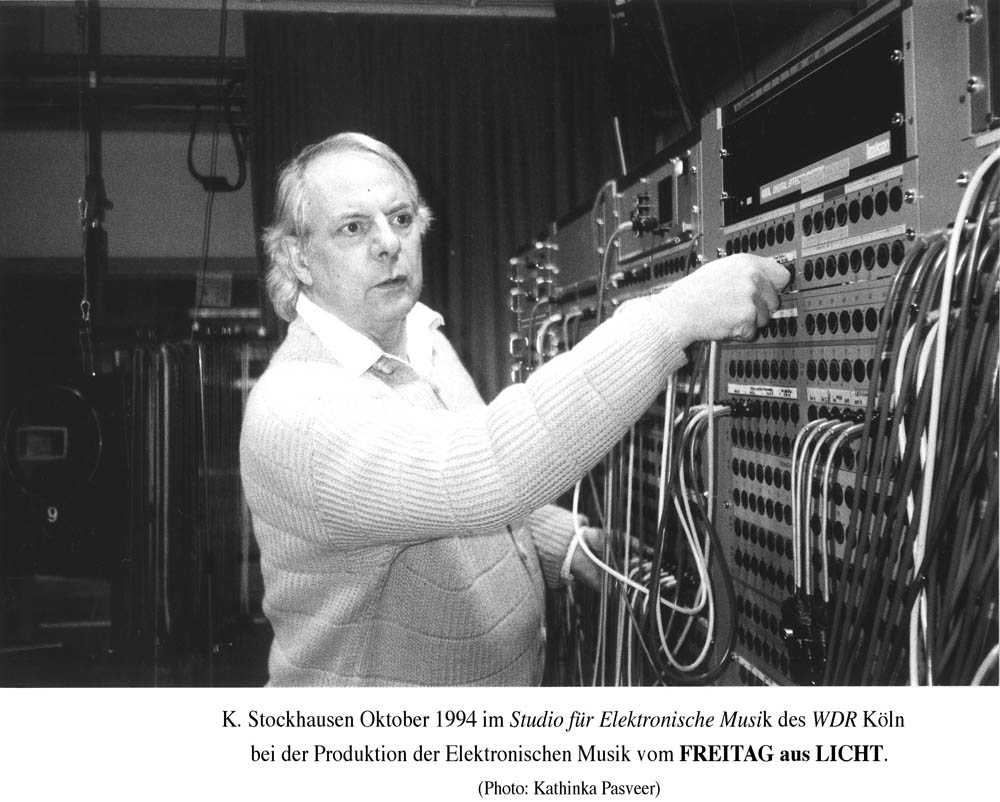
Anthony Braxton (b. 1945) has been as far ranging as anyone in his exploration of musical sound. Not content to limit himself to the musical world of jazz, Braxton has embraced the musical influences of such classical avant-garde composers as Schoenberg, Stockhausen, Xenakis, and Cage. He has been a prolific composer, writing pieces that run the gamut in size and scope, from solo pieces and intimate duos to works for orchestra — and even one composition for four orchestras!
As a performer, Braxton has demonstrated a similar openness to diverse possibilities. In 1968, he recorded For Alto, the first full-length album for solo saxophone. In 1970 and 1971, Braxton was a member of the progressive jazz quartet Circle, led by pianist Chick Corea. In 1974, he recorded two In the Tradition albums, demonstrating his virtuosity and love for mainstream jazz, while raising eyebrows among devotees of the New York "Loft Jazz" scene. ("Loft jazz" in New York in the 1970s was literally performed in converted industrial lofts. The scene was dominated by high-energy players emulating the free-jazz style of Coltrane, Ayler, and others.) Braxton's 1976 album Creative Orchestra Music remains one of his most highly regarded works, and it offers probably the most direct evidence of Braxton's postmodern tendencies, including as it does a host of juxtaposed musical styles and genres that have populated the American cultural landscape over the last century, reaching as far back as the marches of John Philip Sousa3.
Braxton's openness to European as well as African musical influences has been a point of contention, drawing criticism from some quarters. But despite his detractors, Braxton's career as a musician has thrived since the mid-1970s. He has also been a music professor since the mid-1980s. In 1994 he was named a MacArthur Fellow.
Duke Ellington did not like to be categorized as a "jazz" composer, and Braxton expresses a similar view about his own work:
"I know I'm an African American, and I know I play the saxophone, but I'm not a jazz musician. I'm not a classical musician, either. My music is like my life. It's in between these areas4."
There is no such thing as a "typical" piece by Anthony Braxton. So we'll simply experience music from one of his novel collaborations, Birth and Rebirth, his 1978 duo album with drummer Max Roach. The album's opening piece, Birth ♫, bookends the album (along with "Rebirth," the closing track).
On Birth ♫, Braxton plays his principal instrument, alto saxophone. An introductory section is characterized by a relaxing, almost sultry melodicism, with delicate percussive interplay coming from Roach. However, at the 1:27 mark, the drums announce that the duo has come to play — and play hard! Their sound builds steadily, from riveting hard bop to Aylerian-inspired frenzy. Braxton's playing reaches such a climax (7:34) that he leaves it to Roach to close the piece with a solo (8:14). Let's listen (Birth ♫).



Anthony Braxton spent over 40 years teaching, spending the last part of his teaching career as a professor at Wesleyan University until he retired in 2013.
