
Overview:
Lessons in creativity focus primarily on process rather than product or the act of reproducing music. In order for students to become independent thinkers in music, they should be motivated to develop aesthetic decision-making skills through improvisation and composition. Skills in creativity based upon divergent thinking can occur at various levels beginning with the spontaneity of young students singing a song to more developed works capable of becoming a musical product in the form of compositions, and pre-composed or improvised performances.
Objectives:
Students will be able to:
- Explain the rationale for creativity lessons in the elementary music class,
- Summarize the ways improvisation is initiated through simple activities,
- Identify how lessons focusing on creativity can reinforce music concepts through improvisation and composition,
- Illustrate the ways in which creativity activities can stimulate students’ imagination through divergent thinking and exploration,
- Describe the guidelines for teaching a lesson focusing on creativity,
- Design the basic elements for creating a sequence when teaching an improvisation and composition lessons,
- Describe how creativity activities can be assessed effectively,
- Design and demonstrate a creativity lesson, and
- Identify ways in which technology can enhance a creativity lesson.
Are Elementary Students Able to Improvise?
The step from exploration to improvisation is a small one. In the beginning stages, the parameters for improvisation should be limited, challenging the students to explore and improvise on only one element of a familiar song or skill.
Play party games are very effective for stimulating rhythmic or melodic improvisations that are short. Students sitting in a circle can repeat the chant “An egg, an egg, a ______ egg.” The effort required to find their own type of egg (fried, purple, broken, delicious, etc.) requires students to improvise and “fit” an appropriate rhythm within the time span allowed.
Another effective approach is to ask students to improvise an “answer” as a group played on the recorder. The music educator performs an improvisation prompt, the first part of the phrase, also referred to as the “call”, for two measures and is “answered” by the group. The answer can be refined many ways by limiting the students on types of rhythms, number of pitches, or a specified ending pitch. The safety provided by the group response enables many shy or less adept students to respond with more confidence and ease.
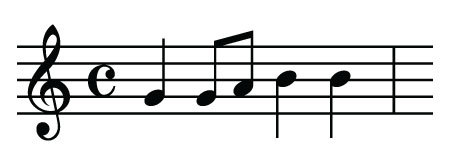
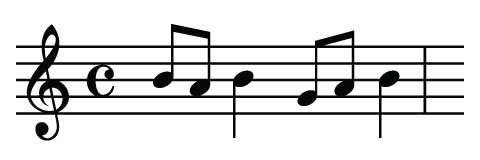
The emphasis in improvisational activities should be placed on introducing students to the element of risk-taking. Because improvisation is invented spontaneously, students must be comfortable by performing in structured activities with established parameters to develop their ease and flexibility.
Improvisation can be effective in helping to develop students’ technical skills and musical vocabulary. Many of the ideas acquired in improvisation activities can be used later in compositions.
Arranging, implemented spontaneously as a part of Orff-Schulwerk activities, is an effective supplement to improvisation. The focus on ABA and Rondo form provides opportunities for students to improvise between the returning A sections. Students can improvise different rhythmic accompaniments on the simple block and broken chord borduns, create spontaneous movements or dramatizations to simple nursery rhythms and, with teacher guidance, arrange these components into full performance pieces.