
Learning Objectives
- Relate how Romantic poets and artists abandoned traditional subjects, turning instead to the passionate and the fanciful.
- Relate how the Industrial Revolution impacted the technological development and affordability of musical instruments.
- Analyze how the orchestra grew in size and sound as new instruments were introduced and composers demanded greater levels of expression.
- Illustrate how Romantic composers explored nationalistic folklore and exotic subjects.
- Identify the form of romantic period songs, including strophic, through-composed, and the modified strophic forms.
- Examine the German art song (or Lied) as a favored romantic period genre.
- Discuss how the music of Franz Schubert impacted romantic period music.
- Discuss how the music of Frédéric Chopin impacted romantic period music.
- Trace the ascendance of program music in relation to absolute music.
- Summarize how political unrest throughout Europe stimulated the formation of schools of musical nationalism in Russia, Scandinavia, Spain, England, and Bohemia among other countries.
- Differentiate between the distinct national styles of romantic opera in France, Germany, and Italy.
- Discuss how the Italian nationalist composer Giuseppe Verdi impacted romantic period music.
- Trace how choral music became a popular artistic outlet for the middle classes.
- Discuss how the Russian composer Pyotr Ilyich Tchaikovsky impacted romantic period music.
Romantic Period (1820–1910)
Painting
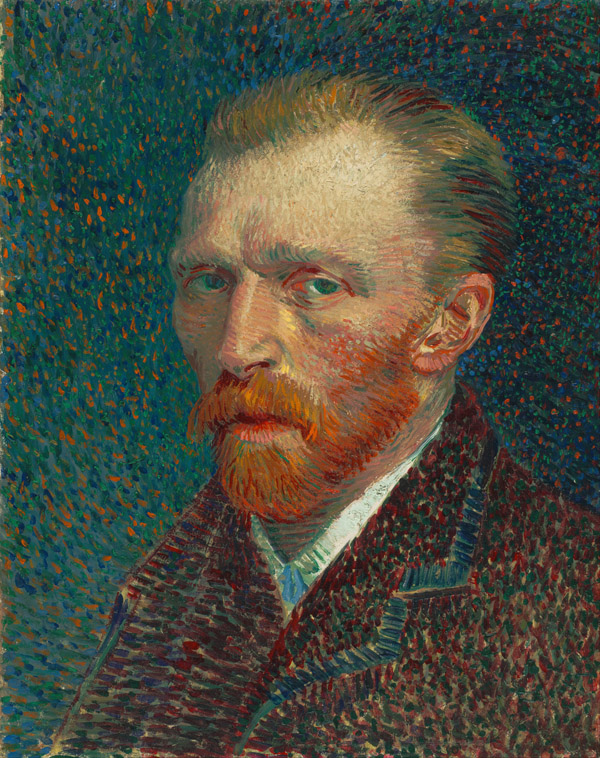
Romanticism in the visual arts extended roughly from 1800 to 1850. Whereas the Classical and Neoclassical periods in visual art cultivated emotional restraint and clarity of form and expression, Romantic outpouring was reflected in the paintings of Francisco Goya and Ferdinand Delacroix, although it was probably the life and work of Vincent Van Gogh that most aptly exemplified the extremes of Romanticism. In the late 19th century, impressionists such as Edouard Manet, Edgar Degas, and Claude Monet influenced all of the arts, including music. The work of Henri Rousseau, for example, anticipated 20th-century primitivism.
Sculpture
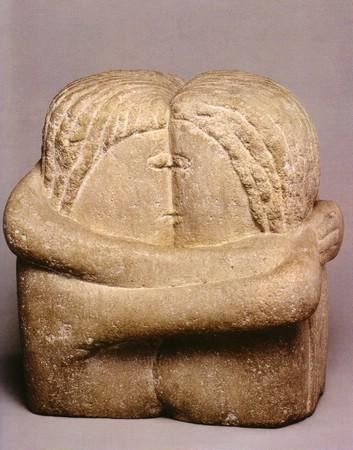
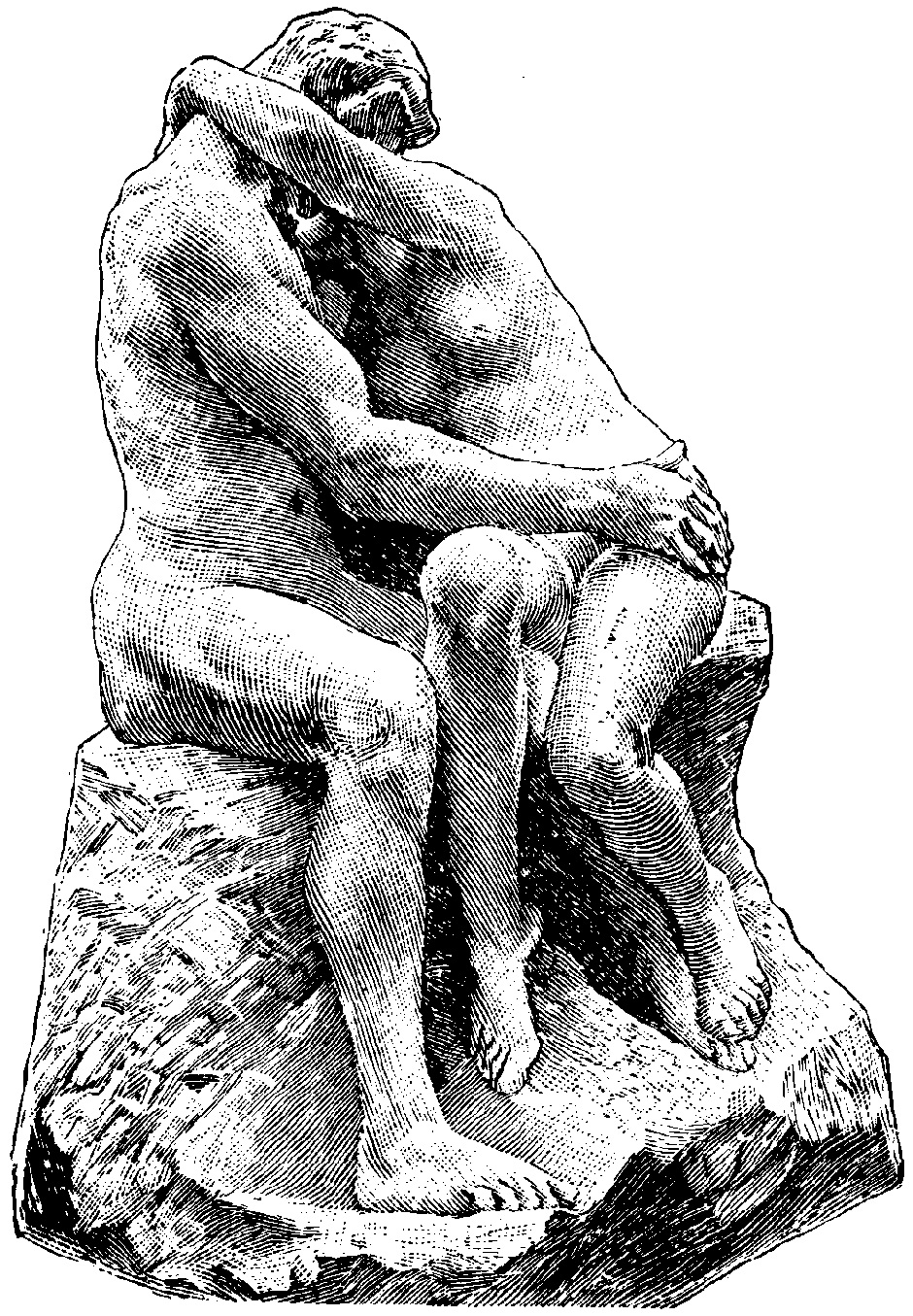
Sculpture in the Romantic era was naturalistic and emotional. Two important pieces, both created around the turn of the century and both called The Kiss, illustrate the contrast between Romanticism and later movements. Whereas Auguste Rodin's 1886 version depicts two nude figures locked in a passionate embrace, Constantin Brâncuşi's, created in 1908 (as Romanticism neared its end), is much more abstract and focuses on form rather than on emotion or naturalistic detail.
Architecture
Architecture was greatly affected by advances made during the Industrial Revolution. Cast iron as structural material transformed the discipline.
One of the great architectural accomplishments of the Romantic era was the Crystal Palace in London. Built by the greenhouse designer Joseph Paxton for the Great Exhibition of 1851 and sponsored by Prince Albert, the Crystal Palace was the first prefabricated building and a forerunner of the steel and glass architecture of the 20th century. As such, it was a significant step in the history of architecture.
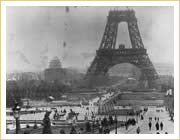
From 1887 to 1889, Gustave Eiffel erected the Eiffel Tower in Paris. Mocked at first as a monstrosity, then later embraced as an emblem of modernity, the Eiffel Tower was constructed of wrought iron on a reinforced concrete base. At its completion, it stood at 984 feet tall, which made it the tallest building in the world. It held that distinction until 1930, when the Chrysler Building was erected in New York City. The Eiffel Tower remains the tallest structure in Paris to this day.
In the Industrial Age, ornamental architecture gave way to functionality in design. The prime architectural expression of industrial and technical power inevitably became the skyscraper.
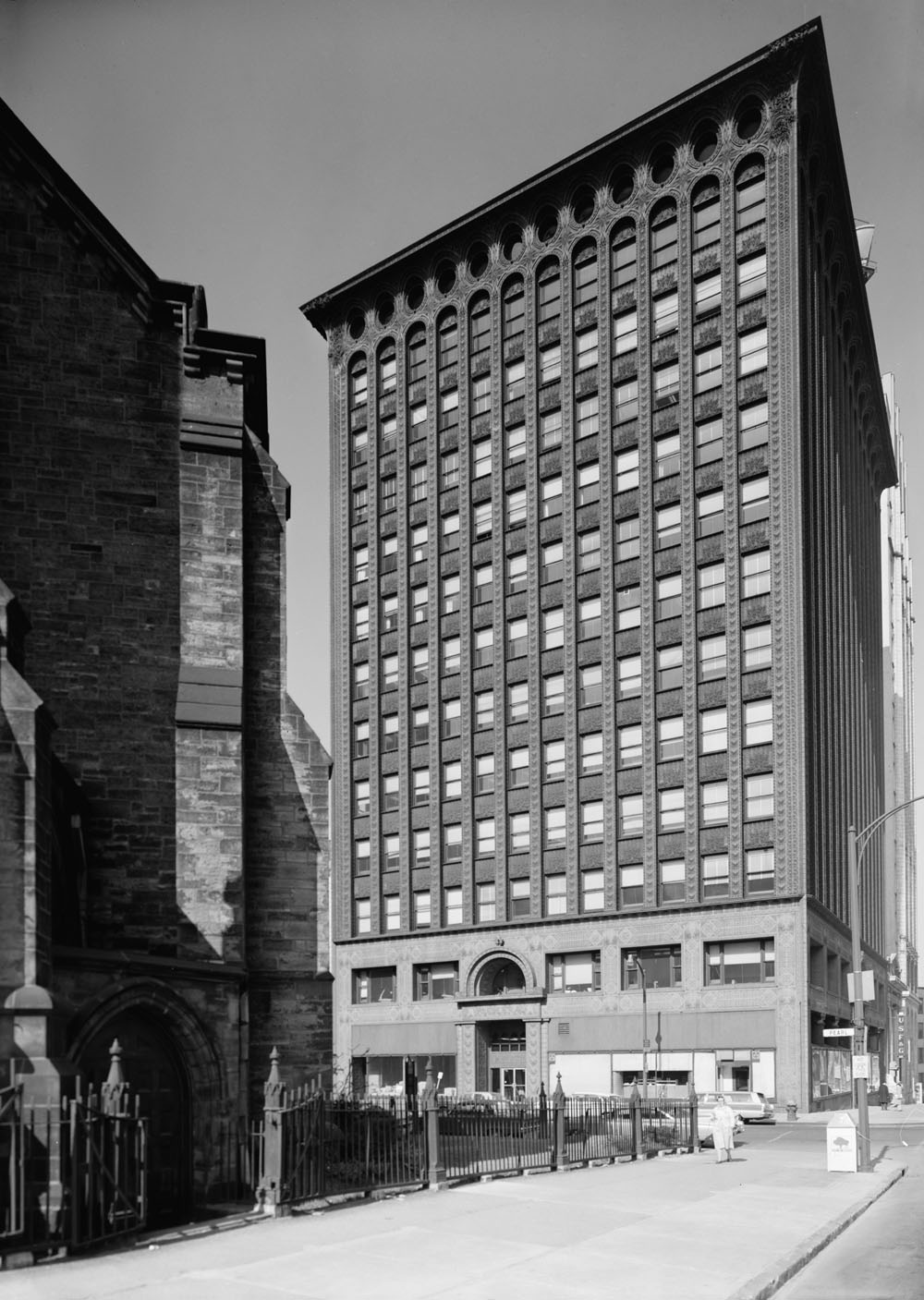
In 1894, the American architect Louis Sullivan, mentor of Frank Lloyd Wright and considered by many the “Father of Modernism,” designed the Guaranty Building in Buffalo, New York. Embodying Sullivan's motto of “form follows function,” this building exemplified structural simplicity made possible by its steel frame, a feature which did away with the limitations of masonry and allowed cities to grow upward for the first time.
Literature
In the early part of the century, writers emerged as some of Romanticism's leading proponents. Novelist Victor Hugo in France, the poets John Keats and Percy Shelley in England, and Henry Wadsworth Longfellow in the United States numbered among the writers who reflected the Romantic aesthetic in their works. Later, Charles Dickens, Honoré de Balzac, George Sand, Edgar Allan Poe, Alexandre Dumas, Henrik Ibsen, Herman Melville, Emily Dickinson, Walt Whitman, Leo Tolstoy, Fyodor Dostoyevsky, and Mark Twain created some of the world's most enduring literary works. Karl Marx, Friedrich Nietzsche, and Soren Kierkegaard wrote philosophical works that sought to change humanity's view of itself.
In the mid-1880s, the age of the realistic novel emerged with novelists such as the Brontë sisters and Herman Melville. The new reverence for nature that characterized Romantic thought was illustrated in Ralph Waldo Emerson's works. Edgar Allen Poe's The Raven embodied a fascination with the irrational and the supernatural.
Scientific Progress
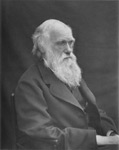
The 19th century in Europe was an era of enormous progress, especially in science. Steam engines were invented, and railways began to crisscross the landscape. Biologists developed the germ theory of disease, revolutionizing medicine. In 1859, Charles Darwin (1809-1882) presented to an astonished world his theory of evolution in the groundbreaking work On the Origin of Species.
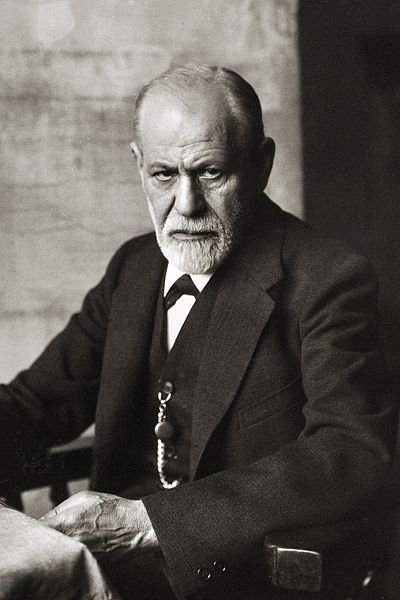
In 1899, the Viennese neurologist Sigmund Freud (1856-1939) laid the foundation for psychoanalytic theory in his most important work, The Interpretation of Dreams. Freud's work had a profound influence on 20th-century art, especially on the Surrealists, who, in their effort to gain access to the secrets of the unconscious, created new art forms and techniques.