
Learning Objectives
- List the characteristics of the Baroque era (1600-1750) in context of social change including religious wars (Protestants vs. Catholics), the exploration and colonization of the New World, and the rise of middle-class culture.
- Identify a new style—monody—that featured solo song with instrumental accompaniment in the Baroque period through listening examples.
- Define figured bass, a shorthand that allowed the performer to supply chords through improvisation.
- Compare and contrast the major-minor tonality system and the equal temperament tuning system.
- Explain the significance of the union of text and music as expressed in the Baroque Doctrine of the Affections and reflected in genres such as opera, oratorio, and cantata.
- Define and compare the genres of opera, oratorio, and cantata.
- Compare and contrast the development of two types of concertos: the solo concerto and the concerto grosso.
- Correctly identify visually and aurally the main keyboard instruments of the Baroque era: organ, harpsichord, and clavichord.
- Describe the main characteristics of J. S. Bach's keyboard music, in particular his Well-Tempered Clavier.
Baroque Period (1600–1750)
Secular Cantata
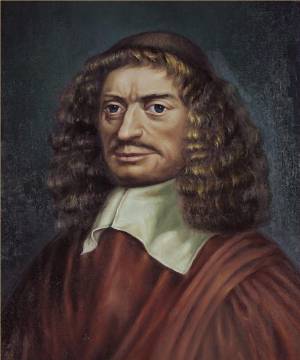
The secular cantata was another popular form of musical entertainment in Baroque Italy. Prominent composers such as Luigi Rossi (1597-1653) and Giacomo Carissimi (c. 1605-1674) wrote numerous cantatas for performance at social gatherings in the homes of wealthy aristocrats. The earliest secular cantatas were short and consisted of contrasting sections of recitatives and arias.
Composer: Giacomo Carissimi
-
"Lamento della Regina Maria Stuarda"
Barbara Strozzi
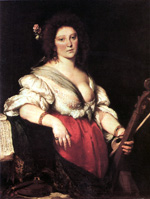
One of the most prolific composers of secular cantatas was Barbara Strozzi (1619-c. 1663). Between 1644 and 1663, Strozzi published eight volumes of vocal works containing about 100 pieces, most of which were individual arias and secular cantatas for soprano and basso continuo. One of the most popular pieces was Le Tre Grazie a Venere ("The Three Graces to Venus"). The texts of many of her cantatas centered on love or unrequited love, favorite themes among 17th-century composers. In all probability, Strozzi performed these pieces for a Venetian fellowship of poets, philosophers, and historians who met in her father's home.
Composer: Barbara Strozzi
-
"Le tre grazie a Venere"
Bella madre d'Amore
anco non ti rimembra
che nuda avesti
di bellezze il grido
in sul Trojano lido
dal giudice pastore?
Onde se nuda piadi
insin agl' occhi de' bifolchi
Idei, vanarella che sei,
perche vuoi tu con tanti
addobbi e tanti
ricoprirti agl'amanti
O vesti le tue Grazie
o getta ancor tu fuori manti,
gli arnesi e veli:
di quelle care membra
nulla nulla si celi!
Tu ridi e non rispondi.
Ah tu le copri si,
tu le nascondi
che sai ch'invoglia piu,
che piu s'apprezza
la negata bellezza!
do you not remember
that naked you had
the prize of beauty
on the Trojan shore
from the shepherd judge?
Of naked you pleased
the eyes of the people of Mount Ida,
vain as you are,
do you want with such garments
to cover yourself
before the eyes of your lovers?
Oh clothe your Graces
or cast aside mantles,
your accruements and veils,
let nothing be hidden
of your dear body!
You laugh and answer not!
Ah you cover
and conceal yourself,
for you know that temptation grows
and beauty that denies itself
is more precious!