
Vocal Timbre
What causes different timbres? To a great extent, timbre is determined by the shape of the sound waves and how the sound is produced. Vocal timbres vary in range (high to low) and color (rich, thin, nasal, warm, full, weak, etc.). Physical factors, such as the shape of the face, size and thickness of the vocal folds (vocal cords), age, and training, also affect timbre.
Vocal health is also closely connected to timbre. A heavy smoker has a certain timbre that is hard to miss, and the way your voice sounds when you have a bad cold, cough, or laryngitis is very different from how it sounds when you are rested and healthy.
Vocal Ranges
We classify singers as sopranos, mezzo-sopranos, altos, tenors, baritones, and basses, according to the range within which they sing. A related term is tessitura, which refers not to the extremes of a range but to the part of the vocal range that is used most in a song.
Female Voices
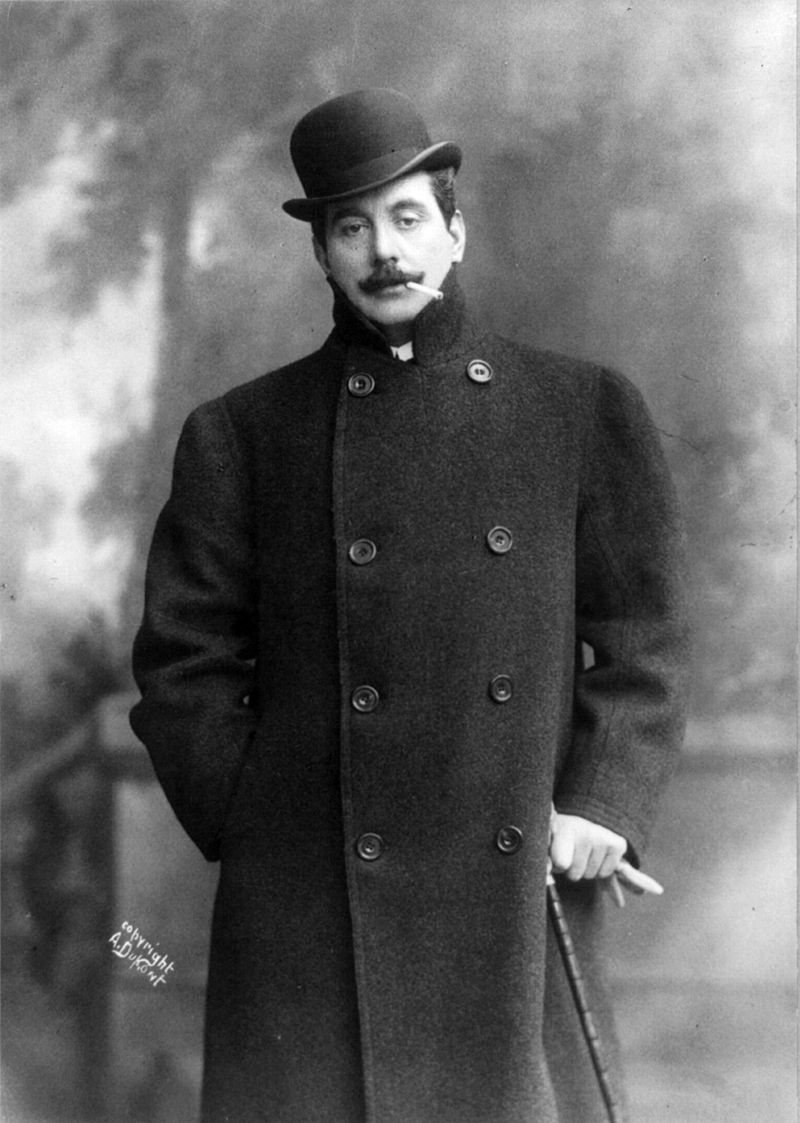
Composer: Giacomo Puccini
-
"Gianni Schicchi: Gianni Schicchi: O mio babbino caro"
Another famous soprano aria is "Song to the Moon" by Antonín Dvořák.
Composer: Antonín Dvořák
-
"Rusalka, Op. 114, B. 203: Song to the Moon"
One of the most celebrated types of soprano is the coloratura soprano. Coloratura sopranos have agile voices capable of singing elaborate, highly ornamented melodies that sometimes contain the highest pitches in the vocal repertoire. The "Der Hölle Rache kocht in meinem Herzen" (known as "The Queen of the Night" aria) from The Magic Fluteis perhaps the most well-known piece in classical opera for a coloratura soprano. It calls for pitches up to high F (around 1397 Hz) and spans a two-octave range.
Composer: Wolfgang Amadeus Mozart
-
"The Magic Flute: Der Hölle Rache kocht in meinem Herzen (Hell's vengeance boils in my heart)"
Mezzo-Soprano
The mezzo-soprano has a lower voice range than the soprano. The Italian term mezzo means "medium." It appears that the distinction between soprano and mezzo-soprano started around the middle of the 18th century. It was 19th-century composers, however, that started giving important opera female roles to mezzo-sopranos in the composers' operas. One of those composers was Georges Bizet (1838–1875), whose opera Carmen is among the most famous of all operas, with its realistic Spanish setting and strong, dramatic story. "Habanera", sung by the title character Carmen, is one of the most famous compositions for the mezzo-soprano voice.
Composer: Georges Bizet
-
"Carmen: Habanera"
There is nothing quite as powerful as two well-matched voices singing together. The "Flower Duet" from the opera Lakmé by Léo Delibes remains one of the most beautiful examples of a soprano and mezzo-soprano duet.
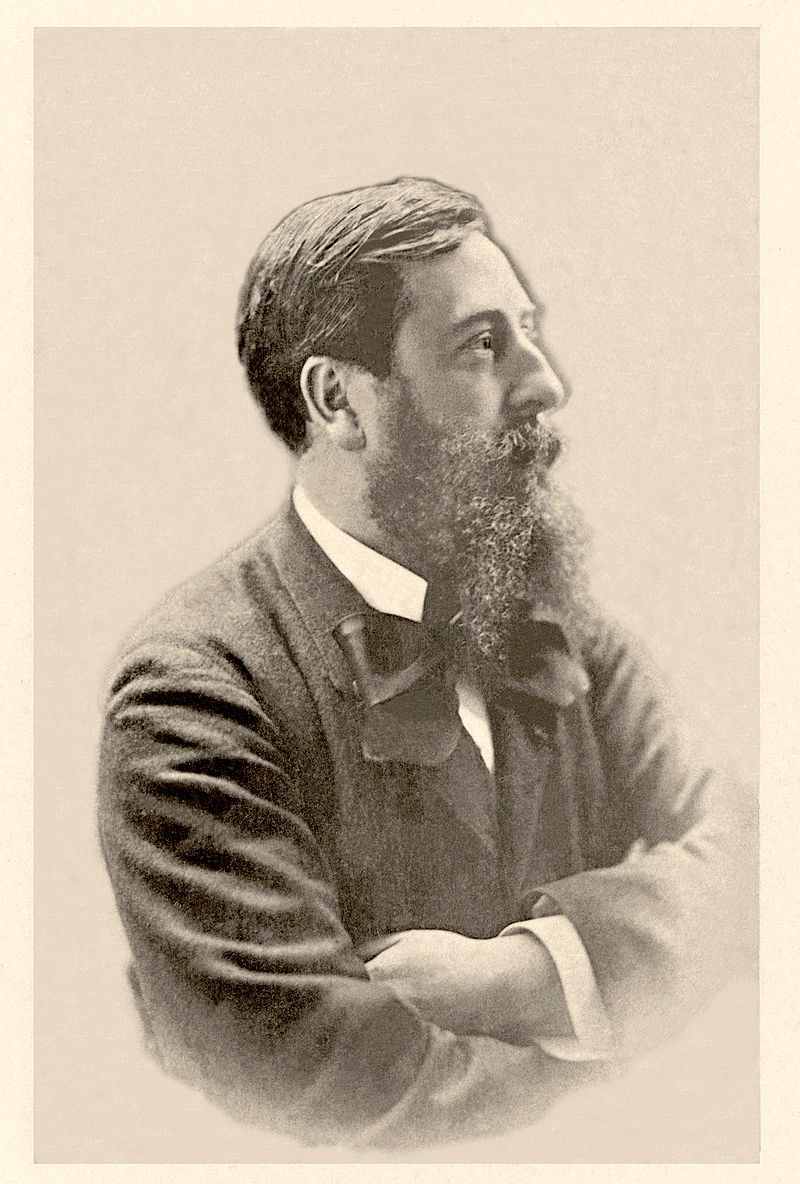
Léo Delibes trained at the Paris Conservatoire starting in 1847. He led an undistinguished career until his first major triumph in 1870 with the ballet Coppélia. He was known as an outstanding composer of operetta, although his catalog includes several successful operas of a more serious kind.
In particular, his opera Lakmé was staged at the Opera-Comique in 1883 and met with considerable success. The "Flower Duet" from this opera remains a favorite today, and it is often used in contemporary films. The story, based on Le mariage de Loti by Gondinet, is set in British India, where the British officer Gerald falls in love with Lakmé, daughter of Brahmin priest Nilakantha, with tragic consequences for her.
Composer: Léo Delibes
-
"Lakmé: Viens Mallika...Dome epais le jasmin"
Contralto
The contralto, or alto for short, has the lowest range of the female voices. In the first operas, this range was used mainly to represent comic old women, and later on, ones of tragic dignity. With time, it evolved to include heroic figures as well as darker characters such as villainesses and sorceresses. The alto voice may also portray a completely different character, as in Bach's incredibly moving aria "Erbarme dich, mein Gott"(meaning, "Have mercy, my God") from St. Matthew Passion in which the dark intensity of the singer's voice embodies the full expression of repentance.
Composer: Johann Sebastian Bach
-
"St. Matthew Passion, BWV 244: Erbarme dich' mein Gott"
Male Voices
Tenor
The highest of the male voices is the tenor. One of the highest of the male voice types, its vocal range lies between the countertenor and baritone voice types. The tenor voice type is generally divided into the leggero tenor, lyric tenor, spinto tenor, dramatic tenor, heldentenor, and tenor buffo, which specializes in smaller comic roles.
The expressive qualities of the tenor voice are superbly showcased in the aria "E lucevan le stelle" from the opera Tosca by Giacomo Puccini, which gives us a glimpse of the composer's wonderful melodic gift and dramatic sensibility.
Tosca, first performed in Rome in 1900, is based on a play by Victorien Sardou that deals with political intrigue, love, and persecution. In the opening scene, the protagonist, an artist named Cavaradossi, is seen working on a church painting of Mary Magdalene that resembles the beautiful singer Tosca with whom he is in love. As the story unfolds, Cavaradossi is imprisoned for his part in a liberal political plot and condemned to death, a fate from which Tosca seeks to save him. In "E lucevan le stelle" (meaning "The stars are shining"), Cavaradossi, with one hour to live, recalls the past.

Composer: Giuseppe Giacosa
-
"Tosca, Act III: E lucevan le stelle"
Baritone
Between the tenor and the bass, there is a male voice range that can reach into both the tenor and the bass ranges. This range is called the baritone, a word of Greek origin meaning "deep sounding." The soloist in "Dark Eyes", which is probably one of the most popular Russian folk songs, is a good example of a baritone's voice. Subtypes of baritone include the baryton-Martin baritone (light baritone), lyric baritone, Kavalierbariton, Verdi baritone, dramatic baritone, baryton-noble baritone, and the bass-baritone.
In this aria from Ah! Per sempre ...Bel sogno beato ("Ah! Forever have I lost you, flower of love, oh my hope; ah! life from now on will be full of sorrow") from the opera I Puritani ("The Puritans) by Vincenzo Bellini, Sir Riccardo Forth, the leader of the Puritans shares his plight with Bruno: Riccardo had been promised Elvira's hand in marriage by her father Lord Valton but, returning to Plymouth the previous evening, he has found that she is in love with Arturo (a Royalist), and will marry him instead. As he pours out his sorrows to his friend Bruno, Riccardo is called upon by his soldiers to lead them but he declares "I am aflame, but the flame is love, not glory".
Composer: Vincenzo Bellini
-
"I Puritani: Act I Scene 1: Ah! per sempre io ti perdei (Riccardo)"
Bass
The lowest male voice is the bass. Categories of bass voices vary according to national style and classification system. Italians favor subdividing basses into the basso cantante (singing bass), basso buffo ("funny" bass), or the dramatic basso profondo (low bass). The American system identifies the bass-baritone, comic bass, lyric bass, and dramatic bass.
Mozart's opera The Magic Flute features "O Isis und Osiris", one of the best-known bass arias in the operatic repertoire. In it, the council of priests of Isis and Osiris, headed by Sarastro, enters to the sound of a solemn march. Sarastro tells the priests that Tamino is ready to undergo the ordeals that will lead to enlightenment. He invokes the gods Isis and Osiris, asking them to protect Tamino and Pamina, the two main characters in the opera.
Composer: Wolfgang Amadeus Mozart
-
"The Magic Flute: O Isis und Osiris"
Vocal Groups
Singing seems to be a natural human activity. People of all colors, genders, ages, walks of life, and nationalities seem to enjoy singing regardless of their musical ability or the beauty of their voices. It is not uncommon, therefore, for people to get together to sing. There is something indefinably powerful about the experience of making music in a group, especially when it involves singing: The number of people assembling to sing does not matter and can range from two to many more. The largest of these groups is called a choir. Choir members may be all male, all female, or mixed. In a mixed choir, the voices are divided by vocal range based on the highest and lowest sounds that a person can produce. This applies to all-male as well as to all-female choirs.
Composer: George Frideric Handel
-
"Messiah, HWV 56: Hallelujah"
Choirs may sing accompanied by instruments. However, it is also common for them to sing without any accompaniment, in which case the choir is said to be singing a cappella. "Dark Eyes" features a mixed choir that alternates with the soloist to produce a powerfully compelling rendition of this beautiful melody.
Composer: Florian Hermann
-
"Dark Eyes"
Chamber Choir
Depending on size, choirs may be classified as chamber choirs and full choruses. The following example features a small group of singers (chamber choir). These types of groups traditionally get together in informal environments; for example, in private homes (thus the name "chamber") or in small concert halls.
John Farmer (c.1570–1601) was an English composer and organist. His madrigal Fair Phyllis, written in 1599, is a poem of pastoral love that reveals the hidden implications in the text through the deliberately suggestive musical setting.
Composer: John Farmer
-
"Fair Phyllis"
Feeding her flock near to the mountainside
Composer: John Farmer
-
"Fair Phyllis" [ 00:00-00:17 ]00:16
But after her lover Amyntas hied
Composer: John Farmer
-
"Fair Phyllis" [ 00:17-00:30 ]00:13
When he found her, Oh then they fell a-kissing
Composer: John Farmer
-
"Fair Phyllis" [ 00:31-01:48 ]01:17
The musical style of the English madrigals and songs have several main features, most important of which are the intensity and intimacy of the choral writing and texts that are often full of double meanings or hidden implications. Only a small group of singers can truly perform these types of pieces where every musical line has real textual purpose.
Full Chorus
The impact of a grand full chorus accompanied by an equally large orchestral force may be experienced in all its glory in the "Entry Chorus" from Giuseppe Verdi's opera Nabucco. This piece also gives us the opportunity to hear a group of male voices and a group of female voices that sing separately in certain sections of the piece, even though they form part of the same full chorus.
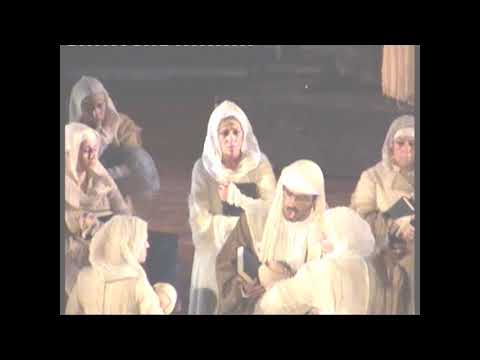
Nabucco: Entry Chorus - ''Gli arredi festivi giu cadano infantri"
Entry Chorus
Composer: Giuseppe Verdi
-
"Nabucco: Entry Chorus, Gli Arredi Festivi Giu Candano Infantri" [ 00:00-00:41 ]00:41
Male voices
Composer: Giuseppe Verdi
-
"Nabucco: Entry Chorus, Gli Arredi Festivi Giu Candano Infantri" [ 01:18-02:40 ]01:22
Female voices
Composer: Giuseppe Verdi
-
"Nabucco: Entry Chorus, Gli Arredi Festivi Giu Candano Infantri" [ 02:41-05:53 ]03:12