
Percussion
Introduction
Making sounds by hitting objects against one another must be one of the oldest activities known to man. The history of percussion instruments is therefore extremely rich. Every culture on the planet uses one kind of percussion instrument or another. Drums are perhaps the most universally used. They may be found in African and South American tribal cultures as well as Eastern and Middle Eastern countries such as China, Korea, India, Egypt, and Iran. Aside from fulfilling a purely musical function, drums have played an important role in communication, rituals, and ceremonies in all these cultures.
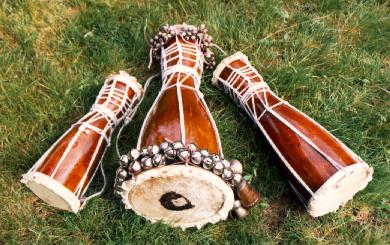
Before looking at the orchestral percussion instruments, let's briefly consider African drumming, as Africa is renowned for the pulsating rhythms of its drums. The membrane drum most significantly illustrates this power. Although membrane drums come in different sizes and shapes, they all have one thing in common: they talk. The concept of a talking drum is widely embraced in African communities and provides perhaps the most important illustration of the way in which musical communication takes place in Africa. But how does an African drum talk? This is a question that many Westerners often ask. Simply put, African drums talk by imitating speech patterns. Most African languages are tonal languages, in the sense that the meaning of a word often depends on how the word is said. For example, the Yoruba word "e-wa" could mean "beauty," "beans," or "please come," depending on how the word is intoned.
African drummers talk through their drums when they make their drum patterns imitate the speech contours of words. A musical performance on a drum is therefore significant not only for its musical features but also for what the drum is "saying." The Yoruba people, whose population is about 30 million, live in South Western Nigeria and parts of Benin Republic. Yoruba populations are also found in Brazil, Cuba, The Caribbean, and the United States. Yoruba music is noted for its varieties of drums, many of which are regarded as “talking” instruments. The dundun drum ensemble epitomizes Yoruba drum music.
Composer: Anonymous
-
"Dundun Ensemble"
Do you know of any other cultures whose percussion music features "talking" drums?
Orchestral Percussion Instruments
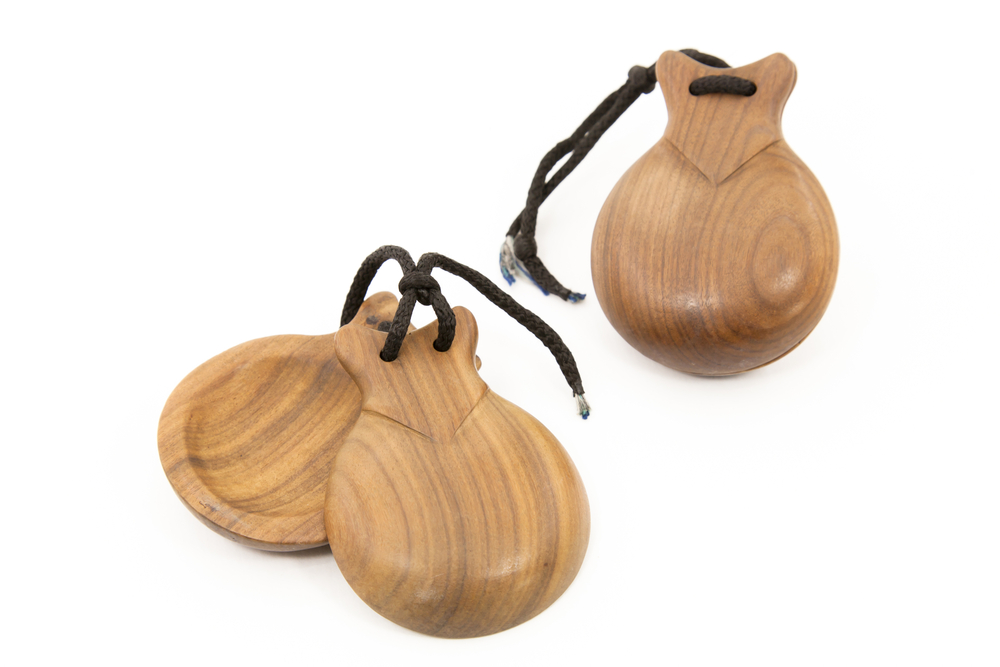
Idiophones are instruments that produce sounds from the vibration of their own bodies—idio comes from the Latin idem meaning the thing itself.
Castanets are idiophones that may be further classified under the concussion group, meaning instruments in which two similar objects are clapped together to make sound. Castanets are widely used in Spanish folk music, especially to provide a rhythmic accompaniment to dancing. The dancers loop the castanet string around the thumb, leaving the rest of the fingers free to strike them against the palm of the hand. Orchestral castanets are usually mounted on a stick.
Composer: Benjamin Britten
-
"The Young Person s Guide To The Orchestra, Op. 34" [ 13:27-13:31 ]00:04
Membranophones
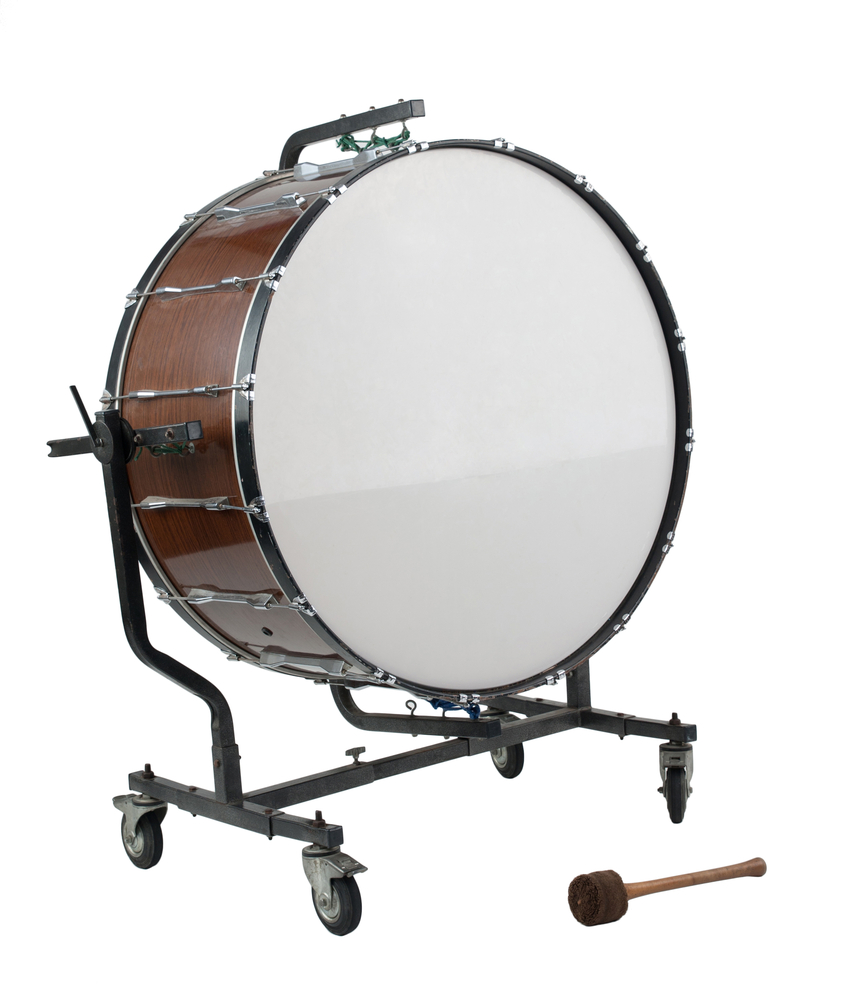
Membranophones are instruments that produce sounds by vibrating a membrane or skin that is stretched over a wood or metal frame. Most of these instruments are drums of some kind or another that may be played directly with the hands or with a beater.
The bass drum is a large instrument, approximately 36 inches (90 cm) in diameter and 16 inches (40 cm) deep. The one pictured at left is suspended from a swivel frame, which is how it is normally used in the symphony orchestra. It is believed that the bass drum originated in Turkey as a member of military bands, later becoming popular in 18th-century Europe when Turkish music came into vogue. The bass drum is also an integral part of marching bands, in which players hold the instrument by using a harness with wide leather straps.
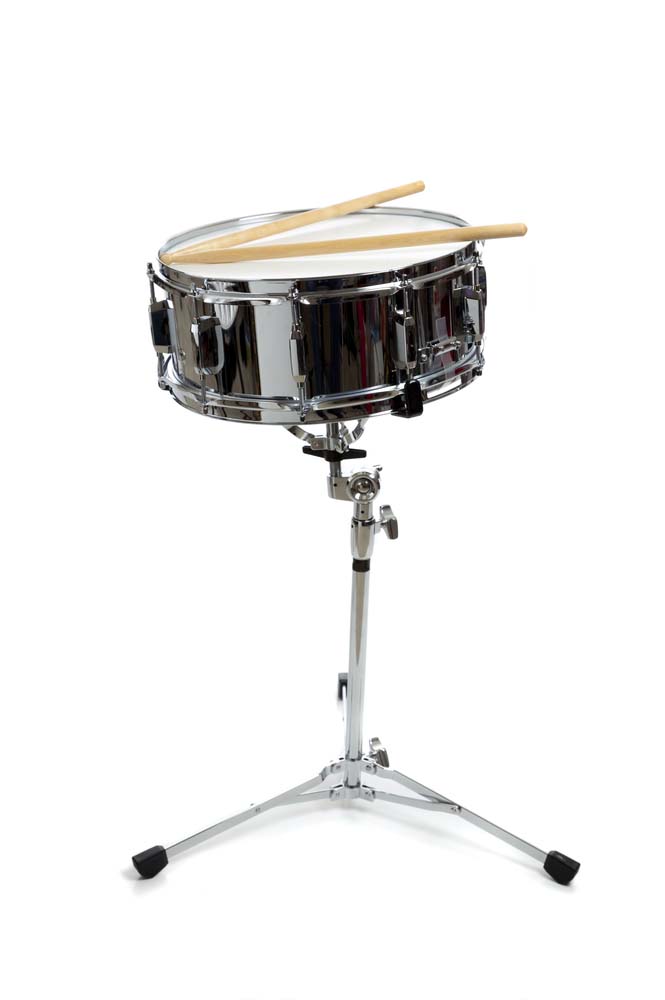
The snare drum was incorporated into the orchestra in the 1700s. Up until then, it had traditionally been used exclusively in army bands, attached by a sling to the player's side. The one used in the orchestra is about 14 inches (35 cm) in diameter and about 5 inches (13 cm) deep, and it is placed on a stand. The one used in marching bands is slightly smaller in diameter (12 inches/30cm) but about 10 inches deeper.
Composer: Johann Strauss I
-
"Radetzky March, Op. 228"
Composer: Aaron Copland
-
"Fanfare for the Common Man"
Percussion Pitch
Pitch in percussion instruments is an interesting subject. Some percussion instruments are capable of producing definite pitches. These include the timpani (also known as kettledrums), the chimes, and the beautifully sounding—and closely related—xylophone, vibraphone, and marimba. Other percussion instruments, such as the tambourine, triangle, cymbals, and castanets produce sounds of indefinite pitch. Such instruments may also be described as unpitched or non-pitched. Sounds produced by non-pitched instruments are made up of such complex frequencies that it is impossible, or at the very least, relatively difficult to discern distinct pitches when they are played.
Percussion instruments can be classified under more than one category. A case in point are the castanets, which aside from being idiophones, as we already know, are also unpitched instruments and can, therefore, be classified as unpitched idiophones. The snare drum can be classified as an unpitched membranophone, and so on.
Let's look at examples of pitched (definite pitch) and non-pitched (indefinite pitch) percussion instruments:
The Timpani
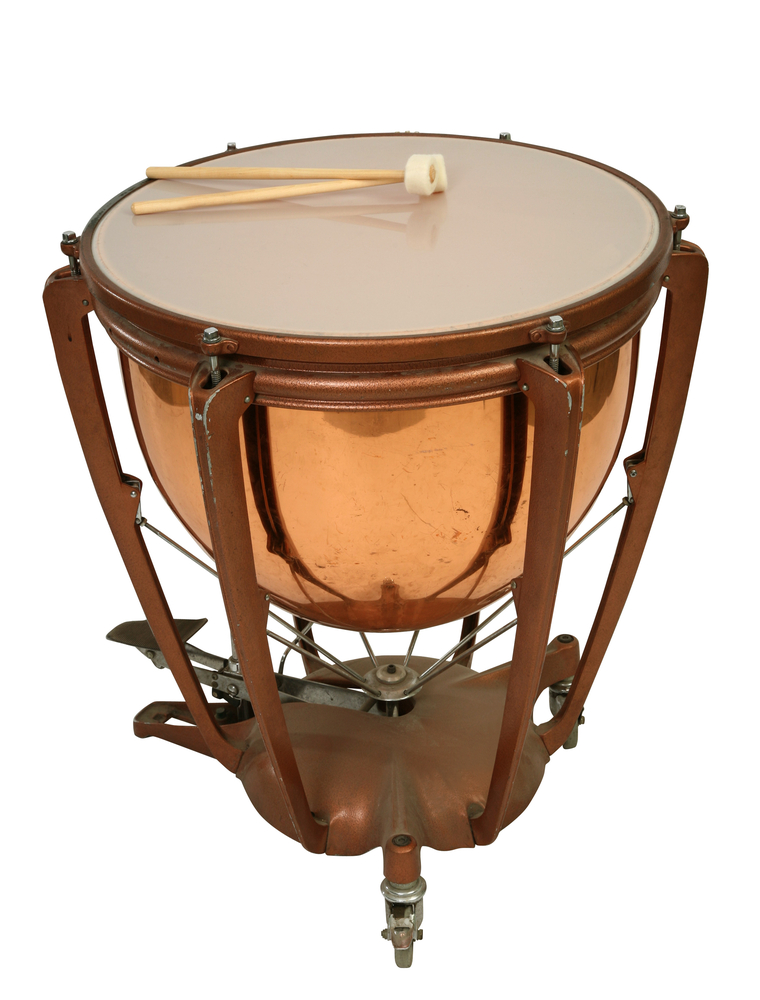
The timpani, or kettledrum, was invented in the Middle East around the 10th century. Today, it is the most important percussion instrument of the symphony orchestra, where it is most often used in pairs. Unlike most drums, they are capable of producing an actual pitch. The vibrating membrane is held in place by a metal ring with screws that the player manipulates to vary the tension of the skin—and therefore the instrument's pitch. Kettledrums vary in size from 20 to 32 inches in diameter (50 to 82 cm). The end (or head) of the mallets traditionally used to play them is covered with felt.
Composer: Carl Orff
-
"Carmina Burana: Carmina Burana: O Fortuna"
The Gong
Composer: Benjamin Britten
-
"The Young Person s Guide To The Orchestra, Op. 34" [ 13:29-13:30 ]00:01
The Gong
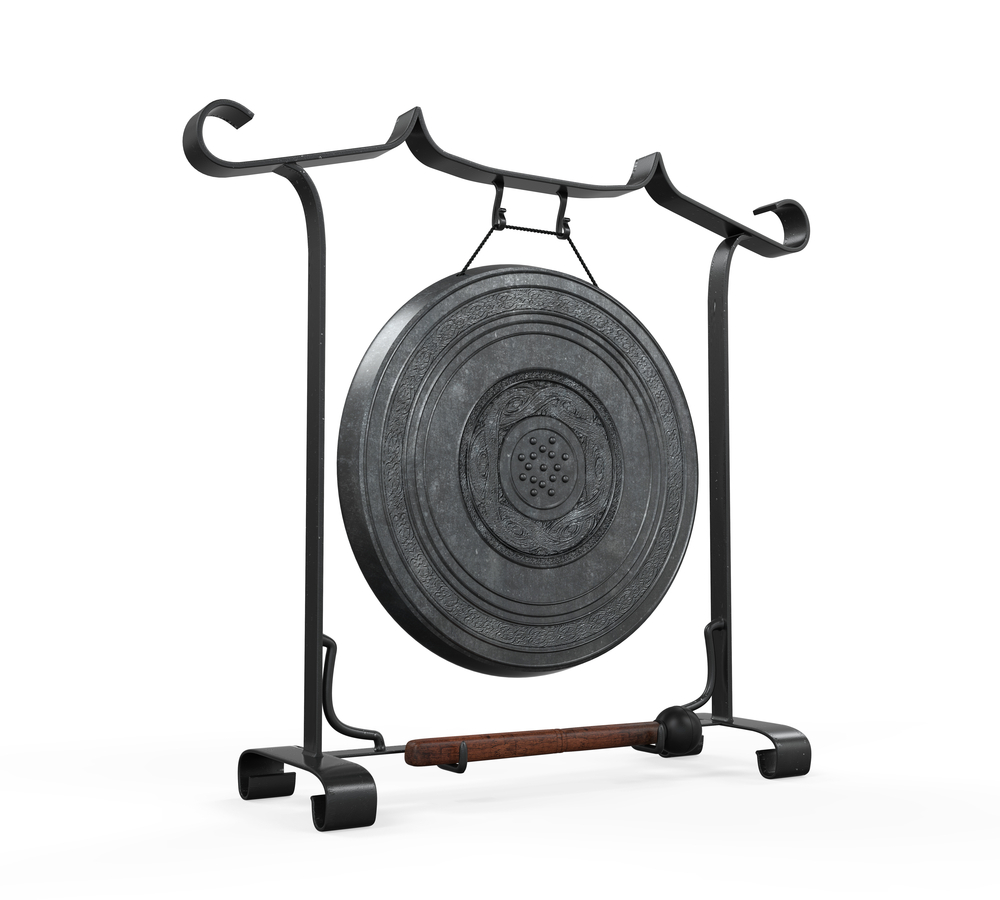
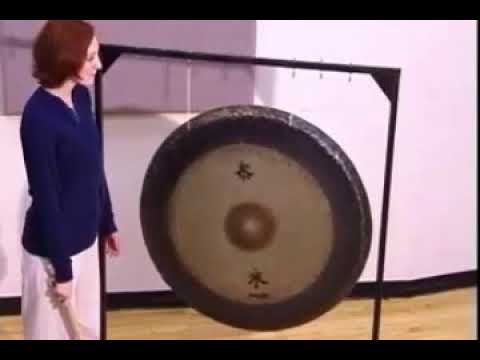
The gong is a circular metal percussion instrument used primarily in Asian countries. There are many different types of gong, but by far the most familiar to most Westerners is the chau gong, also known as bullseye gong because of the concentric rings in its design. A large chau gong is called tam-tam—tam-tam and gong are actually interchangeable terms. Although some gongs may be tuned, orchestral gongs have indefinite pitch, are large and flat, measure 76 cm or more in diameter, and their circumference is turned over to form a lip. Most are cast and hammered from an alloy of copper and tin. Orchestral gongs are suspended from a frame and played with a padded felt or wool mallet.
Percussion
The Xylophone
Another well-known definite-pitched orchestral instrument that merits special attention is the xylophone, which is widely used and known for its beautiful sound.
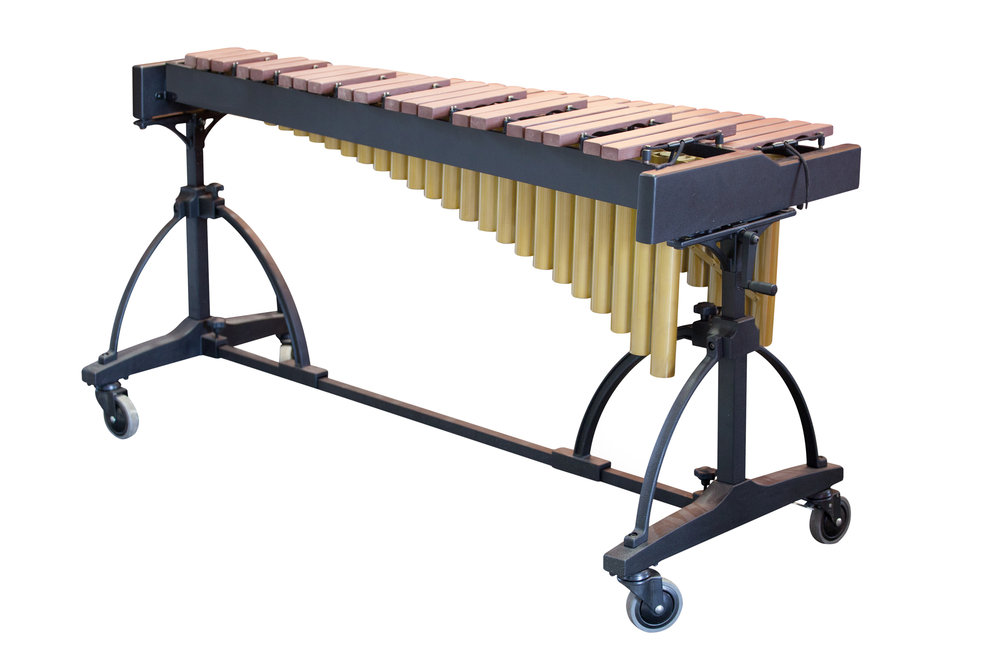
The xylophone is made up of several wooden bars, each of which is tuned to a specific pitch. The bars are arranged in the same order as a piano keyboard, and the player strikes them with wooden or hard rubber mallets. Under each hardwood bar there is a resonator whose length corresponds to the pitch of the bar. The bars are concave on the back.
The origin of the xylophone is unclear. Some say it originated in Southeast Asia, while others maintain that it was first developed in Africa. What is certain is that African slaves introduced it to South and Central America, where it is known as the marimba. There, it plays a central role in folk music.
Composer: Camille Saint-Saëns
-
"Carnival of the Animals" [ 17:02-17:10 ]00:08
The Vibraphone
The vibraphone is a musical instrument in the struck idiophone subfamily of the percussion family. It consists of tuned metal bars and is usually played by holding two or four soft mallets and striking the bars. A person who plays the vibraphone is called a vibraphonist, vibraharpist, or vibist.
One of the main differences between the vibraphone and other keyboard percussion instruments is that each bar suspends over a resonator tube with a motor-driven valve at the top. The valves connect together on a common axel, which produces a tremolo or vibrato effect while the motor rotates the axle. The vibraphone also has a sustain pedal similar to a piano. With the pedal up, the bars produce a muted sound. With the pedal down, the bars sustain for several seconds, or until muted with the pedal.
Composer: Ney Rosauro
-
"Vibraphone Concerto: I. Recitative: Allegro" [ 00:00-00:30 ]00:30
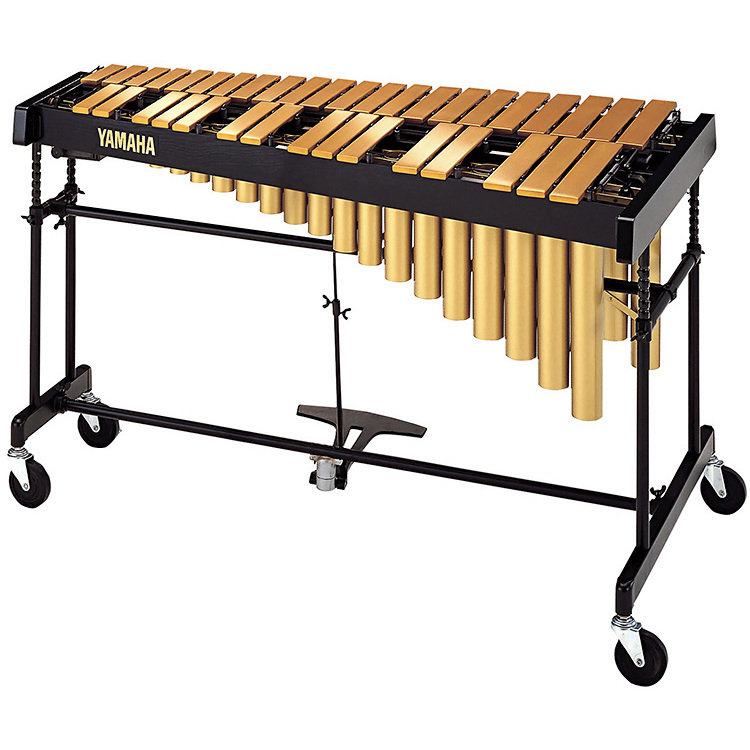
The Marimba
The marimba consists of a row of chromatically tuned wooden bars, arranged in the manner of a piano keyboard. The player strikes the bars with yarn or rubber mallets to produce musical tones. The bars are supported by a wooden frame over resonator tubes or pipes suspended underneath the bars that amplify their sound. The bars of a chromatic marimba are arranged like the keys of a piano, with the groups of two and three accidentals raised vertically, overlapping the natural bars to aid the performer both visually and physically. This instrument is a type of idiophone, but with a more resonant and lower-pitched tessitura than the xylophone. A person who plays the marimba is called a marimba player.
Composer: Max Steiner
-
"The Treasure of the Sierra Madre (restored J. Morgan): Narange Dolce" [ 00:03-00:15 ]00:12
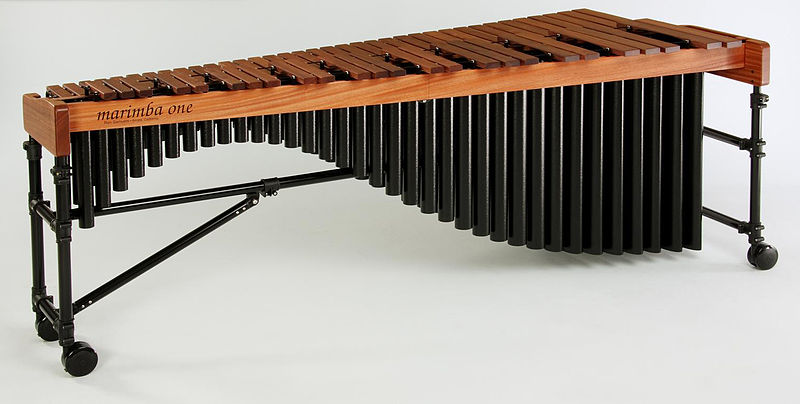
Marimba
The marimba is the national instrument of Guatemala (Central America), where they often form whole orchestras.
Listening Example
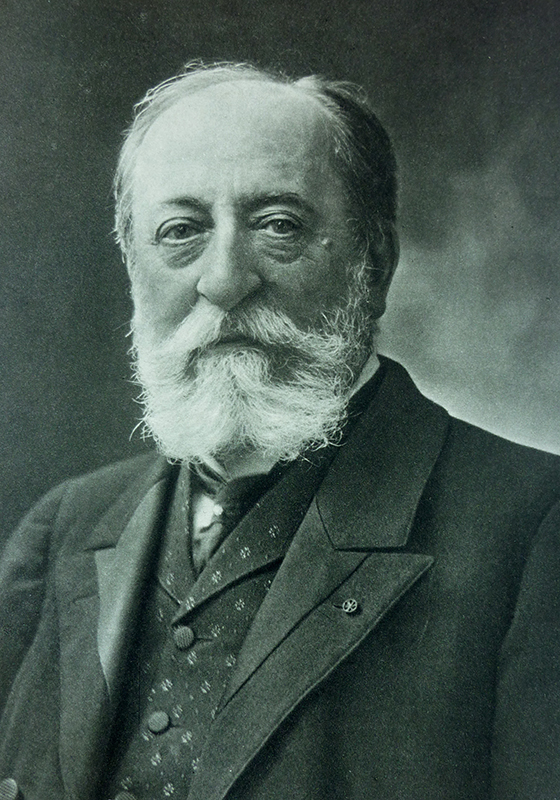
The twelfth movement of Camille Saint-Saëns' beloved 14-movement suite Carnival of the Animals features the xylophone and violin playing much of the melody, alternating with piano and clarinet. The use of the xylophone is meant to evoke the image of skeletons playing cards.
Composer: Camille Saint-Saëns
-
"Carnival of the Animals"
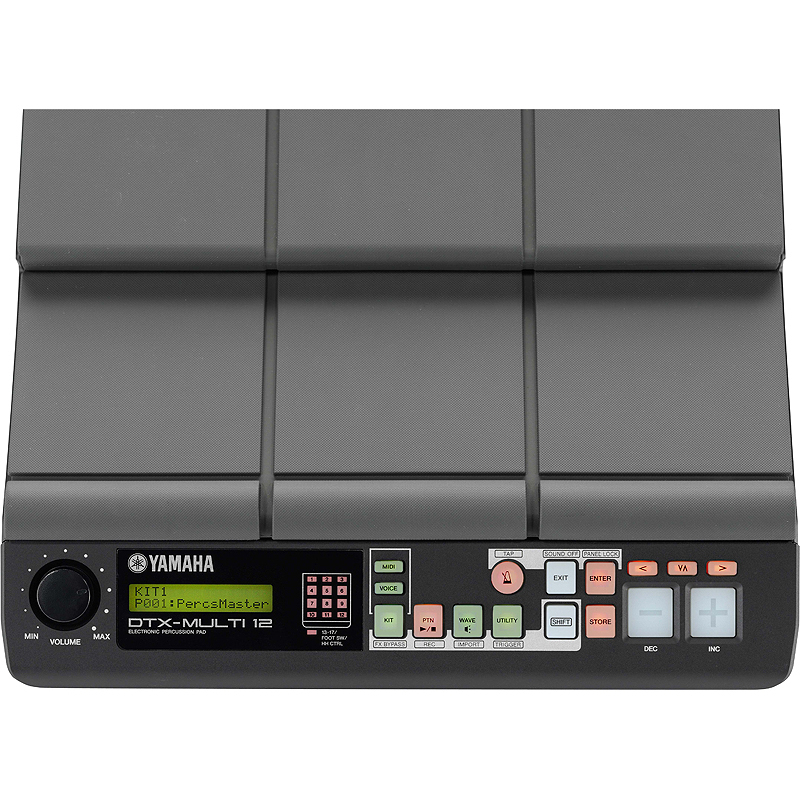
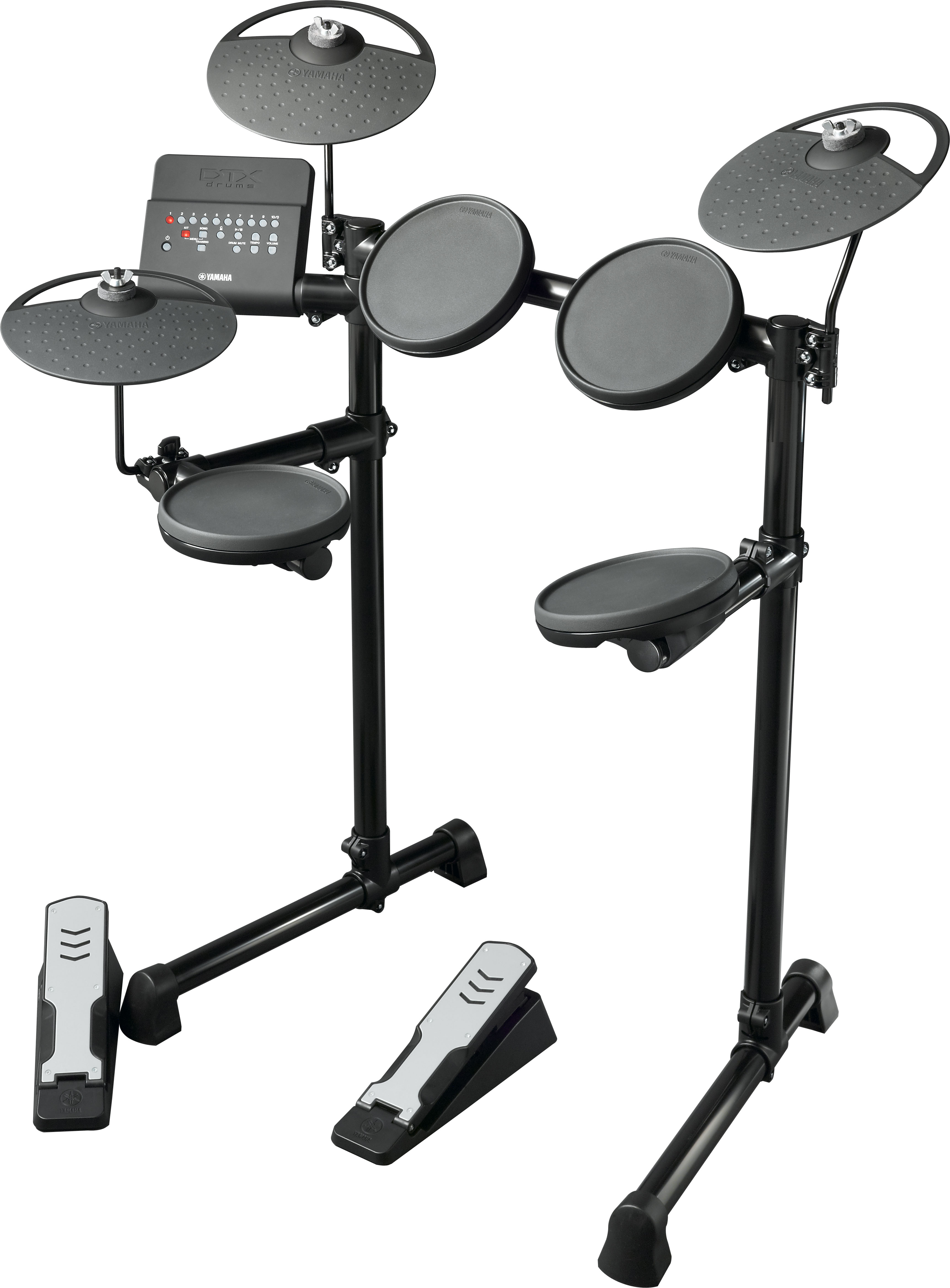
Electronic and Digital Percussion
Composer: David Antony Clark
-
"A Land Before Eden"
Composer: David Antony Clark
-
"Rainmakers"