
Rock-and-Roll
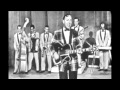
Bill Haley & His Comets - Rock Around The Clock (1955)
In the early 1950s, many different musical threads came together to create the earliest rock and roll. Blending elements of gospel music, blues, popular song, hillbilly music, and rhythm and blues, artists such as Ray Charles, Chuck Berry, and Fats Domino wrote and recorded some of the earliest crossover hits. Soon, white artists such as Bill Haley and His Comets and Pat Boone began recording cover versions of black artists’ songs, most of which were more commercially successful than their black counterparts.
"Rock Around the Clock" is a rock and roll song in the 12-bar blues format written by Max C. Freedman and James E. Myers (the latter being under the pseudonym "Jimmy De Knight") in 1952. The best-known and most successful rendition was recorded by Bill Haley & His Comets in 1954 for American Decca.
The early 1950s were an exciting time for recording artists, listeners, and record companies. Changes in technology, new and hybrid musical forms, and shifts in music consumption patterns all contributed to a reworking of the American popular music landscape that would forever alter the history of popular music consumption in the United States.
In 1951, Cleveland-based disc jockey Alan Freed began playing this music style while popularizing the term "rock and roll" on mainstream radio. Freed was the first radio disc jockey and concert producer to frequently play and promote rock and roll.
Elvis Presley
Elvis Presley was one of the most legendary rock and roll performers of all time. His crossover success and immense commercial appeal turned him into one of the most important musical figures of the twentieth century. Although he continued to sell millions of albums in the 1960s and 1970s, the 1950s were the most important part of his career and the period that had the most profound influence on the development of rock and roll in the United States.
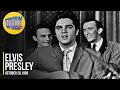
Elvis Presley "Hound Dog" (October 28, 1956) on The Ed Sullivan Show
Elvis Presley internalized and hybridized the musical styles of hillbilly, gospel, rhythm and blues, and country and western music, creating a new form of rock and roll. Although he was not a songwriter, relying instead on cover versions and songwriters such as Leiber and Stoller, Presley was a master song stylist who riveted audiences with his impassioned performances and hypnotizing physical movements. His sex appeal thrilled his teenage audiences and terrified their parents. Elvis codified a style of music called rockabilly, and in the next lesson, we will focus on several artists whose entire careers were built on this rockabilly sound and style
Elvis Presley was a singer, not a songwriter. He never wrote any original material. Although he could play the guitar reasonably well, he did not know how to read or write music, and he learned all of his material by rote. As a result, all of his songs were either the products of cover versions or of songwriting teams, or sometimes both, as was the case of "Hound Dog ♫." Written by the songwriting duo of Jerry Leiber and Mike Stoller, "Hound Dog ♫" was first recorded by the rhythm and blues artist Big Mama Thornton in 1953. Big Mama Thornton’s version of the song is raw, gritty, and far more suggestive than Presley’s cover. Compare the lyrics of the two, both of which are in the AAB form of the 12-bar blues.

Big Mama Thornton - Hound Dog (1956)
Big Mama Thornton
(Written by Leiber and Stoller)
Quit snoopin’ ‘round my door
You ain't nothin’ but a hound dog
Quit snoopin’ ‘round my door
You can wag your tail
But I ain’t gonna feed you no more
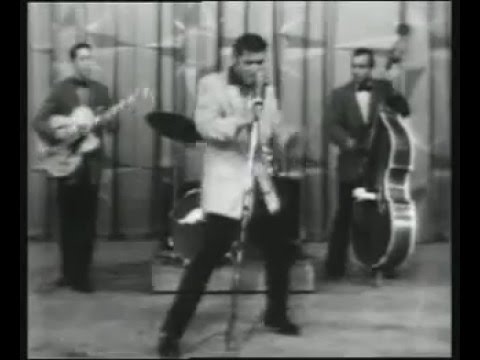
Elvis Presley - Hound Dog
Cryin’ all the time
You ain’t nothin’ but a hound dog
Cryin’ all the time
You ain’t never caught a rabbit and you ain’t no friend of mine.
Heavy Metal
Aerosmith
During the 1970s and 80s, several American bands were trying their hand at heavy metal music. Aerosmith was formed in 1970 and spent their first few years of their existence as a blues revival band in the style of the British band The Rolling Stones. The group did not cover blues songs, however; singer Steven Tyler and guitarist Joe Perry wrote new blues-style songs for Aerosmith to perform. The members of Aerosmith were not averse to including elements of folk music and country music in their songs, either.
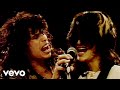
Aerosmith - Dream On (Live)
Live Performance
Aerosmith's single "Dream On ♫" (1973) features electric guitars played in the style of acoustic folk guitar playing, but heavily amplified and distorted guitar sounds are introduced later in the song that sound more like hard rock than folk music. In "Walk this Way ♫" (1975), Aerosmith blended rock's backbeat (emphasis on beats 2 and 4) with blues-styled guitar riffs. Aerosmith's popularity faded in the early 1980s, but they experienced revived interest in their music when Tyler and Perry re-recorded "Walk This Way ♫" with hip-hop group Run-DMC in 1986.
Guns N' Roses
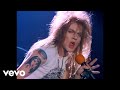
Guns N' Roses - Welcome To The Jungle
Guns N' Roses was another Los Angeles-based heavy metal band popular in the 1980s, and they were one of the first metal groups to achieve significant mainstream success. Their music showed influences of hard rock, folk music, and funk because they would sometimes include horns, multi-voice choruses, and synthesizers in their music. Further, guitarist Slash would sometimes use an acoustic guitar. Like Van Halen's David Lee Roth and Eddie Van Halen, Guns N' Roses' lead singer Axl Rose and guitarist Slash often competed over who was the dominant personality onstage and in the group's recordings. The group's first album, Appetite for Destruction (1987), went to number 1 on the Billboard albums chart.
Guns N' Roses typically sang about women, daily life, issues with drugs, and stories from their childhoods; in general, they avoided topics of death and destruction. For example "Welcome to the Jungle ♫" (1987) was Rose's perception of Los Angeles after arriving from a small town, and "Sweet Child O Mine ♫" (1987) was about Rose's girlfriend. Both of the videos for those songs received heavy play on MTV, which further increased the band's popularity and album sales.
Guns N' Roses frequently drew controversy and criticism during the late 1980s and 1990s, most of which was perpetuated by Rose. Rose was always sharing his points of view publically, even if they were unpopular or even offensive. In the 1988 single "One in a Million ♫," Rose used homophobic language and racial epithets. In 1991, Rose attacked a fan who refused to stop filming the concert, and then he refused to perform the show. The crowd rioted, injuring dozens of people. Rose was fond of sporting shirts emblazoned with Charles Manson's likeness, and he even included a song written by Manson on the 1993 album Spaghetti Incident? The members of the band flaunted their abuse of drugs and alcohol. For example, the 1987 song "Mr. Brownstone ♫" uses as its title a slang term for heroin and describes the tolerance one builds when using the drug; Rose was known to refer to the song during live concerts when mentioning the band's drug use. By 1997, all of the original members of Guns N' Roses had left the band except for Rose. This new lineup continues to record and tour in the 2010s. The music and outspoken lead singer of Guns N' Roses inspired a generation of musicians.
Hip-Hop
By the early 1990s, hip-hop had become a major commercial and artistic force in the United States. The music continued to grow and diversify in both style and geography. Although New York had been the center of hip-hop's development since the 1970s, in the early 1990s, the West Coast became the new hot spot for hip-hop. The West Coast style, characterized by Dr. Dre's G-funk production style, led the way. But, the West Coast did not remain the center of hip-hop for long. Artists such as the Wu-Tang Clan and Nas reestablished the significance of New York and the East Coast in hip-hop. As hip-hop diversified, however, feuds developed between musicians on both coasts. In some cases, these feuds resulted in singles that criticized or outright threatened rival musicians. In the case of rappers Tupac Shakur and the Notorious B.I.G., the feuds resulted not only in musical exchanges but also in violent confrontations.
Dr. Dre and The West Coast Style
Dr. Dre began his career as a producer and rapper in the Los Angeles group N.W.A. He left the group in 1991 after a conflict with fellow N.W.A. member Eazy-E. Dr. Dre's first solo effort after leaving the group was 1992's The Chronic, which ushered in a new era of rap production style and created the defining sound of West Coast hip-hop.
By the time Dr. Dre began producing and recording the music for The Chronic, it had become increasingly difficult for hip-hop artists to sample the same amounts of music that they had sampled in the late 1980s. As a result, Dr. Dre mixed both samples and live instruments in his music production.
Dr. Dre's style of production was called G-funk a style of hip-hop production started by Dr. Dre that is named in homage of George Clinton’s P-funk style and is characterized by slower tempos, the inclusion of sounds from recordings of Parliament and Funkadelic (both in samples and re-performances), thundering bass lines, and high-register synthesizer lines , in homage to the P-funk of George Clinton. Dr. Dre borrowed many sounds from recordings of Parliament and Funkadelic, both in samples and in re-performances. He then raised the highs and lowered the lows, creating thundering bass lines and high-register synthesizer lines. In general, Dr. Dre's music was slower in tempo compared to the music of other hip-hop artists such as the Beastie Boys and Public Enemy. The third single from The Chronic was "Let Me Ride♫," and it includes replayed portions of Parliament's "Mothership Connection (Star Child) ♫." The choruses of "Let Me Ride♫" include re-performed lyrics and melodies from "Mothership Connection (Star Child) ♫," and the concluding moments of each chorus also include replayed instrumental portions from the source. Typical of the G-funk style, "Let Me Ride♫" features synthesizers playing in a high register and a rumbling bass line. The drums in the song are sampled, not replayed, and Dr. Dre sampled Clyde Stubblefield's iconic drum break from James Brown's "Funky Drummer ♫" for the drums in "Let Me Ride♫."
Rap
In 1979, rap music exploded onto the popular landscape with the enormous success of a single by the Sugarhill Gang entitled “ Rapper’s Delight .” Following its release in October 1979, “Rapper’s Delight,” with its complete sample of the group Chic’s disco hit “Good Times,” was a mainstay on the Billboard Pop charts for twelve weeks. Although it was not the first rap record to garner widespread acclaim, “Rappers Delight” is arguably the popular point of departure for contemporary rap music.
Oratorical practices to rappers and rap music before “Rapper’s Delight” include the following:
- Jamaican-style toasts: a form of poetic narrative performed to instrumental music
- Various blues songs: especially where conversational talking styles are dominant
- Prison toasts
- Playing the dozens: an endless repertoire of verbal insults
- Disc jockey announcer styles: such as that of Douglas “Jocko” Henderson
- The Black Power poetry of Amiri Baraka
- The street-inflected sermons of Malcolm X
- The rhetorical prowess of nearly all of the prominent Black poets of the early 1970s, including Gil Scott Heron, Nikki Giovanni, Sonia Sanchez, the Watts Poets, and The Last Poets
Rap music might not exist (at least in the way it does today) without the iconic influence of James Brown. The “Godfather of Soul” was also the preeminent forefather of rap music. His celebrated call-and-response technique, coupled with his conversational vocal style, incredible interaction with his band and audience, and his ear for the most contagious break-down arrangements in the history of Black music, puts him at the start of the hip-hop culture that gave rise to rap music. Listening to a James Brown classic, such as “ Funky Drummer ” or “ Funky President ,” will immediately render his impact on rap music apparent. Indeed, Brown was rappin' before rap music became reified as a popular phenomenon. It is no mistake that James Brown’s music is still one of the most sampled and copied sounds in rap music.

James Brown - I Got You (I Feel Good)
Grandmaster Flash is now best known as a recording artist, but several purely technical DJ breakthroughs owe their existence to his hand-and-eye coordination. For example, “Punch phrasing”—playing a quick burst from a record on one turntable while it continues on the other—and “break spinning”—alternately spinning both records backward to repeat the exact phrase over and over—are credited to Flash.
When all of the historical and influential touchstones for rap music are considered, the fact that rap has become the premier element of hip-hop culture, a culture that has spread all over the world, should be pretty unremarkable. Since 1979, thousands of known and unknown rappers have produced records, some of which have achieved commercial success. However, to develop a definitive sense of rap music, especially its connections to race and African American culture and its relationship to inner-city populations and American popular culture, various subcategories of the genre warrant some further explanation. The intersection of the four elements of hip-hop in the West and South Bronx (DJ-ing, breakdancing, MCing, and graffiti) with its artisans and audiences, and commercial products, facilitated the cultural revolution of hip-hop as we know it today.