Generating page narration, please wait...

SUBJECT: Harmony
Grade Level: Music Appreciation – Grades 9 - 12
LESSON OBJECTIVES
Students will:
- Define the musical concept of harmony.
- Explain the difference between consonance and dissonance.
- Compare and contrast the different functions of melody and harmony in music
COMMON CORE STANDARDS
Add district, state and/or national standards as is applicable to your area
Preparatory Activities
10 minutes
-
eview the vocabulary for Class 15:
- Harmony, soloist, unison, consonant, dissonant, resolution, harmonic progression.
Resources/Materials
- Overhead projector – “The Wheels on the Bus” transparency or digital file.
- Piano keyboard
- The following audio files:
- Bach - Air on the G String from Orchestra Suite No. 3 in D major, BWV 1068
- Handel – “Hallelujah Chorus” from Messiah
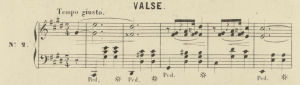
- Chopin - Waltz in C sharp minor, Op. 64, No. 2
INSTRUCTIONAL SEQUENCE
TIME
Whole Group Instruction
- Display the “The Wheels on the Bus” children’s song.
- Have students sing the song – point out the melody (with laser pointer or other highlighting instrument)
- Ask students to identify melody and harmony lines – and explain what evidence in the music leads to their conclusions.
- Characteristics in the children’s song are similar in more complex music
- Display RH Melody file – and compare characteristics with “The Wheels on the Bus”
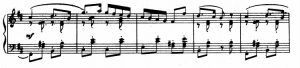
- Display LH Melody file - show that melody is not always relegated to the “top line” or the right hand.
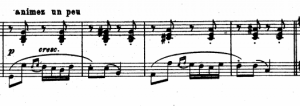
- Display file for Bach – Air on the G String – play audio file as well
- Have students identify melody and harmony lines
- Explain what evidence in the music leads to the conclusions.
- Play the second line with the bass line
- Does the second line “sound” like a melody?
- What would happen if we played the melody line (top line) and changed the bass line?
20 - 30 minutes
Group Practice/Small Group Instruction
- Small group, partners, or individuals
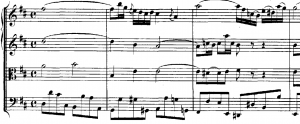
- Display the opening to the “Hallelujah Chorus” and play a short clip of the audio.
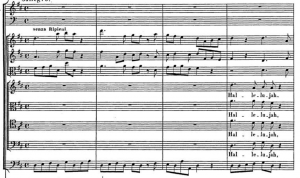
- Have students identify the melody and harmony lines – contrast and compare the 2nd violin line with the written bass part.
- Have students experiment with changing the bass line to different harmonies.
- Follow the same process with Chopin - Waltz in C sharp minor, Op. 64, No. 2
15 - 20 minutes
Closing Activites/Summary
- Have students come together and share their results.
- Were there any ”new” harmonizations in the “Messiah” or the Chopin “Waltz” that sounded good?
- Were there sounds that were consonant? Dissonant?
5 - 10 minutes
Evaluation/Assessment 5=Best, 1=Least
- Did students distinguish between melody and harmony visually? 5 4 3 2 1
- Did students distinguish between melody and harmony aurally? 5 4 3 2 1
Extension/Enrichment/Re-teaching/Accommodations
- Have students bring in their own musical selections and identify the melody and the harmony.